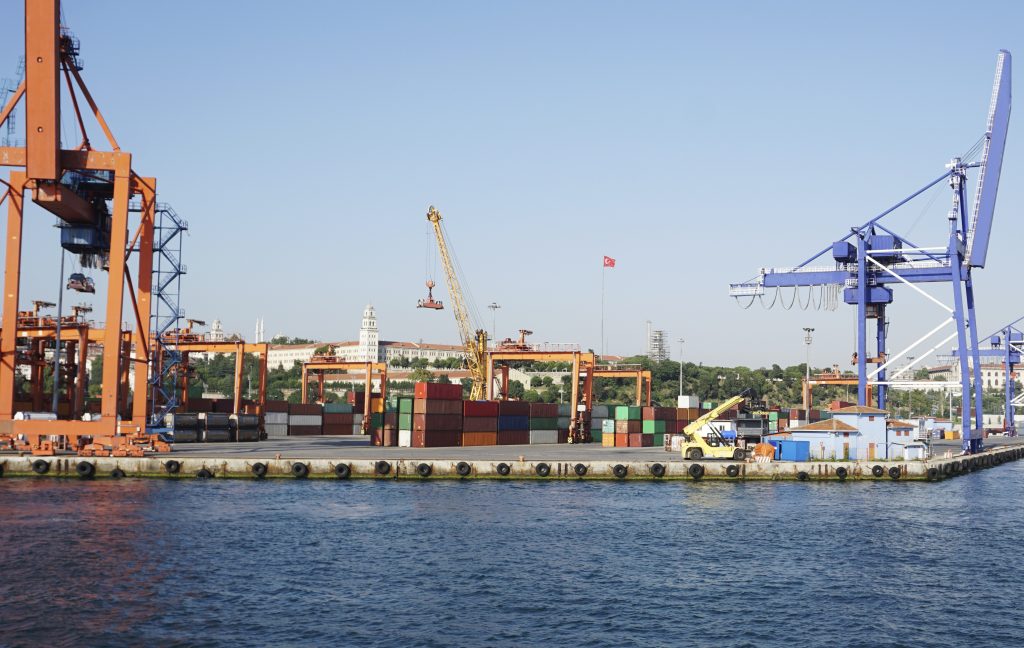
The hefty 50 per cent tariffs on Indian imports set by US President Donald Trump has been imposed on the goods starting from Wednesday. This comes weeks after the US president announced an additional 25 per cent tariff and the negotiation that yielded nothing for New Delhi.
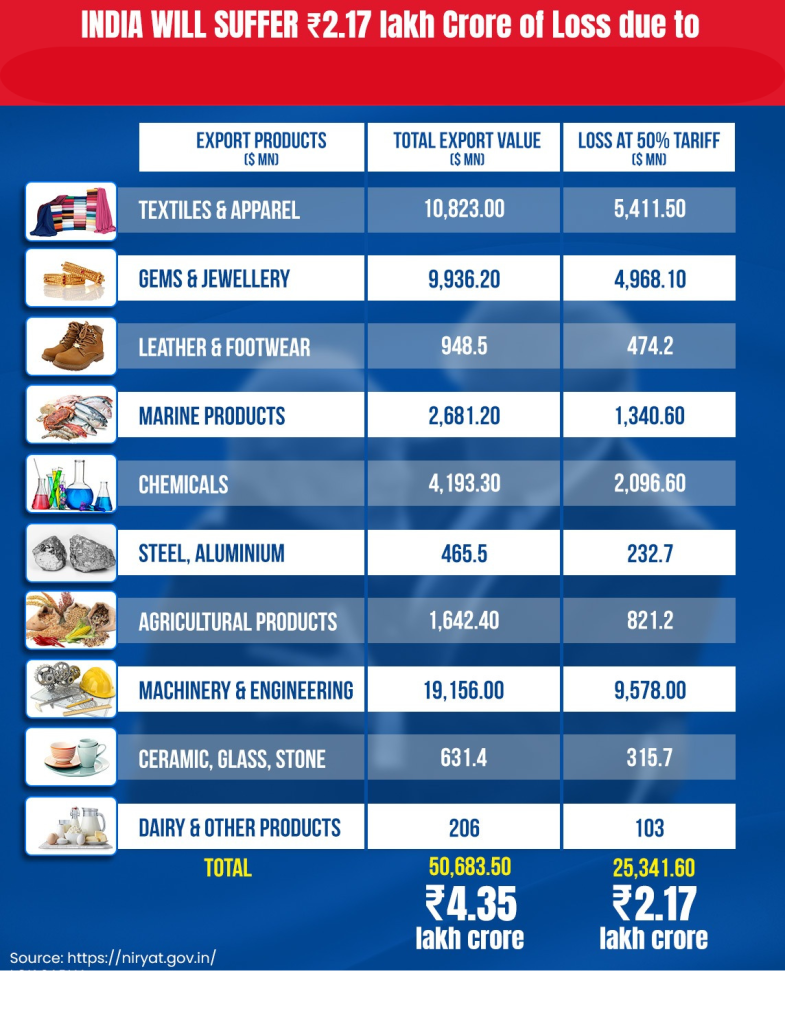
As soon as the tariffs have kicked in, it has incurred the loss of 2.17 lakh crore to the Indian exporters across ten sectors.
With this, many sectors have stopped production and many are looking for ways to get minimum impact from this move. The products which have been impacted include, Textile, Leather products, Marine, chemicals, steel, dairy, machinery among others.
Speaking to Tehelka on the challenges and how the exporters are shielding themselves from this crisis, Raghunandan Saraf, Founder and CEO of Saraf Furniture said that exporters in the furniture sector are compelled to shift their strategy and moving towards cost-effective sourcing, raw material procurement and value engineering to maintain competitiveness.
“The furniture sector, which already functions on slender margins and protracted production timelines, has now been complicated further by the 50 per cent tariff on exports to the US. Additionally, exporters are adopting measures to insulate themselves from immediate impacts by optimizing supply chains. These measures include more cost-effective sourcing, raw material procurement, and value engineering to maintain competitiveness. A portion of exports is also being diverted to the Middle East, Europe, and Australia to reduce dependence on the US market,” Saraf told Tehelka.
He said that the hurdles, however, are quite sizeable. Furniture has always been bulky and freight intensive, contributing to high logistics costs, which, combined with the added US tariffs now present a daunting challenge.
“This burden, added to the terms mid-sized exporters face with overseas buyers, is especially problematic. Time, investment, and market understanding are hurdles no one can achieve overnight. The uncertainty surrounding the duration of the tariffs has created a reluctance to devise long-term plans. Adaptability has always been a hallmark of the sector, but the current scenario exposes the limits of endurance and emphasizes the need to strike a compromise between enduring immediate hardships and long-term restructuring of trade relations,” he added.
Meanwhile, The Federation of Indian Export Organisations (FIEO) President SC Ralhan said that the move will severely disrupt the flow of Indian goods to its largest export market.
He described the development as a setback and adds that it can severely impact India’s exports to the US, with approximately 55 per cent of India’s US-bound shipments (worth USD 47–48 billion) now exposed to pricing disadvantages of 30–35 per cent, rendering them uncompetitive in comparison to its competitors from China, Vietnam, Cambodia, Philippines and other Southeast and South Asian countries.
He said, “Textiles and apparel manufacturers in Tirupur, Noida, and Surat have halted production amid worsening cost competitiveness. This sector is losing ground to lower‑cost rivals from Vietnam and Bangladesh. While for the seafood especially shrimps, as the US market absorbs nearly 40 per cent of Indian seafood exports and the tariff increase risks stockpile losses, disrupted supply chains, and farmer distress.”
FIEO Chief urged there is need for immediate government support which includes push for interest subvention schemes and export credit support to sustain working capital and liquidity.
“To further support this, low cost of credit and easy availability of credit with emphasis on MSMEs with the support from banks and financial institutions with special direction in this regard both from the government and the Reserve Bank of India is needed,” he added.
While the exporters and the stakeholders are voicing their concerns on the tariffs, the political parties are coming out to protest against the move by the US and cornering the central government of India citing weak diplomacy.
Sagarika Ghosh, MP, TMC said that The Narendra Modi government is squarely responsible for failing to protect India’s exporters.
“As tariffs on India kicks in, exporters across India are facing ruin. Textile units have stopped production, seafood exporters face slowdown, crippling job cuts loom in the jewellery sector. The Narendra Modi government is SQUARELY RESPONSIBLE for failing to protect India’s exporters from the CRUSHING impact of Trump tariffs in an economy already facing an unemployment catastrophe,” she expressed on X.
Taking a dig at Prime Minister Narendra Modi, Congress chief Mallikarjun Kharge said that we will lose an estimated Rs 2.17 lakh crore as the first jolt of this tariff across ten sectors alone.
“Your dear friend “Abki Baar, Trump Sarkar” has imposed 50 per cent Tariffs on India, starting today. We will lose an estimated ₹2.17 Lakh Crore as the first jolt to this Tariff, across 10 sectors alone,” he wrote on X.
Further he said, “Our Farmers, especially cotton farmers, are badly hit. You had said you are ready to pay any “personal price” to protect them, but you have done absolutely nothing to soften the blow and protect their livelihoods. Global Trade Research Initiative (GTRI) suggests that almost 1 per cent of our GDP could be impacted, and that China would benefit.”
He said that several export-oriented important sectors, including MSMEs, will experience massive job losses. A snapshot – which is just a tip of the iceberg, reveals that —Indian textile export sector is facing potential job losses of about 5,00,000 including both direct and indirect employment.
“In the Gems & Jewellery sector, 150,000 to 200,000 jobs could be at risk if the tariffs continue. Close to 1,00,000 workers involved in diamond cutting and polishing across the Saurashtra region have already lost their jobs since April, when the 10 per cent base US tariff was put in place,” he said.
“You failed in securing a Trade Deal. Now you are failing to protect our country,” he added.
Earlier this month, US President Donald Trump imposed additional punitive tariffs on Indian goods from 25 per cent to 50 per cent over New Delhi’s continued purchase of Russian oil. The US has been scaling pressure on India citing it is important to stop war between Ukraine and Russia.