99% of Indian exports (textiles, leather, pharma, jewellery, seafood, engineering goods) to the UK now enjoy duty free access; ‘Britain is open for business,’ UK PM Keir Starmer said
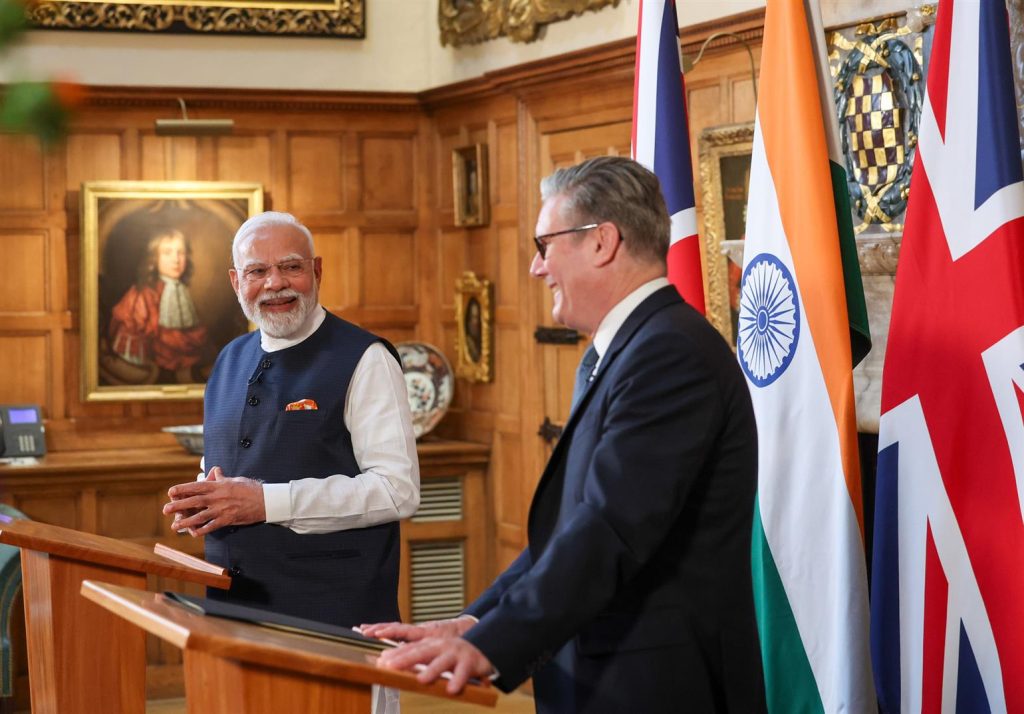
ndia and the United Kingdom made history by officially signing the Comprehensive Economic and Trade Agreement (CETA) during Indian Prime Minister Narendra Modi’s visit. The pact, sealed at Chequers by Commerce Minister Piyush Goyal and British Trade Secretary Jonathan Reynolds in the presence of PM Modi and UK PM Keir Starmer, is projected to elevate bilateral trade by US $34 billion annually
At a time when the India-US trade agreement faces multiple uncertainties, CETA is expected to give a big boost to the Indian economy and trade with duty-free export of many items, including agricultural produce like Basmati, fruits and vegetables.
The agreement is being called as the UK’s largest bilateral pact since Brexit and India’s most ambitious pact with a Western country. Official UK figures forecast an increase in bilateral trade by nearly 39 % in the long run when compared to 2040 projected levels of trade in the absence of the agreement. The deal is expected to increase bilateral trade by $34 billion annually, thereby making it the most significant trade pact for the UK since leaving the European Union and the most comprehensive one India has signed.
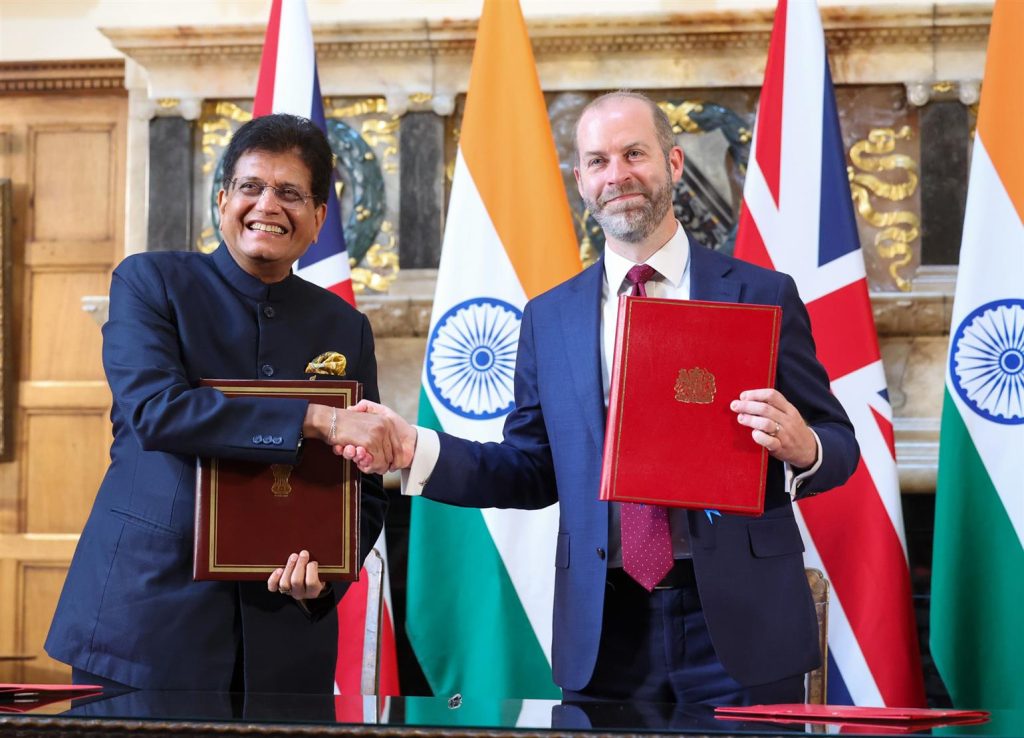
CETA is a result of three years of negotiations
The agreement will ensure cheaper goods for consumers and new markets for farmers and exporters, along with visa relief for professionals, boosting both the economies.
According to officials, India will gain from tariff elimination on about 99 per cent of tariff lines (product categories) covering almost 100 per cent of the trade values, unlocking “thousands of jobs” and also cutting tariffs on British whisky, cars and an array of other items.
Under the agreement, several key sectors will now enjoy zero-duty access to the UK market with agricultural products and processed food industry getting new opportunities for growth. India will see an elimination of tariffs on around half its exports to the UK, including textiles, footwear and agricultural produce such as mangoes and grapes. Indian craft drinks like Feni from Goa, artisanal wines from Nashik, and toddy from Kerala will find shelf space in high-end UK retail and hospitality chains.
The India-UK CETA promises immediate and significant benefits for a range of labour-intensive sectors that form the backbone of India’s MSME sector, employing millions across the country.
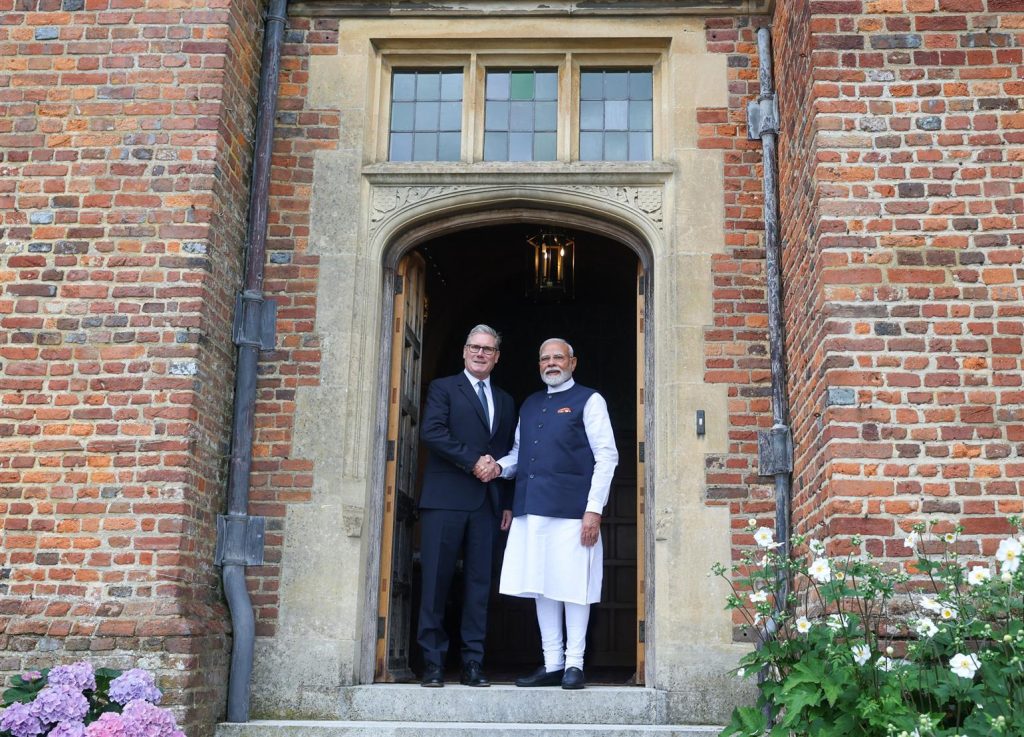
‘Blueprint for shared prosperity’; PM Modi
Slashing tariff lines across 99 per cent of Indian exports, the deal is set to unlock thousands of jobs while cutting tariffs on British whisky, cars and several other items. Farmers and food processing units are set to benefit from the FTA. Basmati rice, cotton, groundnut, fruits, vegetables, onion, pickles, spices, tea, coffee, among other items will be exempt from duties when exported to the UK. Mobility provisions include India’s professionals—yoga instructors, chefs, IT, healthcare—receiving 1,800 work visas annually and a three year exemption from UK national insurance contributions
“I’m really pleased and privileged to welcome you here today on what I consider to be a historic day for both of our countries, and the delivery of the commitment that we made to each other,” said Starmer, as he greeted PM Modi
Calling the UK and India as “natural partners”, PM Modi said the two nations are “writing a new chapter” in their history. “This will inject new energy into the services sectors of both countries, especially in technology and finance. It will promote ease of doing business, reduce cost of doing business and increase the confidence of doing business,” he added
“This agreement is more than just an economic partnership; it is also a blueprint for shared prosperity. On the one hand, it paves the way for enhanced market access in the UK for Indian textiles, footwear, gems and jewellery, seafood, and engineering goods. It will also unlock new opportunities for India’s agricultural produce and processed food industry. Above all, this agreement will be especially beneficial for India’s youth, farmers, fishermen, and the MSME sector.
“On the other hand, UK-made products such as medical devices and aerospace components will become more accessible and affordable for Indian consumers and industries.
“Alongside the trade agreement, a consensus has also been reached on the Double Contribution Convention. This will inject new momentum into the service sectors of both countries, particularly in technology and finance. It will enhance the ease of doing business, reduce operational costs, and boost confidence of doing business. Additionally, the UK economy will benefit from access to skilled Indian talent,” PM Modi said
What DBT said
According to the UK Department for Business and Trade (DBT), once the trade pact comes into force, India’s average tariff on British products will drop from 15 per cent to 3 per cent. It means British companies selling products to India, from soft drinks and cosmetics to cars and medical devices, will find it easier to sell to the Indian market.
Whisky producers will benefit from tariffs slashed in half, reduced immediately from 150 per cent to 75 per cent and then dropped even further to 40 per cent over the next 10 years, giving the UK an advantage over international competitors in reaching the Indian market
Every region of the UK will benefit. The clean energy industry will have “brand new, unprecedented access” to India’s vast procurement market as the country.