The revision of electoral rolls in West Bengal has sparked a controversy that had reached the Supreme Court of India, prompting the court to step in with an unusual remedy. Invoking its extraordinary powers, the court ordered the creation of special tribunals to hear appeals from voters whose names were excluded during the Special Intensive Revision (SIR) of electoral rolls.
What is the SIR?
The Special Intensive Revision (SIR) is a process carried out by the Election Commission of India to update and verify electoral rolls before elections. Electoral rolls — the official list of registered voters — must be periodically revised to ensure accuracy and prevent fraudulent voting.
During an SIR exercise, election authorities typically undertake several steps: removing duplicate entries, deleting the names of deceased voters, correcting errors in personal details, and verifying whether individuals listed on the rolls are still eligible to vote in a particular constituency.
In West Bengal, the recent SIR process assumed unusually large proportions. Officials identified nearly 60 lakh voters whose records required further scrutiny, placing them in what was described as an “unmapped” or disputed category. These voters were asked to submit documentary proof to establish their eligibility.
Given the scale of the exercise, the authorities deployed judicial officers to examine documents and determine whether individuals should remain on the electoral rolls.
Why it became controversial?
The revision process quickly became politically contentious. Opposition parties and several civil-society groups alleged that the verification exercise could lead to the removal of genuine voters from the electoral rolls, potentially affecting the democratic process in the state.
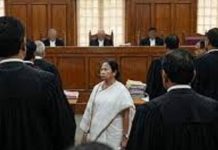
The government of West Bengal, led by Chief Minister Mamata Banerjee, also raised concerns about the manner in which the revision was being carried out. Banerjee accused election authorities of conducting the process without adequate transparency and safeguards.
As the controversy intensified, Banerjee launched a protest against the alleged deletion of voter names, arguing that the exercise risked disenfranchising large numbers of people.
The Election Commission of India, however, maintained that the revision was a routine administrative exercise aimed at ensuring that the voter list remained accurate and free of irregularities.
What was the legal problem?
The central issue before the court concerned the appeal mechanism available to voters whose claims were rejected during the verification process.
Judicial officers had been assigned the task of examining documents and deciding whether individuals qualified to remain on the electoral rolls. However, if a person’s claim was rejected, the existing framework allowed the appeal to be handled by Electoral Registration Officers (EROs)— administrative officials within the election machinery.
Petitioners argued that this arrangement was problematic because bureaucrats would effectively be sitting in appeal over decisions taken by judicial officers. Critics contended that such a system blurred the distinction between judicial and administrative authority and could undermine confidence in the process.
Given that millions of voters were affected by the SIR exercise, the absence of an independent appellate mechanism became a serious legal concern.
What did the Supreme Court say?
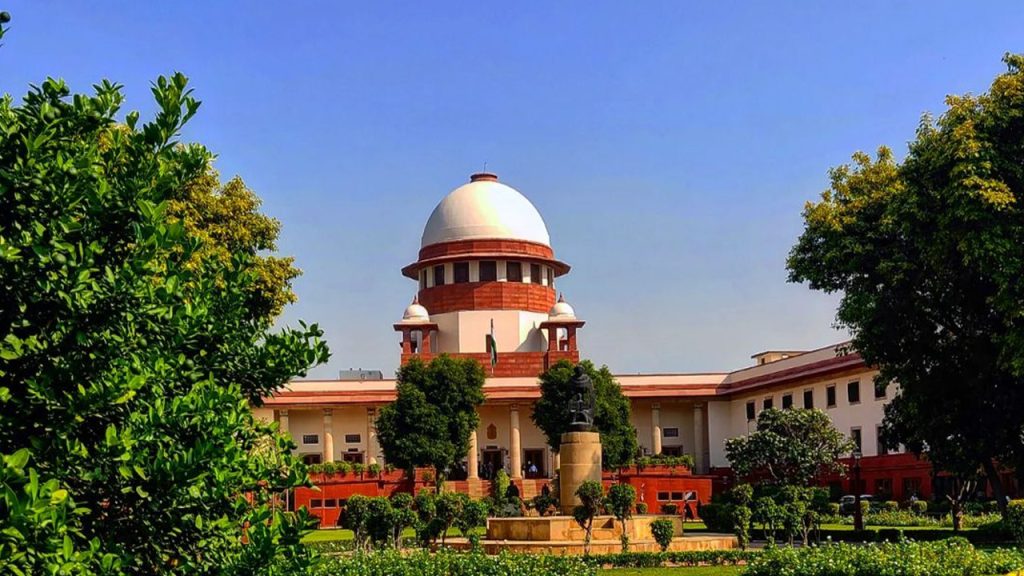
A Bench of the Supreme Court of India led by Chief Justice Surya Kant, along with Justices R Mahadevan and Joymalya Bagchi, decided to intervene.
Invoking its powers under Article 142 of the Constitution of India, which allows the court to pass orders necessary to ensure “complete justice,” the Bench directed that special appellate tribunals be set up to hear disputes arising from the SIR exercise.
These tribunals will consist of retired Chief Justices and former judges of the Calcutta High Courtand neighbouring High Courts. They will examine appeals from individuals whose claims for inclusion in the voter list were rejected.
What happens next?
Following the Supreme Court’s order, the Chief Justice of the Calcutta High Court is expected to recommend names of retired judges who will serve on the newly created tribunals.
Once notified, these tribunals will begin hearing appeals from voters who were excluded from the electoral rolls during the SIR process. Their decisions could determine whether thousands — and potentially millions — of voters are reinstated on the electoral rolls before future elections.
The ruling also had immediate political consequences. After the court’s intervention, Mamata Banerjee called off her protest, describing the decision as a “people’s victory.”