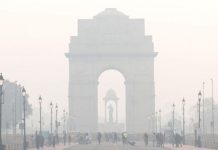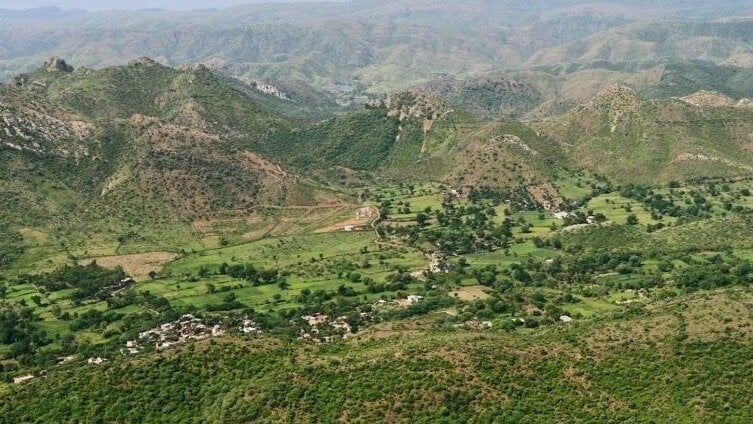
The decision to allow construction in ecologically sensitive parts of the Aravallis, along with redefined boundaries based on height, has sparked widespread outrage. The hashtag #SaveAravalli quickly trended on social media, as thousands of activists, citizens, and lawyers voiced their opposition.
Digital campaigns flooded social media platforms, with petitions and infographics calling on the government to revoke the ruling and protect the Aravallis. Activists argue that this battle is not just about a mountain range; it’s about safeguarding India’s environmental future. An NGO-Change.org has also launched a signature campaign in this regard.
Critics of the decision warn that it will strip vast areas of legal protection, paving the way for urbanization, mining, and deforestation. Such unchecked development threatens the fragile ecosystems that rely on the Aravallis’ natural integrity.
Environmentalists and scientists have raised alarms about the devastating consequences of the ruling. Dr. Priya Mehta, an ecologist with two decades of research on the Aravallis, explains, “We are not just talking about mountains; we’re talking about an irreplaceable ecosystem. Losing the Aravallis would mean losing our ability to combat desertification and climate change in one of India’s most vulnerable regions.”
Local communities, many of whom depend on the Aravallis for water and agriculture, have echoed these concerns. G.S. Gulati, a farmer from Haryana, says, “The Aravallis are our lifeblood. If they are destroyed, we’ll lose everything.”
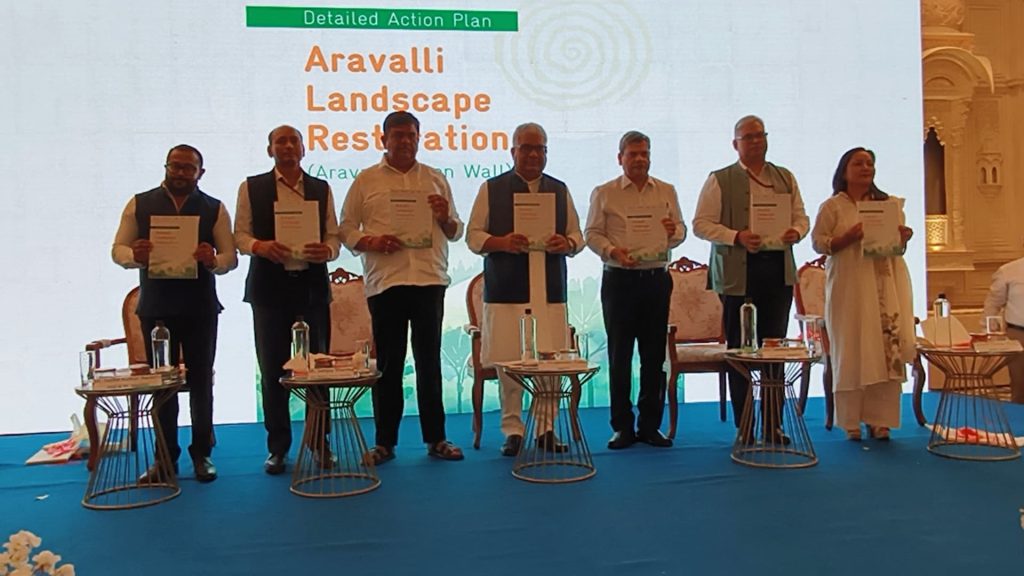
In response to the growing crisis, Union Environment Minister Bhupender Yadav inaugurated a workshop in Udaipur, Rajasthan, focused on devising strategies for restoring the Aravallis. The workshop emphasized ecological restoration, community participation, and sustainable livelihoods, aiming to involve local communities in eco-restoration efforts and promote sustainable practices like eco-tourism and agroforestry.
While environmentalists and local communities are fighting to preserve the Aravallis, some government and pro-development advocates argue that urbanization and mining are necessary for economic growth. They claim that exploiting the region’s resources could create jobs and stimulate infrastructure development. However, critics view this as a short-sighted approach, prioritizing immediate economic gains over long-term ecological stability. Environmental lawyer Aarav Gupta warns, “Once the Aravallis are gone, they’re gone forever. The cost of their destruction will outweigh any temporary economic benefit.”
The Aravallis are more than just a source of resources; they are a vital ecological shield that has shaped the climate and ecology of northwest India for over a billion years. The hills provide essential services—such as preventing desertification, replenishing groundwater, and protecting the National Capital Region from toxic air pollution. For generations, local communities have thrived alongside this delicate ecosystem. Destroying it would have catastrophic consequences.
The future of the Aravallis remains uncertain, but the movement to protect them continues to gain momentum. Protests, petitions, and legal challenges are pushing forward with renewed determination. With growing public support and scientific evidence on their side, defenders of the Aravallis are working tirelessly to preserve the region’s ecological health.