In the complex political landscape of India, electoral battles often resemble family dynasties passing the torch from one generation to the next. Bihar is no different. The political landscape of the poll-bound state remains deeply entangled with dynastic politics, where electoral battles often mirror family legacies. Much like the rest of India, political power in the state frequently passes from one generation to the next — and the ongoing assembly elections are no exception.
The 243-member assembly elections have many candidates who are sons, daughters, spouses, close relatives of established politicians. This legacy-driven approach cuts across party lines.
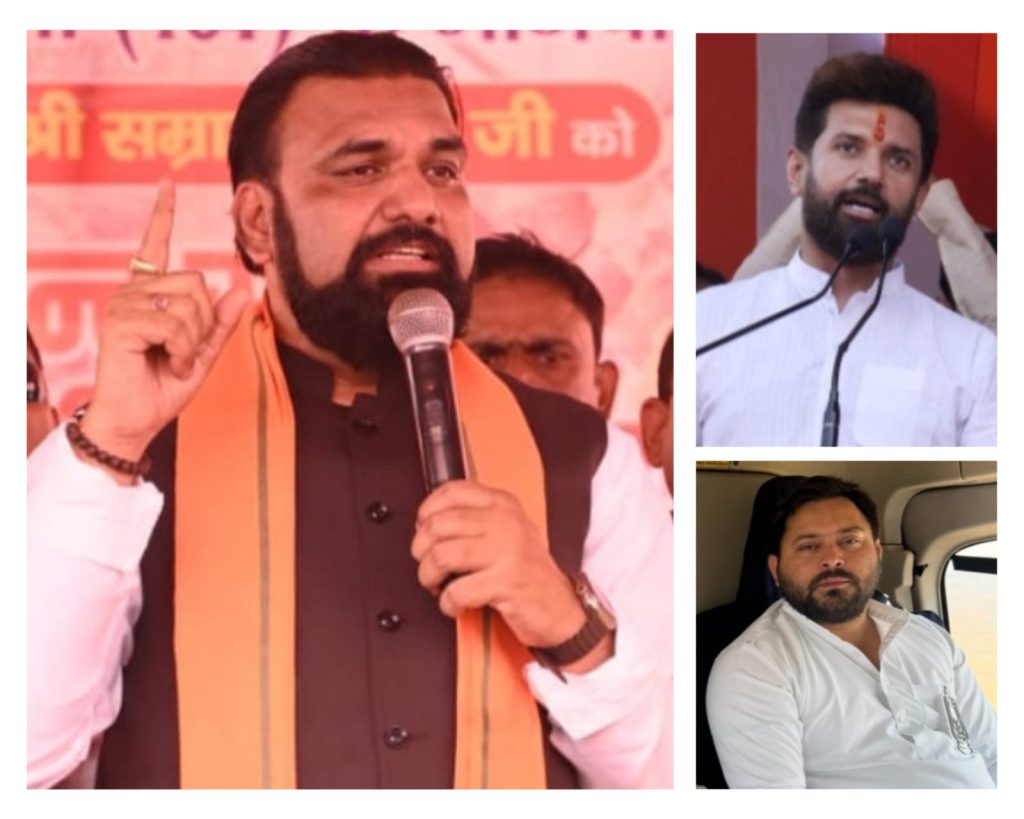
Leading the dynastic charge are Tejashwi Yadav and Tej Pratap Yadav — sons of former chief ministers Lalu Prasad Yadav and Rabri Devi. Tejashwi, the RJD and possibly the Mahagathbandhan’s face for chief minister, is continuing his family’s dominance in Bihar politics.
Across the spectrum
But dynasty politics isn’t limited to the RJD. The BJP and JD(U) have also fielded candidates with political pedigree. Nitish Mishra, son of former CM Jagannath Mishra, is in the fray and so is JD(U)’s Chetan Anand, son of MP Lovely Anand. Smaller and regional parties, too, are following the trend. Deepa Manjhi, daughter-in-law of former CM Jitan Ram Manjhi and Lata Singh, daughter of former Union Minister RCP Singh, too are contesting.
Prominent dynasts include:
· Tejashwi Yadav (RJD), son of Lalu Prasad Yadav
· Samrat Choudhary (BJP), son of Shakuni Choudhary
· Osama Shahab (RJD), son of late Mohammad Shahabuddin
· Snehlata (Rashtriya Lok Morcha), wife of Upendra Kushwaha
· Nitish Mishra (BJP), son of Jagannath Mishra
· Deepa Manjhi (HAM), daughter-in-law of Jitan Ram Manjhi
· Jagriti Thakur (Jan Suraaj), granddaughter of Karpoori Thakur
· Komal Singh (JD(U)), daughter of LJP MP Veena Devi
· Chetan Anand (JD(U)), son of Lovely Anand
Clearly, dynasty is a norm, not an exception.
The moral question
While the BJP often berates the Congress and Rahul Gandhi for promoting dynastic politics, their own ranks in Bihar include leaders like Chirag Paswan, son of the late Ram Vilas Paswan — highlighting the selective nature of such criticism. Experts agree: no political party in Bihar can claim moral superiority on the issue. Across the board, family names are being prioritized over merit, ideology, or commitment to public service.
This growing reliance on dynastic candidates reflects a broader concern — the steady sidelining of grassroots workers and the increasing influence of glamour and inherited power in Indian politics. For many ordinary party members, contesting elections has become a distant dream.
Compounding this is the uneven playing field created by the unregulated use of money in elections. With campaigns often dominated by well-funded candidates from political families, the space for independent or first-generation leaders is shrinking. Some observers also point to a long-standing failure to invest in education and social mobility, thus leaving little or no room for new leadership to emerge.