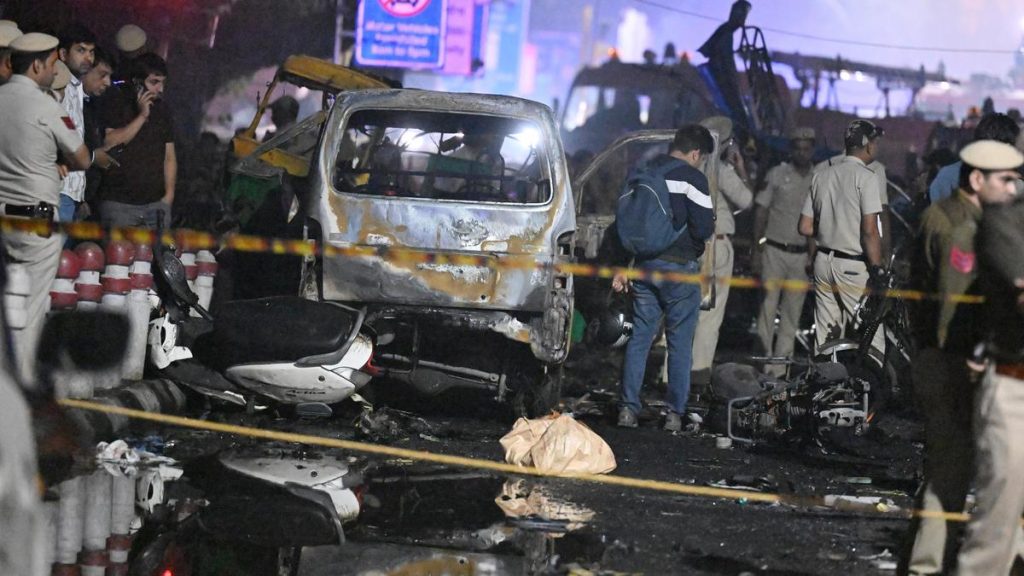
On a crisp winter day in the heart of Delhi, a shocking attack unfolded that would not only leave the Indian capital reeling but also mark a dangerous shift like terrorism in the region. A car bomb, parked in the busy commercial and diplomatic district of the city, exploded, killing several and injuring dozens. The immediate shockwaves reverberated through the political and security circles of India, triggering questions not only about the security apparatus but also about the very nature of the attackers themselves.
In a tragic twist, investigations revealed that the bomb was planted by individuals with backgrounds that were anything but typical for a terrorist cell. The suspected attackers, it emerged, were highly educated, highly skilled professionals—one of them a doctor. The identity of the individuals behind the attack has since sent shockwaves through the national security establishment, pointing to a disturbing trend of “white-collar” terrorism that is slowly emerging as a new and formidable threat.
This attack, while horrifying, signals the growing threat of radicalized professionals who have the skills and resources to cause significant damage to society. It’s no longer just fringe extremists or militants from the rural underbelly of the country; educated, well-off professionals are now increasingly becoming involved in acts of terror. These individuals often operate in plain sight, making them difficult to detect and even harder to anticipate.
The Sequence of Events: A Disconcerting Pattern
The car bomb that exploded in the heart of Delhi was not an isolated event but part of a larger, more troubling trend that has been evolving in recent years. As investigators pieced together the clues, the sequence of events that led to the attack began to emerge.
In the weeks leading up to the bombing, intelligence reports indicated heightened activity among extremist groups across India, but there was nothing specific pointing to the involvement of professionals or skilled workers. The first indication that this attack was different came when investigators discovered that one of the key suspects was a trained doctor. In fact, it later came to light that several of the individuals involved had professional credentials, including engineering and medical degrees, which is atypical for the kind of operatives that most counterterrorism experts were accustomed to dealing with.
The car bomb itself was a highly sophisticated device, one that was designed to maximize casualties in a high-traffic area. The precision and skill required to assemble such an explosive device suggest a level of education and technical expertise that goes beyond what would be expected from a traditional terrorist cell. Further investigation revealed that the planners had meticulously studied the area, taking into account factors such as traffic patterns, security vulnerabilities, and the specific target zones to ensure maximum impact.
What makes this attack even more concerning is the way in which it was executed. The individuals behind the bombing were able to blend into mainstream society. They weren’t operating from the fringes of society as we have often seen in past terror operations; instead, they were part of the very fabric of Indian urban life. They were educated, middle-class individuals who could pass unnoticed in the very communities that they were now targeting. This shift in profile is a stark departure from the “traditional” image of a terrorist, making it more difficult for authorities to track or predict these types of attacks.
The Rise of Radicalized Professionals
The car bomb attack in Delhi points to a growing trend of radicalization among educated professionals in India and across the world. These individuals—doctors, engineers, teachers, and other professionals—are becoming increasingly involved in terrorist activities, challenging the existing security paradigms that once categorized terrorism as a phenomenon rooted in poverty and lack of education.
This new brand of terror is both more insidious and more dangerous. Radicalized professionals have access to resources, networks, and knowledge that make them far more capable than the traditional foot soldiers of terror groups. Their professional backgrounds often provide them with the technical skills needed to carry out complex attacks, such as bomb-making, hacking, or strategic planning. They are also better equipped to elude detection, blending in with society and moving freely through cities and towns. In a country like India, with its large and complex urban populations, this is a serious concern for law enforcement agencies.
Why White-Collar Terror is a New Kind of Threat
What makes white-collar terrorism so dangerous is that it breaks down many of the assumptions that law enforcement agencies and intelligence services have built over the years. Historically, most terrorist organizations have relied on marginalized individuals—those with limited access to education, economic opportunities, and social mobility. These individuals are often recruited from impoverished or disenfranchised communities and are more easily manipulated and radicalized by extremist ideologies.
However, the rise of white-collar terrorism signals a shift in this dynamic. Professionals who have achieved social and economic success are now increasingly becoming susceptible to extremist ideologies. This new breed of terrorist is not motivated solely by economic deprivation or social alienation; they may be driven by religious, political, or ideological beliefs, or they may have personal grievances that they feel cannot be addressed through traditional means. These individuals have a higher level of education, access to professional networks, and financial resources, which allows them to conduct their operations in a far more sophisticated manner.
The Role of Social Media and Online Radicalization
A key factor in the rise of white-collar terrorism is the role that social media and the internet play in the radicalization process. In the past, extremist groups relied heavily on word-of-mouth or physical meetings to recruit new members. Today, however, social media platforms like Telegram, Twitter, and Facebook have become key tools for spreading extremist propaganda and recruiting individuals from all walks of life. Professionals, in particular, are more likely to consume information through digital platforms, making them vulnerable to online radicalization.

The online radicalization process for educated individuals tends to be more subtle. Unlike the overtly manipulative recruitment tactics used to lure disenfranchised youth, radicalization among professionals often starts with a deep dive into online forums, discussions, and articles that appeal to their intellectual curiosity. Once they become hooked on extremist ideologies, the shift to active participation in terrorist activities may come gradually and even seem rational to the individual. The access to online training materials, such as bomb-making guides or strategies for evading law enforcement, can also make these individuals more capable of carrying out acts of terror on their own.
A Changing Landscape for Counterterrorism
The rise of white-collar terrorism presents a host of challenges for law enforcement and intelligence agencies. Traditional methods of detecting and preventing terrorism, such as monitoring extremist hotspots or tracking individuals with criminal backgrounds, are no longer sufficient to address this new type of threat. White-collar terrorists are harder to spot because they don’t fit the established profiles of militants. They are often well-integrated into society, with professional careers, families, and social circles that make them appear unremarkable.
To combat this new threat, security agencies will need to adopt a more nuanced approach to counterterrorism. This will require better coordination between intelligence services, law enforcement, and private institutions like universities and hospitals, where many professionals are employed. Public-private partnerships will be crucial in identifying early warning signs of radicalization, such as subtle shifts in behavior, changes in political or religious beliefs, or withdrawal from social circles.
Additionally, there is an urgent need for a more sophisticated understanding of the psychological and ideological factors that drive professionals toward extremism. Rather than focusing solely on the external factors, such as financial difficulties or political oppression, counterterrorism efforts must also consider the internal, often deeply personal motivations behind the radicalization of educated individuals.
The Global Implications
India is not alone in facing this new form of terror. Across the world, there has been a steady rise in the involvement of educated individuals in extremist movements. In Europe, for instance, several high-profile terrorists have had advanced degrees, and the U.S. has witnessed similar trends. This suggests that the phenomenon of white-collar terrorism is part of a larger, global shift that has implications not just for India, but for the world.
As terrorism continues to evolve, so too must our understanding of it. The car bomb attack in Delhi serves as a stark reminder that terrorism is no longer a problem confined to certain parts of the world or to certain types of people. It is an ever-evolving threat that transcends borders and affects everyone, regardless of class or profession.
A Call to Action
The Delhi car bomb attack marks the beginning of a new phase in global terrorism, one where educated and skilled professionals play an increasingly central role. As the nature of the threat changes, so too must our approach to counterterrorism. Governments, intelligence agencies, and societies must adapt to this new reality, finding ways to identify, track, and prevent radicalized professionals from carrying out such horrific attacks.
India, and indeed the world, stands at a crossroads. The rise of white-collar terrorism presents a unique and dangerous challenge, but with the right strategies, cooperation, and vigilance, it is a threat that can be mitigated. The fight against terrorism is far from over, and the battle is only becoming more complex. But understanding the enemy, recognizing the shifting nature of the threat, and adapting our defences accordingly will be the key to ensuring a safer future for all.