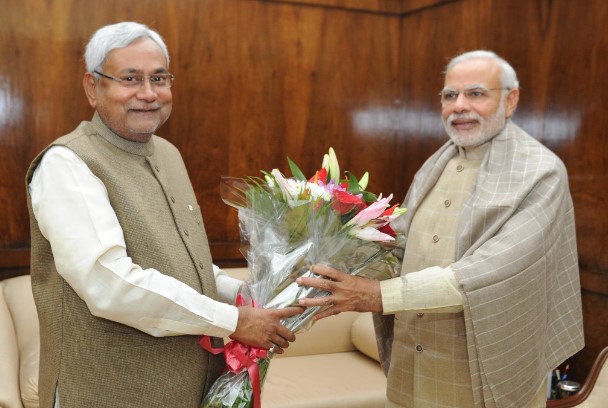
The 2025 Bihar Assembly elections delivered a decisive mandate, reshaping the state’s politics and firmly positioning the BJP-led NDA as the dominant force. Sailing past the 200-seat mark in the 243-member House, the NDA decimated the Mahagathbandhan. Whether Nitish Kumar returns as chief minister for a fifth consecutive term remains open, but the verdict reaffirmed his enduring political relevance and strengthened the “double-engine government” narrative promoted by the BJP.
Even critics acknowledged the sheer scale of the NDA’s victory—greater than the most ambitious projections. Home Minister Amit Shah had predicted 160-plus seats, but the final count exceeded even internal expectations. The NDA’s gains cut across caste lines, consolidating support among EBCs, upper castes, and portions of Dalits, while a split in Muslim votes—particularly due to AIMIM—limited the opposition’s ability to mobilise minority-heavy regions.
The real game-changer, however, was women voters. With a historic 71.6% turnout—nearly nine percentage points higher than men—women effectively became Bihar’s “kingmakers.” Two decades of welfare-focused governance under Nitish Kumar, combined with targeted schemes such as the Rs 10,000 enterprise assistance, cash transfers, subsidised electricity, and entrepreneurship incentives, translated into a strong pro-incumbency wave. For most women, the NDA offered tangible benefits already delivered versus promises for the future. This unprecedented participation disrupted Bihar’s traditional caste arithmetic. The NDA’s cohesive campaign—merging Narendra Modi’s national appeal, Nitish’s governance record, and Chirag Paswan’s influence—presented stability and welfare as central themes.
The opposition entered the contest fragmented, disorganised, and plagued by a leadership crisis. Tejashwi Yadav campaigned energetically but remained hamstrung by over-reliance on Yadav candidates, reinforcing caste-exclusivity perceptions. The public feud between brothers Tejashwi and Tej Pratap further damaged credibility. Winning barely a handful of seats, Congress appeared organisationally hollow. Rahul Gandhi’s limited campaigning, delayed seat-sharing decisions, and incoherent coordination diluted the impact of early outreach efforts like the Voter Adhikar Yatra. Complaints about voter roll discrepancies failed to gain traction.
Attempts by Tejashwi to distance himself from his father’s “jungle raj” legacy were undercut by sustained BJP attacks linking him to “sins of the father,” particularly on law and order. In contrast, the NDA’s narrative of stability, Modi’s popularity, and Nitish’s governance proved more credible to voters. Prashant Kishor’s Jan Suraj Party, contesting 238 seats, failed to win any, though it ate into the opposition’s vote share.