A new field report by the Concerned Citizens’ Group (CCG) has warned of a sharp rise in public anger across Jammu and Kashmir over the new reservation policy, continuing curbs on media, and deep economic distress in tourism and horticulture.
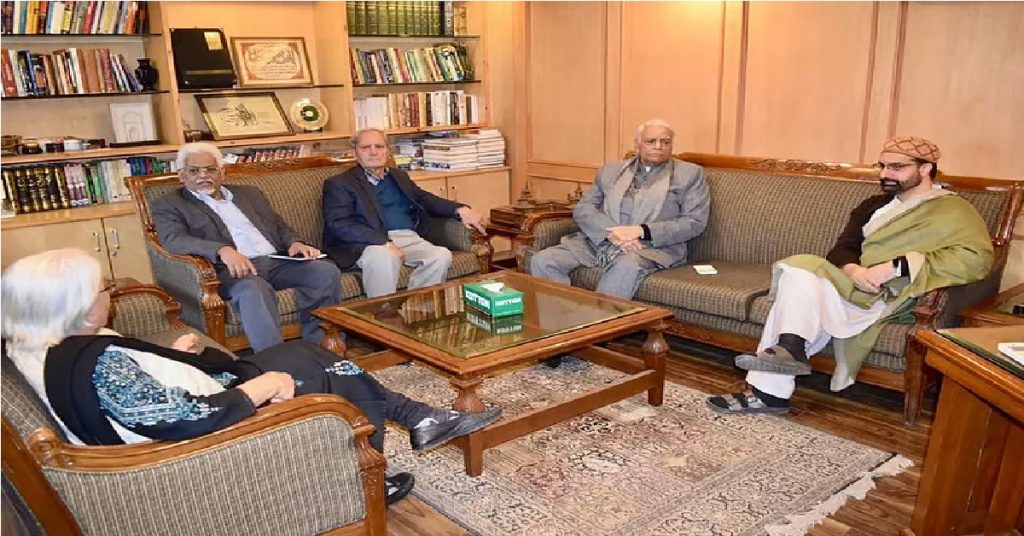
The four-member team—former Union Minister Yashwant Sinha, Air Vice Marshal (Retd.) Kapil Kak, veteran journalist Bharat Bhushan and activist Sushobha Barve—visited the region between October 28–31 and said the situation is “much further from the truth than the one presented by the Government of India or its media in Delhi.”
The report finds widespread unrest over the new reservation policy, particularly among students who accuse the administration of ignoring their concerns. It notes that Jammu has become the “overwhelming beneficiary” of reservation certificates issued in the last two years, creating “deep regional imbalance.” The group writes that the data “is bound to reignite the debate on the new reservation policy and further fuel the anger of the students.” Students told the CCG that the House Committee formed to review the policy is biased. “So, how can we expect any justice from it?,” a student leader asked, pointing out that it “did not organise stakeholder consultations” and has “only members from the ST community.”
Discontent is not limited to the Valley. The report notes that “the 1947-48 Hindu refugees of Poonch district now settled in Jammu… have a grievance that they have been arbitrarily excluded” from the Pahari reservation category. Pahari-speakers in Ramban have similar complaints. Even among Gujjars—whose 10% reservation is unchanged—anger is growing. A Gujjar public intellectual told the group: “One would not find any Gujjar even as SHO in the 10 districts of Jammu division.” He said this sidelining was “creating disquiet but also building up anger in the community.”
On the media situation, the CCG notes there has been “no meaningful restoration of media autonomy” despite the UT assembly elections. Censorship, intimidation, and pressures to follow official narratives persist. The report says: “Operation Sindoor placed severe restrictions on media reportage and most Kashmiri journalists were not able to report about the developments on the ground.” Several reports were pulled down under pressure for contradicting the official narrative. Journalists said media control had effectively shifted to the Raj Bhavan after the DIPR chief was given additional charge there, and a media adviser to the LG has gained notoriety for “capricious decisions about giving out government ads to selected news platforms and denying it to others.”
Major national media organisations—including The Times of India, Economic Times, NDTV and The Hindu—have been denied accreditation, the group notes, adding that the Economic Times’ accreditation was “inexplicably revoked.” Journalists described denial of press passes to cover government events as “akin to deliberately sabotaging their careers.” A new verification requirement asking journalists to submit six months’ salary slips has intensified fears. Many worry they can be arbitrarily labelled part of the “terrorist ecosystem.” They cited the case of journalist Irfan Mehraj, who has been in Rohini Jail for over 1,000 days; “each time he applies for bail, he finds the judge has changed and the hearing has to begin afresh,” the report says.
The report also documents heavy economic losses after the Pahalgam terror attack, which “emptied” Kashmir of tourists “overnight.” Hotel owners, taxi operators, houseboat owners and shopkeepers suffered severe income loss, with many hoteliers forced to lay off staff. Even during Diwali, tourist traffic remained far below normal. Hoteliers are also battling a new land lease policy under which hotel lands are being auctioned instead of renewed. The group notes that “Gulmarg has been a special focus for implementation of the policy,” while expired leases in Srinagar and Jammu have drawn no such action. Owners say they are denied preference in auctions despite decades of investment.
Horticulture suffered an estimated Rs 2,000 crore loss when landslides blocked the Srinagar–Jammu highway for nearly three weeks during apple harvest. Around 4,000 trucks were stranded. “The orchardists have suffered losses of over Rs. 2000 crore this year,” the President of the Pulwama Fruit Mandi told the group. Though the government eventually deployed goods trains to move apples to Delhi and Punjab, “substantial losses had already incurred.” Jammu traders now fear economic loss because goods trains bypass their mandi. “The government is not consulting traders here before implementing important decisions,” a Jammu Chamber of Commerce member said.
Summing up, the CCG writes: “The situation on the ground, specially in the Kashmir Valley, is much further from the truth than the one presented by the Government of India or its media in Delhi.”