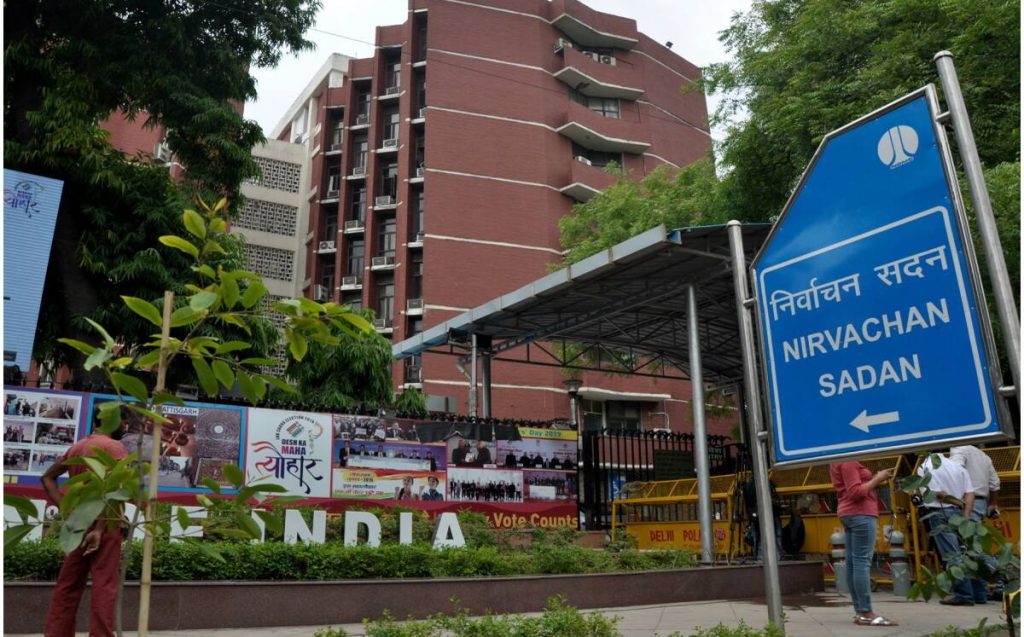
A massive political controversy has erupted in Bihar following the Election Commission of India’s (ECI) decision to carry out a Special Intensive Revision (SIR) of the state’s voter rolls—a move that has drawn sharp criticism from opposition parties and is now under the scrutiny of the Supreme Court.
The SIR, the first of its kind in Bihar since the adoption of computerized electoral rolls in 2003, aims to clean the voter lists of ineligible entries, including duplicates and non-citizens. According to the ECI, this exercise is mandated under Article 326 of the Constitution and the Representation of the People Act, which restrict voting rights to Indian citizens aged 18 and above.
The EC has clarified that the revision will ensure transparency and accuracy in the rolls ahead of the crucial Bihar Assembly elections slated for October–November 2025, with revised rolls expected by September.
The move, however, has faced severe backlash from political parties within the INDIA bloc, including the Congress, Rashtriya Janata Dal (RJD), Samajwadi Party, Left parties, and AIMIM.
They allege that the exercise is a “deliberate attempt to disenfranchise” large segments of voters—particularly Dalits, backward classes, minorities, and migrants—who typically support opposition parties.
Prominent leaders like Rahul Gandhi, Tejashwi Yadav, and Akhilesh Yadav participated in a protest march in Patna on July 9, culminating in a statewide bandh. Protesters accused the EC of acting under political pressure and warned of the possible deletion of up to 2 crore voter names.
The matter reached the Supreme Court, where a bench led by Justices SC Dhulia and PB Varale expressed concerns over the timing of the revision. While the court did not object to the legality of the EC’s authority to revise rolls, it warned that the process—so close to the elections—may not allow voters enough time to appeal deletions or rectify documentation issues.
Adding fuel to the fire is the ECI’s exclusion of Aadhaar and voter ID cards as proof of citizenship in the current revision drive. Critics say this raises procedural red flags and may lead to arbitrary removals.
In a particularly contentious observation, the court also noted that determining citizenship is within the purview of the Union Home Ministry, not the Election Commission, hinting at jurisdictional overreach.
The Election Commission has stood its ground, asserting that the revision is a routine and necessary process to uphold the integrity of elections. It has assured that no voter will be deleted without proper verification and a chance to be heard.
In court, EC representatives argued that the SIR is conducted as per the law and that the timing allows for sufficient notice before finalization of the electoral roll.
The Supreme Court has reserved its judgment and is expected to deliver guidelines or directions to ensure that voter rights are protected while allowing the EC to maintain the sanctity of the electoral process. Meanwhile, political tensions continue to escalate in Bihar as parties gear up for a high-stakes election season.
As the situation unfolds, all eyes remain on both the judiciary and the EC to balance the need for fair elections with citizen inclusivity—a test that may set a precedent for future electoral exercises across India.