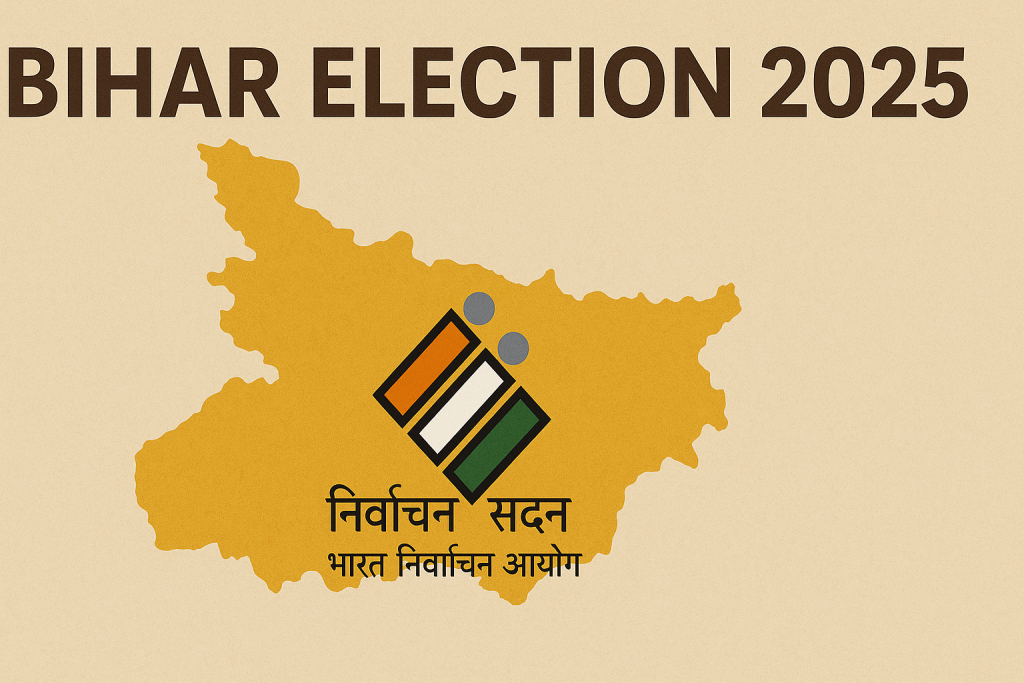
Even after the announcement of the election schedule, both the National Democratic Alliance (NDA) and the Mahagathbandhan are locked in tough negotiations over the most contentious issue: seat-sharing.
According to sources, the two key NDA constituents in Bihar—the BJP and the JD(U)—are likely to contest around 100–103 seats each. As per the evolving formula, the JD(U) may field candidates in 103 constituencies, a drop from 115 in the 2020 Assembly elections. The BJP is expected to contest 102 seats, down from 110 last time.
Chirag Paswan’s Lok Janshakti Party (Ram Vilas) is expected to be allotted 20–25 seats, mainly in regions where it currently holds influence, particularly its five Lok Sabha seats. Jitan Ram Manjhi’s Hindustani Awam Morcha (HAM) could contest around eight seats, up from seven in 2020, when it won four. Upendra Kushwaha’s RLSP, despite its limited presence, might be allocated five to six seats.
However, buoyed by his party’s clean sweep in the recent Lok Sabha elections (five out of five seats), Chirag is said to be pushing hard for “winnable” constituencies. He has repeatedly touted his party’s “100 percent strike rate” as leverage—not just for better seat bargains but also as a bid to emerge as a chief ministerial contender. With Chief Minister Nitish Kumar reportedly in poor health and murmurs of a leadership transition within the JD(U), the LJP leader sees a strategic opportunity.
Meanwhile, the RJD-led Mahagathbandhan is also grappling with complex negotiations. Sources indicate that the RJD is poised to contest the lion’s share of seats—around 130. The Congress may be allotted 50, while the Vikassheel Insaan Party (VIP), led by Mukesh Sahani, could get around 20.
The Left parties—CPI, CPI(ML), and CPI(M)—are collectively being offered 35 seats. However, all is not well in the INDIA bloc as the CPI(ML) has reportedly rejected an offer of 19 seats, calling it “an attack on its dignity.” In 2020, the CPI(ML) contested 19 seats and won 12, giving it one of the best strike rates in the alliance. Citing its performance, it has demanded at least 40 seats this time.
Meanwhile, the Congress, which contested 70 seats in 2020 but won only 19, initially demanded a similar number for 2025. Its leaders have accused the RJD of monopolising the “winnable” constituencies and relegating Congress to weaker regions. In the last Assembly election, the RJD contested 144 seats and won 75, emerging as the single-largest party. The Congress’s modest 19-seat win did little to help the alliance, which ultimately fell short as the NDA clinched 125 of the 243 seats.