As the new year unfolds, West Bengal is already in campaign mode. The calendar may still show months before the formal announcement of the Assembly elections—widely expected in March–April 2026—but the political battle lines are drawn, hardened, and appear irreversible. Bengal is no longer a state of fragmented contests and shifting coalitions. It has entered an era of binary politics, where power will be decided in a straight, high-stakes face-off between the Trinamool Congress (TMC) and the Bharatiya Janata Party (BJP).
This is not merely another state election. Bengal 2026 is about political supremacy, ideological dominance, and narrative control—within the state and far beyond it. For the ruling Trinamool Congress, it is a battle to defend a long-held fortress and reaffirm regional political identity. For the BJP, it is the unfinished national mission: breaking into the last major eastern bastion still resisting the saffron surge.
The numbers underline why this contest will be fierce. Over the past two electoral cycles, Bengal has steadily moved towards bipolarisation. The 2021 Assembly election decisively re-established TMC in power, but it also confirmed BJP as the principal challenger, far ahead of all other parties combined. The 2024 Lok Sabha election in Bengal further consolidated this reality, with TMC and BJP together commanding an overwhelming majority of the vote share. Smaller parties have been reduced to the margins, functionally irrelevant in most constituencies.
In practical electoral terms, this means that even a modest swing of two to three percent can flip dozens of Assembly seats. Bengal’s constituency arithmetic is unforgiving: close contests dominate, margins are narrow, and turnout is high. This is why both parties have entered the new year with intense preparation—booth by booth, household by household, narrative by narrative.
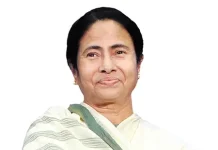
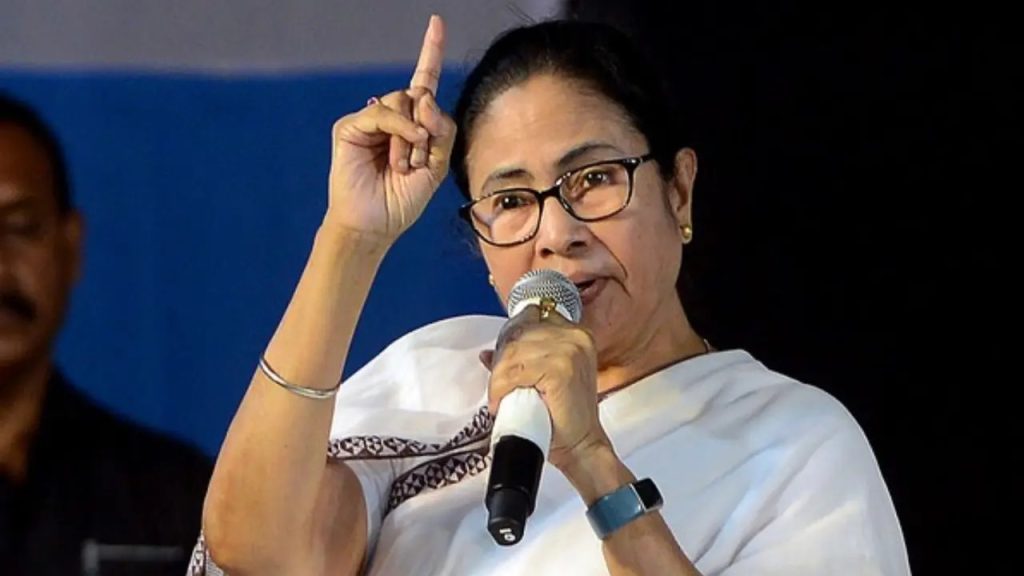
For the Trinamool Congress, the core strategy is continuity with refinement. Mamata Banerjee’s leadership remains central, not just as Chief Minister but as a symbol of resistance—against the Centre, against what the party portrays as “outsider domination,” and against ideological homogenisation. The TMC campaign is expected to lean heavily on welfare politics combined with cultural assertion. Schemes aimed at women, the poor, and marginalised communities are not merely administrative tools; they are political bonds, designed to convert state support into voter loyalty.
Women voters, in particular, form the backbone of TMC’s electoral confidence. Direct cash assistance, doorstep delivery of services, and constant physical visibility of the government have created a perception—carefully nurtured—that the state stands with ordinary households in their daily struggles. In a polarised contest, such tangible benefits often override abstract ideological appeals.
Alongside welfare, TMC’s second pillar is Bengali identity. Language, culture, historical pride, and regional autonomy are being framed as political assets under threat. The party’s messaging is clear and emotionally calibrated: Bengal’s social harmony, pluralism, and cultural distinctiveness must be protected from what it describes as aggressive centralisation and cultural imposition. This is not a new argument, but in 2026 it will be sharper, more personalised, and more relentlessly repeated.
Yet incumbency brings its own risks. After years in power, TMC faces localised resentment—allegations of corruption, organisational arrogance in certain districts, and fatigue among sections of the electorate. The party is acutely aware that complacency would be fatal in a bipolar contest. That is why its preparation is focused not just on grand rallies, but on micro-management: repairing local units, managing candidate selection carefully, and preventing internal sabotage.
The BJP, on the other hand, is entering Bengal 2026 with a different kind of confidence—one drawn from national momentum. Recent electoral successes in multiple states, including decisive victories where the BJP has emerged as the central pillar of governance, are being used as psychological reinforcement. The message to cadres is simple: history is moving in one direction, and Bengal cannot remain an exception forever.
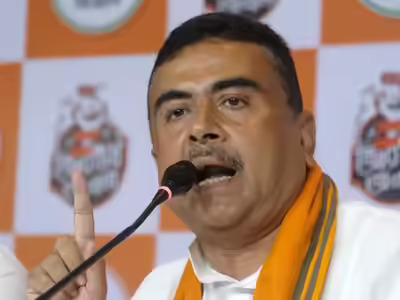
The BJP’s Bengal strategy is unapologetically confrontational. Polarisation is not a by-product; it is the centrepiece. The party aims to consolidate Hindu votes across caste and class lines by projecting itself as the sole defender of cultural security and political dignity. Issues related to demography, border management, illegal migration, and religious appeasement are expected to dominate BJP’s narrative space.
This approach is risky—but calculated. In a straight fight against a strong regional party, ideological consolidation becomes a shortcut to numerical strength. The BJP leadership believes that if Hindu voters can be mobilised with sufficient emotional intensity, traditional welfare loyalties can be weakened, and new voting coalitions can be engineered.
At the same time, BJP understands that rhetoric alone will not win Bengal. Its earlier electoral breakthroughs, particularly in 2019 and 2021, were driven by organisational expansion—booth committees, disciplined cadre networks, and aggressive campaigning. The challenge now is sustainability. Maintaining enthusiasm over multiple cycles, preventing defections, and translating vote share into seats are far more complex tasks.
A critical sub-theme in the run-up to 2026 is the battle over electoral legitimacy itself. Voter roll revisions, scrutiny of entries, and administrative processes have already become political flashpoints. For TMC, these exercises are framed as attempts to disenfranchise genuine voters and destabilise the social fabric. For BJP, they are presented as necessary corrections to ensure fairness and prevent manipulation. In a highly charged atmosphere, even procedural steps risk becoming catalysts for street-level mobilisation.
This environment ensures that the 2026 election will not be a calm or technocratic exercise. It will be emotional, confrontational, and deeply polarised. Campaign language will be sharp, symbolism will be amplified, and every incident—local or national—will be weaponised for political gain.
The larger question, however, is whether Bengal’s democracy benefits from such extreme bipolarisation. When elections become referendums on identity rather than evaluations of governance, policy debates shrink, and issues such as jobs, industrial revival, urban infrastructure, education reform and healthcare are drowned out by louder, simpler narratives of “us versus them”, the state cannot be expected to gain. Bengal, with its rich intellectual and political heritage, deserves a higher standard of democratic discourse.
The way forward, therefore, demands responsibility from both sides. TMC must recognise that long rule cannot be justified by identity alone; accountability and institutional reform are essential to retain moral authority. BJP must acknowledge that governance credibility, not just ideological mobilisation, is necessary to convert national ambition into state-level acceptance. And electoral institutions must act with transparency and consistency, so that the eventual verdict—whatever it may be—is accepted as legitimate by all.
In conclusion, West Bengal 2026 is shaping up as one of the most consequential Assembly elections in contemporary India. The fight between Trinamool Congress and Bharatiya Janata Party will be relentless, strategic, and deeply polarising. The BJP will attempt to turn the election into a state-wide ideological consolidation, riding on national momentum and assertive identity politics. The TMC will counter with welfare delivery, cultural pride, and the projection of itself as Bengal’s protective shield.
The outcome will not hinge on a single wave or one dramatic event. It will be decided in hundreds of close contests, shaped by micro-alliances, emotional narratives, and organisational discipline. As the new year sets the tone, one thing is certain: Bengal is heading into a political storm where every vote will matter—and the future direction of the state will be rewritten.
(The author is Editor, STAR Views & Editorial Advisor, Top Story)