For much of this winter, snow eluded Kashmir, barring occasional spells on higher reaches. January, traditionally the Valley’s coldest and most reliable snow month, arrived instead with dry air and alarmingly empty skies. By mid-month, official data confirmed the scale of the crisis: Jammu and Kashmir had recorded a 96 per cent rainfall deficit, receiving just 1.4 mm of precipitation between January 1 and January 14, against a normal of 33.3 mm, according to the India Meteorological Department (IMD).
Then, finally, the snow came.
Late but decisive, fresh spells of snowfall across Kashmir’s plains and higher reaches in the closing phase of Chillai Kalan, the harshest winter period, have altered the season for the better. Not only have fears of an impending water crisis eased but also reigniting tourism confidence after months of uncertainty triggered by security concerns, floods, and climate volatility.
The Meteorological Department (MeT) earlier said the Jammu and Kashmir meteorological subdivision recorded a 39 per cent rainfall deficit between October 1 and December 31, 2025, a continuation of a troubling trend. In recent years, most winters in the Valley have remained largely dry, barring 2019–20, which saw adequate snowfall. The delayed arrival of winter precipitation this year sharpened concerns across sectors that depend on snow — from agriculture and hydropower to tourism.
Director of the India Meteorological Department (IMD), Srinagar, Mukhtar Ahmad, described the recent snowfall as significant. He said the Kashmir Valley, particularly the higher reaches, received significant snowfall during Chillai Kalan.
Ahmad said the rainfall deficit in the Valley has now reduced to around 31 per cent. “More spells are expected in the coming days. We will have to see how the situation evolves,” he said, adding that rainfall deficit levels in the Jammu division have reduced to near-normal following recent rain.
Crucially, the snowfall has revived confidence around water security. Ahmad said it would allay fears of water scarcity during the summer months, as the fresh snow has rejuvenated water bodies and glaciers, a vital buffer after last year’s unprecedented heat, when both maximum and minimum temperatures reached record highs, deepening a water crisis in urban and rural areas.
Tourism breathes again
For the tourism sector, battered by the April 22 Pahalgam terror attack, subsequent floods, and a snowless early winter, the belated snowfall has been nothing short of a reset.
Chief Minister Omar Abdullah, speaking last week, said the recent snowfall would benefit tourism, as visitors had been eagerly awaiting snow in the Valley. He also warned what might have followed had the skies remained dry. “If we had not received this snow, there would have been a very severe shortage of water during the summer,” Omar said.
On the ground, the shift is visible. From Dal Lake to Gulmarg, from Pahalgam to Sonamarg, hotels are filling, enquiries are returning, and confidence is cautiously resurfacing.
Qamar Sajad, Director of Tourism Kashmir, said that the turnaround reflects more than weather alone. “We are witnessing a steady rise in tourist footfall, and that is because everyone, from shikara operators to hoteliers and from the government to ground-level workers, has played their part,” he said. “This is not just about snowfall, but about the spirit of people who have worked tirelessly to make Kashmir shine. The government and stakeholders together have made tourism breathe again.”
Houseboat owners, among the hardest hit during prolonged slumps, are seeing movement once more. Manzoor Pakhtoon, Chairman of the Houseboat Owners Association Kashmir, said: “We are getting queries again. After the recent snowfall and New Year rush, tourists have started showing interest. We expect a good summer season ahead if this continues.”
In Gulmarg and Sonamarg, the impact has been immediate. Mushtaq Chaya, Chairman of the J&K Hoteliers Club, said over 70 per cent of hotels in Gulmarg and nearly 75 per cent in Sonamarg are booked. “The snowfall has built trust again. People are coming back in numbers,” he said. “Visitors are focusing on Gulmarg, enjoying skiing and the snow rides. But we hope the government opens more destinations soon, so the benefits spread evenly.”
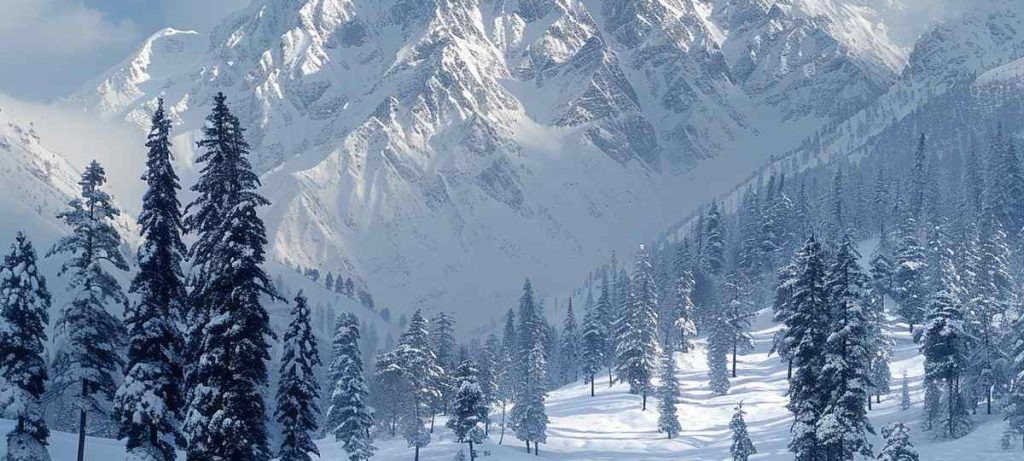
Hotelier Riyaz Ahmad from Pahalgam echoed the sentiment: “We have been full for two weeks now. Guests are waking up to the sight of snow-covered pine trees and calling it a dream. Many are extending their stays, and some do not want to leave at all.”
A fragile recovery, backed by policy
The snowfall arrives at a critical juncture. According to Lieutenant Governor Manoj Sinha, Jammu and Kashmir recorded 1.61 crore tourist visits in 2025 up to November, a decline from 2.36 crore visits last year, but one that he described as resilient given the year’s disruptions.
“Known as the ‘Paradise on Earth’, Jammu and Kashmir recorded 1.61 crore tourist visits in 2025 up to November. While this figure is lower than last year’s 2.36 crore visits (a 32 per cent decline), considering the adverse impact of the Pahalgam incident in April and subsequent floods, sustained and focused efforts of the government have yielded encouraging and resilient outcomes,” Sinha said.
Tourism, he noted, occupies a pivotal position in the UT’s economy and was granted industry status in 2020 to attract investment. The government has identified nine new tourist destinations, is developing the Kashmir Marathon as a flagship sports tourism initiative, and is positioning the region for wellness and experiential travel.
At the global level, Jammu and Kashmir has stepped up promotion. At FITUR 2026 in Madrid, the Tourism Department showcased the region through Virtual Reality experiences, traditional arts and crafts, and curated cultural engagements, while senior officials held meetings with global tour operators and media to rebuild confidence and partnerships.
Climate uncertainty remains
Yet, beneath the optimism lies a deeper vulnerability. Kashmir has witnessed increasingly erratic weather patterns, prolonged dry spells punctuated by intense rainfall events. Winter precipitation has declined due to fewer western disturbances, and the reliance on a narrow snowfall window has made every delayed storm a source of anxiety.
The IMD’s January data — 96 per cent below normal rainfall — served as a stark reminder that the Valley’s water, food, and tourism security remains closely tied to climate volatility.
Fruit growers understand this better than most. “We have witnessed this kind of snowfall after a long time. It will help boost apple production this year,” said Javid Ahmad, president of the Pulwama Fruit Association. For horticulture, timely snow is not a luxury but insurance — regulating soil moisture, pest cycles, and spring flowering.
Snow, symbolism, and survival
For tourists, the snowfall has restored the postcard image of Kashmir. Visitors in Srinagar spoke of luck and longing fulfilled. “This place is truly Heaven… Truly, Kashmir is Paradise,” one said. Another added, “It feels wonderful to be in Kashmir while snow is falling all around. People should definitely come and visit this beautiful place at least once.”
But for Kashmiris, snow carries a deeper symbolism, of balance restored, livelihoods revived, and seasons behaving as they should.
The belated snowfall may not erase the deficits of a warming climate or the scars of a turbulent year. But for now, it has given Kashmir something it desperately needed – time, momentum, and the possibility that winter, even when delayed, can still deliver.