While this spike in water levels may pose some flood risks, it also revealed a hopeful fact that what the Yamuna really needs to survive and thrive is not crores in rejuvenation schemes, but something much simpler — ‘aviral’ and ‘nirmal’ free and uninterrupted flow
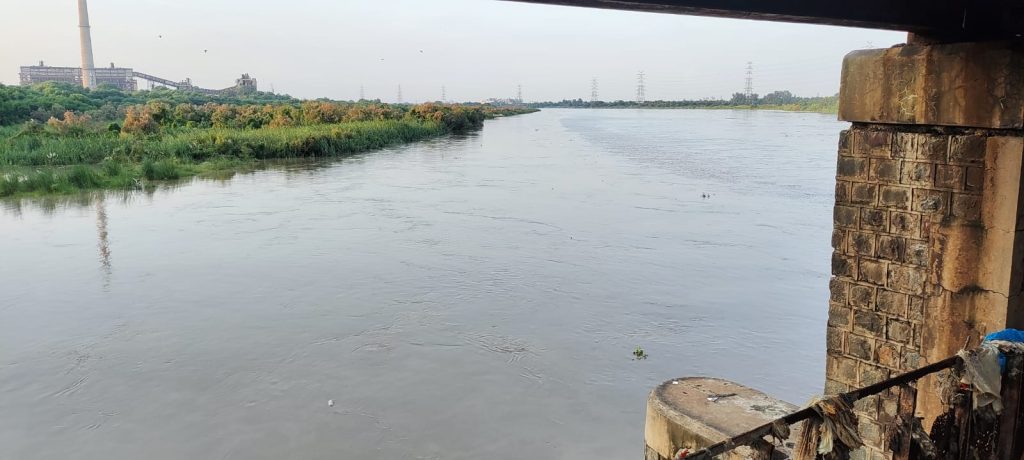
The Yamuna river surged past the danger mark for the second consecutive day on Monday, reaching 204.80 metres at the Old Railway Bridge. With all 18 gates of Haryana’s Hathnikund Barrage opened for the first time this monsoon season, officials warn that water levels may breach 206 metres by early August 19, the point at which evacuations begin, according to reports
While this spike in water levels may have posed flood risks, it also revealed a hopeful insight that what the Yamuna really needs to survive and thrive is not crores in rejuvenation schemes, but something much simpler — ‘aviral’ and ‘nirmal’ free and uninterrupted flow
A gasping river back to life, albeit briefly
As the late environmentalist Manoj Mishra of the Yamuna Jiye Abhiyan often said, floods prove that all the Yamuna needs is ‘aviral’ (continuous/uninterrupted) flow, not just funding.
The words ring true as one watches the river, even if temporarily, reclaims its form, a wider, cleaner, alive version. This flooding may have prompted red alerts, but it also washed away — and quite literally — industrial filth, sewage and neglect.
The sad part is that it takes a flood to remind the city of what the Yamuna once was, and could be again. Delhi’s elders recall swimming at ghats and rafting downstream, scenes unimaginable now amid stagnant black water choked with pollutants.
For decades, Yamuna has been reduced to a drainage canal, a sad casualty of urban sprawl, encroachment, and unchecked extraction for power, agriculture, and domestic use. With among the highest Biochemical Oxygen Demand (BOD) and faecal coliform counts in the country, it’s become a symbol of environmental failure. But the surge proves that when given space and flow, the river can still cleanse and regenerate.
A wake-up call for planners, policy makers
Perhaps, instead of throwing more money at cosmetic clean-up drives, planners and governments must address the root issue: restoring ecological flow, letting the Yamuna breathe and flow uninterrupted and untamed, especially during monsoon months
And it just might achieve more than any budgeted rejuvenation project ever has.
Today may be about flood management but it is also about reimagining the future of a city’s relationship with its river, the current crisis has offered the insight.