Climate change is one part but damage due to rains is also a story of apathy, poor planning
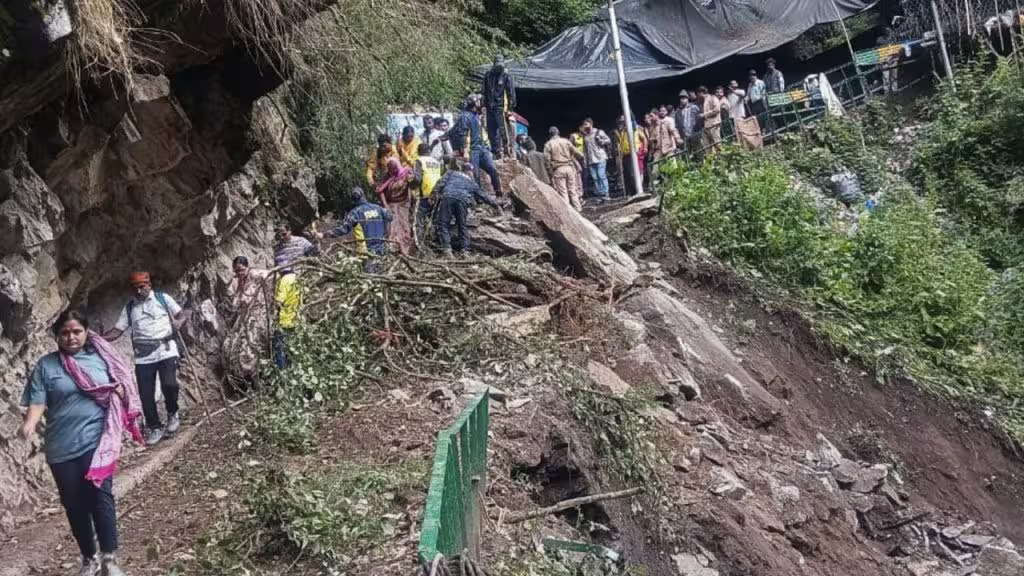
Rivers overflowing, infrastructure/highways/bridges collapsing, agricultural tracts inundated, homes and businesses destroyed and pilgrimage routes becoming perilous—the scale of the crisis and damage in Jammu and Kashmir, Himachal Pradesh and Uttarakhand and plains of Punjab is impossible to decipher at this moment but the situation has made one thing clear again—North India’s fragile relationship with its mountains, rivers and monsoon and the administration’s complete lack of preparedness to handle it.
The death toll in the Vaishno Devi landslide has gone up to 32 with rescuers pulling out more bodies from under the debris a day after disaster struck the route to the hilltop shrine in Jammu and Kashmir’s Reasi district on Tuesday, according to reports.
Expressing grief over the deaths in the Vaishno Devi landslide, J&K Chief Minister Omar Abdullah on Wednesday also asked why officials did not stop pilgrims from going on the track when there was a warning.
“We will have to talk about it later. When we knew about the weather, should we not have taken certain steps to save those lives? The weather warning had come to us a few days ago.”
“Why were these people on the track? Why were they not stopped? Why were they not moved to a safe place? This has to be discussed later. We feel sorrow over the loss of 29 to 30 precious lives,” he was quoted as saying.
While the yatra had been suspended on the Himkoti trek route since Tuesday morning, it was going on the old route till 1.30 pm when authorities decided to suspend it till further orders in view of the torrential rain, as per the reports.
Rains paralyse the region
The death toll in the Vaishno Devi landslide is up to 32 with rescuers pulling out more bodies from under the debris a day after disaster struck the route to the shrine in J&K’s Reasi district on Tuesday
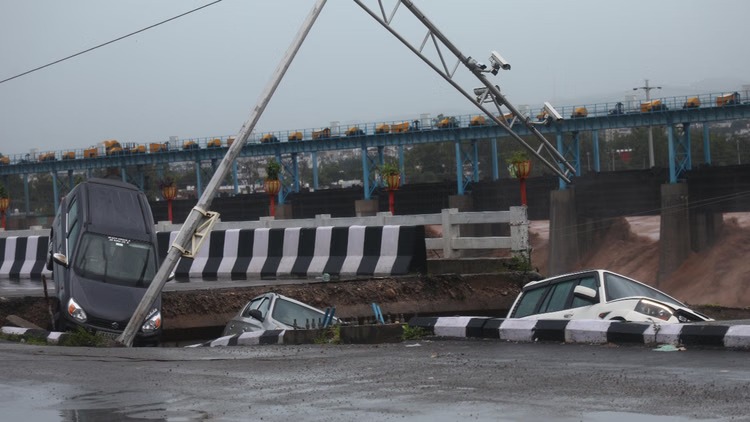
From temples and highways to homes and hotels and agricultural tracts, little was spared from the fury of the skies in the past couple of days.
Relentless rains, overflowing rivers and landslides paralysed life across Himachal Pradesh, Jammu and Kashmir and Uttarakhand with the impact spilling into Punjab and Haryana.
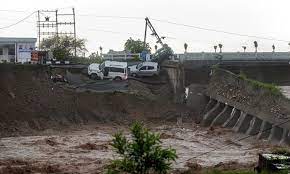
In Punjab, rains and release of surplus water from dams has inundated villages with entire stretches of farmland disappearing under sheets of water as swollen rivers surged into habitations.
Cloudbursts/rains are increasing
Tremendous amounts of rain falling in a short period of time over a concentrated area, cloudburst are causing chaos in mountainous parts of India and as well as neighbouring Pakistan.
According to a paper—‘Increased Summer Monsoon Rainfall over Northwest India Caused by Hadley Cell Expansion and Indian Ocean Warming’—published in August 2024, from 1979 to 2022, the summer monsoon precipitation has increased by a substantial 40% over Northwest India compared to the 1980s.
“The analysis suggests that a noticeable warming of the sea surface in the western equatorial Indian Ocean and the Arabian Sea could be causing this increase in rainfall. This warming strengthens the winds crossing the equator in the Indian Ocean and increases evaporation.
“The study also shows that the monsoon winds are strengthened due to the rapid warming of the Indian Ocean and the enhanced Pacific Ocean trade winds. These stronger winds cause more evaporation, which means more moisture is carried from the ocean to the land, leading to increased monsoon rainfall,” authors say
The main reason for the increase in cloudbursts is the amplified moisture content in the atmosphere, driven by climate change and coupled with the orographic effects of the mountainous terrain that force rapid condensation and release of that moisture.
Warmer air can hold more moisture, and warming oceans and rapidly melting glaciers contribute more water vapour to the atmosphere, leading to more intense monsoon winds.
When these moisture-laden winds encounter the steep mountain slopes of the Himalayas, the air rises rapidly, cools, and condenses, triggering sudden, heavy downpours, say experts
Recent calamities
Notably, the fresh episodes came barely days after one of the worst cloudburst-triggered floods in recent memory struck Chositi village in Kishtwar district on August 14 on the Machail Mata pilgrimage route. The entire village was devastated as torrents of mud and rock buried houses, pilgrims and livestock.
Earlier this month, Uttarakhand was shaken by a deadly flash flood in Dharali near Uttarkashi where a suspected cloudburst or glacial lake outburst swept away homes and hotels.
The crisis is not confined within India’s borders. Swollen rivers such as the Ravi, Sutlej and Chenab, flowing downstream into Pakistan, have forced authorities across the border to evacuate
But you cannot blame climate change every time
One can blame climate change but this is also a story of India’s missing climate plan, greed, poor planning and corruption.
Himalayas are young fold mountains that are still rising, making them prone to earthquakes, landslides, and avalanches.
Due to its location in a seismically active zone, the risk of earthquake-related hazards are always there.
What is adding to the fragility is climate change-induced glacial melting, altered rainfall patterns, and increased frequency of extreme weather events.
Adding further to it is the nonchalant way humans have been treating the precious natural resources. Deforestation, unplanned construction, unsustainable tourism practices are destabilising slopes, leading to soil erosion and landslides.
Besides, there also seems to be a certain nonchalance, both in public as well as those who are supposed to pre-empt such situations and stop loss of innocent lives. As Abdullah said—why officials did not stop pilgrims from going on the track when there was a warning.