
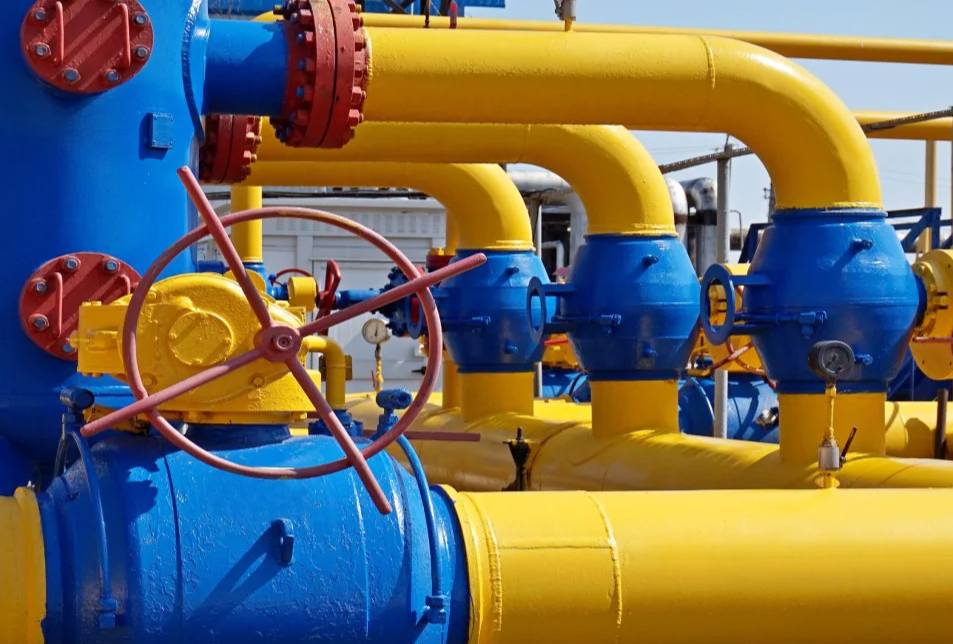
India’s Petroleum Ministry has issued a directive that could reshape how millions of households and businesses access cooking and fuel gas. Areas already connected to Piped Natural Gas (PNG) networks have been asked to transition fully to PNG or shift to LPG usage within a stipulated three-month window, failing which supply arrangements may be discontinued.
The move is being seen as part of a broader push toward rationalizing gas distribution and improving efficiency in the country’s energy ecosystem. Over the past decade, India has significantly expanded its City Gas Distribution (CGD) network, laying pipelines across urban and semi-urban regions to deliver PNG directly to homes and industries.
However, overlapping supply systems—where consumers maintain both LPG cylinders and PNG connections—have created inefficiencies in subsidy allocation, infrastructure usage, and demand forecasting. The latest directive aims to streamline consumption patterns and reduce duplication.
What is PNG?
Piped Natural Gas (PNG) is natural gas supplied to homes and commercial establishments through an underground pipeline network. It is primarily composed of methane (CH₄), a clean-burning fossil fuel.
PNG is not “manufactured” in the traditional sense. It is extracted from natural gas fields—either standalone gas reservoirs or associated with crude oil production. After extraction, it is processed to remove impurities like water, carbon dioxide, and sulfur compounds, making it safe for domestic and industrial use.
PNG vs LNG: What’s the Difference?
- PNG (Piped Natural Gas): Delivered through pipelines in gaseous form directly to consumers.
- LNG (Liquefied Natural Gas): Natural gas cooled to -162°C to convert it into liquid form for easier storage and transport.
LNG is typically imported via ships and then regasified at terminals before being fed into pipeline networks, eventually becoming PNG for end users.
Sources of PNG
India sources its natural gas from both domestic production and imports:
- Domestic fields like those operated by Oil and Natural Gas Corporation (ONGC) and private players
- Imported LNG from countries such as Qatar, Australia, and the United States
After regasification, LNG enters the national gas grid and is distributed as PNG.
PNG Connections
India has seen rapid growth in PNG adoption:
- Over 1.2 crore (12 million) PNG household connections have been established across the country
- The CGD network now spans hundreds of districts, with expansion ongoing
Then there is Pradhan Mantri Ujjwala Yojana (PMUY) which primarily focuses on providing subsidized LPG connections to economically weaker households.
- More than 9.5 crore LPG connections have been distributed under PMUY
- PNG connections are not directly subsidized under PMUY, as the scheme is LPG-focused
PNG Less Affected
PNG tends to be more stable compared to LPG during global oil shocks due to:
- Diverse sourcing of natural gas
- Long-term LNG import contracts
- Lower direct linkage to crude oil prices
In contrast, LPG prices are more directly influenced by international crude oil markets.
India is heavily reliant on LNG imports to meet its growing gas demand:
- Around 50–55% of consumption is met through LNG imports
- The country imports roughly 30–35 billion cubic meters (BCM) annually
Major import infrastructure is operated by companies like Petronet LNG.
Implications
For Consumers
- Households in PNG areas may need to choose between PNG and LPG
- PNG offers continuous supply without cylinder refills
For Government
- Better targeting of LPG subsidies
- Reduced duplication in welfare benefits
For Energy Sector
- Improved utilization of gas pipeline infrastructure
- Acceleration toward a gas-based economy