
Pilots’ body allege report “being driven in a direction presuming the guilt of pilots”, “kept in dark,” “report leaked”
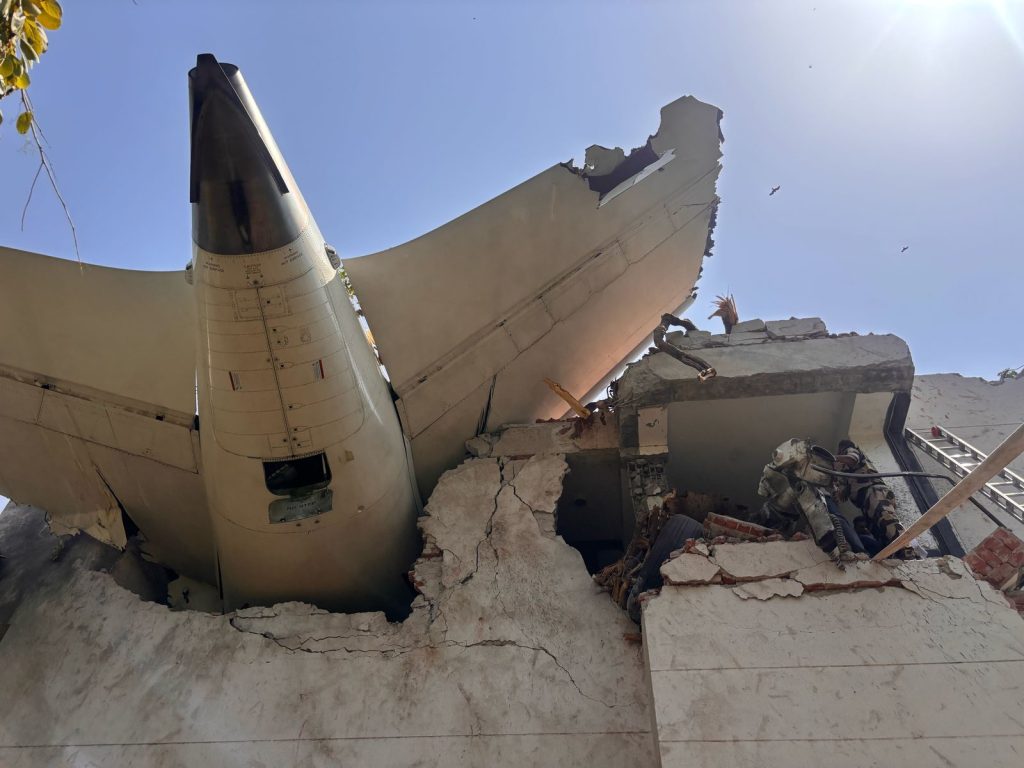
After the Aircraft Accident Investigation Bureau (AAIB) submitted its preliminary report on Boeing Dreamliner 787-8 that crashed last month killing 260 people, the US Federal Aviation Administration and Boeing also privately issued notifications that the fuel switch locks on Boeing planes are safe. The AAIB report and the FAA’s Continued Airworthiness Notification on July 11, have raised the heckles of Indian pilots, who now feel that the attempt is to hold pilots of the ill-fated aircraft responsible for Air India plane crash in Ahmedabad
Raising concerns over the AAIB report, the Airline Pilots’ Association of India (ALPA) alleged that the investigation seems to assume that the pilots were responsible for the accident. ALPA president Sam Thomas criticised the investigation, saying that it is “being driven in a direction presuming the guilt of pilots”.
“We are once again surprised at the secrecy surrounding these investigations… The tone and direction of the investigation suggest a bias towards pilot error… ALPA India categorically rejects this presumption and insists on a fair, fact-based inquiry,” according to the statement.
Notably, the preliminary investigation also did not point to problem with the Boeing 787 Dreamliner or its GE Aerospace engines
The crash was linked to the inadvertent movement of engine fuel control switches.
The report posted on June 12 on the AAIB website says “In the cockpit voice recording, one of the pilots is heard asking the other why did he cutoff. The other pilot responded that he did not do so.”
Quoting FAA December 2018 notification, AAIB said “all applicable Airworthiness Directives and Alert Service Bulletins were complied on the aircraft as well as engines” and that “there has been no defect reported pertaining to the fuel control switch since 2023 on VT-ANB”
“The FAA issued a Special Airworthiness Information Bulletin (SAIB) No. NM-18-33 on December 17, 2018, regarding the potential disengagement of the fuel control switch locking feature. This SAIB was issued based on reports from operators of Model 737 airplanes that the fuel control switches were installed with the locking feature disengaged.
“The airworthiness concern was not considered an unsafe condition that would warrant airworthiness directive (AD) by the FAA. The fuel control switch design, including the locking feature, is similar on various Boeing airplane models including part number 4TL837-3D which is fitted in B787-8 aircraft VT-ANB.
“As per the information from Air India, the suggested inspections were not carried out as the SAIB was advisory and not mandatory. The scrutiny of maintenance records revealed that the throttle control module was replaced on VT-ANB in 2019 and 2023. However, the reason for the replacement was not linked to the fuel control switch. There has been no defect reported pertaining to the fuel control switch since 2023 on VT-ANB,” according the report
VT-ANB is the registration of Air India’s B787-8 aircraft bearing registration.
VT is the registration prefix for aircraft in India
US aviation safety regulator FAA has also written to its counterparts around the world acknowledging the preliminary findings and informing them that the report has “found no urgent safety concerns” related either to the engines or airplane systems of the Boeing 787-8, according reports
Report “leaked”
What is further adding to their angst is that the report putting focus on pilots’ actions and plane’s fuel switches.
ALPA also cited a Wall Street Journal article dated July 10, claiming that the crash was linked to the inadvertent movement of engine fuel control switches and questioned how this sensitive detail reached the press. “We are surprised that a document so crucial has been given to the media without any responsible person signing it,” it said.
Calling the situation deeply troubling, ALPA criticised the AAIB for releasing documents without official signatures and called for immediate reform. “Investigations continue to be shrouded in secrecy, undermining credibility and public trust. Qualified, experienced personnel—especially line pilots—are still not being included in the investigation team,” the statement further read.
The fuel switch theory
Fuel switches are located immediately behind the throttle levers, between the two pilots’ seats on the centre pedestal.
There are two engines, each having its own switch and two positions—RUN when fuel flows to the engine and CUT OFF when fuel supply is stopped.
They are guarded by brackets and feature a spring-loaded locking mechanism, meaning that to move a switch from RUN to CUTOFF, the pilot must lift the switch over a metal stop before sliding it, making accidental activation unlikely.