India, it seems, never really exits election mode. The upcoming electoral cycle is geographically diverse but politically interconnected, as every state election now carries national consequences. It’s a Digital Battlefield where smartphones have become the new campaign arena. The fight for attention is as important as the fight for votes. Youth & First-Time Voters are the New Decisive Bloc.
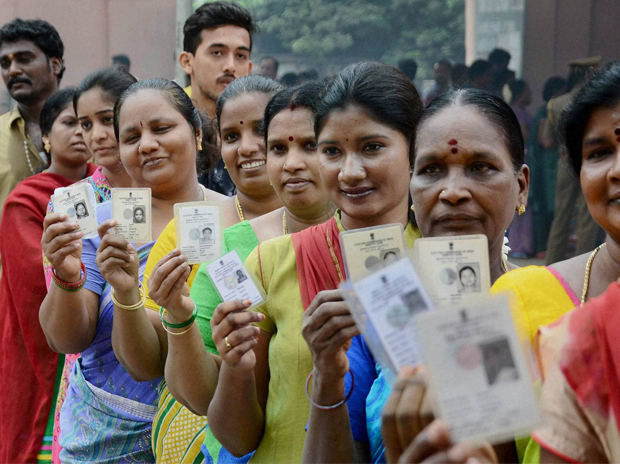
As elections in West Bengal, Kerala, Tamil Nadu, Assam, and Puducherry approach, women voters are expected to play a pivotal role in shaping the outcomes. Their participation and voting preferences are increasingly seen as a powerful force in determining election results, often tipping the balance in tightly contested constituencies.
In these regions, political parties are tailoring their campaigns to meet the demands and aspirations of women, who are no longer just passive participants but are becoming decisive voters in shaping the political narrative.
Across West Bengal, Kerala, Tamil Nadu, Assam and Puducherry, women voters have moved from the margins to the centre of electoral politics. Recent data from both Assembly elections (2021) and the 2024 Lok Sabha polls show a clear trend: women are not only voting in large numbers, but in many cases outvoting men and reshaping outcomes.
In West Bengal, Mamata Banerjee’s core vote bankcomprises over3.3 crore (around 49% of electorate). During 2021 Assembly elections the women turnout was between 71–72%, slightly higher than men . in 2024 Lok Sabha elections, the women turnout crossed 83% in some phases, among the highest in India.
West Bengal is perhaps the clearest example of women as a decisive political constituency. In 2021, women voters are widely believed to have played a crucial role in returning Mamata Banerjee to power despite a highly polarised contest.
Her government has aggressively targeted women through: Kanyashree Prakalpa (Rs. 8,000+ crore cumulative outlay; benefits to 60+ lakh girls), Rupashree(Rs. 25,000 for marriage support) and Lakshmir Bhandar (Rs. 500–Rs.1,000 monthly cash transfer; one of India’s largest DBT schemes for women). These schemes directly impact household economics, explaining why women voters often diverge from family voting patterns and back welfare continuity.
The state of Kerala shows high participation and high awareness. Women voters are about 51.5%(among the highest in India). Inthe2021 Assembly elections, the turnout of women voters was 85.5 per cent, which was higher than that of men. In the 2024 Lok Sabhaelections, women again matched or slightly exceeded male turnout.
Kerala represents a mature women’s electorate—high literacy, strong political awareness, and independent decision-making. The key driver has been the Kudumbashree Mission (Rs. 2,000+ crore ecosystem): 45 lakh women in SHGs. Women voters were crucial in the Pinarayi Vijayan-led government’s rare re-election in 2021. Their voting is less identity-driven and more policy-driven, focusing on: Healthcare and social security pensions.
In Tamil Nadu, too, welfare politics is anchored in women. There are 3.2 crore women voters, which is 50 per cent of the total voters. In the 2021 Assembly elections, the turnoutof womenvoters was80.7%, which washigher than that of men. In the 2024 Lok Sabhaelections, the women turnout remained strong; the state saw a near sweep by the DMK alliance.
Tamil Nadu has a long tradition of women-centric welfare politics, dating back to leaders like J. Jayalalithaa. Key schemes include free bus travel for women (Total outlay Rs. 1,200–Rs. 1,500 crore annually). Kalaignar Magalir Urimai Thogai (Rs. 1,000/month; massive Rs. 7,000+ crore yearly outlay)
Women voters played a decisive role in the DMK’s 2021 victory, backing welfare expansion and economic support schemes. Their voting behaviour strongly reflects household budgeting concerns.
In Assam, women voters outvote men. There are 1.1–1.2 crore(48%) women voters. In the 2021 Assembly elections, women’s turnout exceeded men’s by0.4 percentage points. The trend continued in the 2024 Lok Sabha elections, and the State came out as among the highest female turnout in India (85% in phases).
Assam is a striking case where women consistently vote more than men, yet remain underrepresented politically. Key scheme is Orunodoi Scheme (Rs. 1,250/month DBT; Total outlay Rs. 4,000+ crore annually)
Women voters were instrumental in helping the BJP retain power in 2021, particularly in rural and low-income households where direct cash transfers matter most.
Puducherry has the highest share of women electors, which is 53% of the electorate (highest in India). In the2021 Assembly elections, the turnoutof women was over74%. The 2024 Lok Sabhahad shown continued high female participation. Puducherry stands out not just for turnout but for gender composition—women outnumber men. The key welfare schemes include free bus travel, welfare pensions, and targeted subsidies for women-led households In a small UT with tight contests, even minor shifts in women’s voting patterns can decisively swing results.
The X-Factor: Why Women Decide Elections? Across all five states and one UT, three clear patterns emerge: higher turnout, higher influence, women now equal or exceed men in turnout in many states. Nationally, women’s turnout is nearly at par with men (65.7% vs 65.8% in 2024) . Women voters respond strongly to: Direct cash transfers, Food security, Healthcare, and Transport and mobility.
Women have independent voting behaviour. They are no longer tied to family voting patterns. Their choices are shaped by: Access to welfare, Safety and mobility,andHousehold economics.
The Silent Swing Bloc
In West Bengal, Kerala, Tamil Nadu, Assam, and Puducherry, women voters have become the decisive swing factor—not loud, not always visible, but deeply influential.
From Mamata Banerjee’s welfare politicsto Assam’s cash transfer schemes and Tamil Nadu’s subsidy model, one reality stands out:
Elections are increasingly being won not just in rallies—but in kitchens, households, and among women voters making independent political choices.