By Charanjit Ahuja
In a landmark 6–3 ruling, the Supreme Court of the United States has struck down former President Donald Trump’s sweeping “emergency” tariffs, holding that he exceeded his statutory authority by invoking emergency economic powers to impose broad import duties. The judgment is more than a domestic constitutional rebuke. It recalibrates the balance of power in U.S. trade policy, injects fresh uncertainty into global commerce, and carries important implications for India.
At the heart of the dispute was the use of the International Emergency Economic Powers Act (IEEPA), a 1977 law designed to empower presidents to respond swiftly to genuine national emergencies — typically through sanctions, asset freezes or restrictions on financial transactions.
The Court’s majority concluded that IEEPA does not explicitly authorize the imposition of tariffs. Tariffs, in constitutional terms, amount to taxes, and taxation authority rests primarily with Congress. Expansive use of emergency powers to restructure trade policy triggers what American jurisprudence calls a “major questions” concern — requiring clear legislative approval.
In effect, the Court has drawn a bright constitutional line: presidents cannot rely on general emergency statutes to unilaterally redesign U.S. trade architecture.
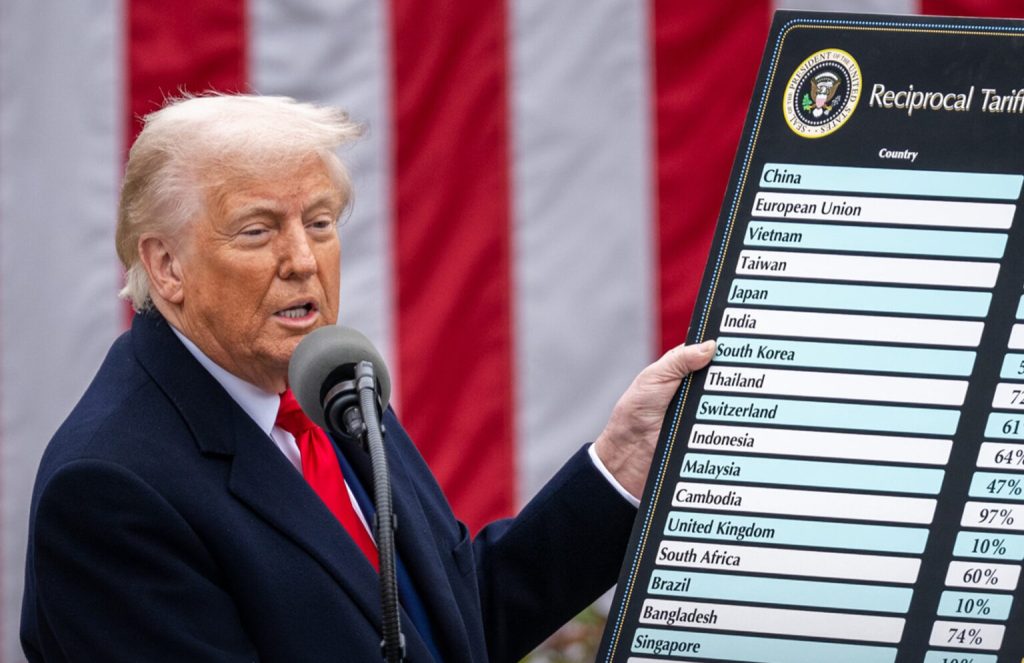
President Trump reacted sharply, calling the ruling disappointing and asserting that alternative legal routes remain available. He subsequently announced a 10% global tariff for 150 days, reportedly relying on Section 122 of the Trade Act of 1974, which allows temporary safeguard measures without prior congressional approval.
This new approach differs in two critical ways: It is uniform, applying equally to all trading partners. It is time-bound — beyond 150 days, congressional consent would be necessary.
While narrower than the previously struck-down emergency tariffs, the move signals that tariff activism remains central to Trump’s trade strategy.
Impact on India
Tariff compression — from uncertainty to uniformity, and for Indian exporters, the most immediate shift is structural. Earlier reciprocal tariffs had created a patchwork of rates — some considerably higher than standard Most-Favoured-Nation (MFN) levels. The Court’s intervention effectively wipes out those differentiated emergency duties.
Under the newly announced 10% global tariff regime, India faces: a flat 10% temporary duty (in addition to baseline MFN tariffs). This has resulted in greater predictability compared with fluctuating reciprocal rates.
For sectors such as textiles, engineering goods, auto components, chemicals and certain pharmaceuticals, this uniform structure may reduce pricing volatility and contract risk in the short term.
The recent ruling of the Supreme Court of the United States striking down former President Donald Trump’s emergency tariffs has not only reshaped American trade law — it has also directly affected India’s diplomatic calendar.
In a significant development, the Government of India has put on hold the scheduled visit of its trade negotiation team to Washington, pending greater clarity on the U.S. tariff regime. The move reflects caution, not confrontation — and signals how deeply legal uncertainty in the U.S. is influencing bilateral economic engagement.
Trade negotiations are built on predictability. When tariff structures are unclear or subject to judicial reversal, it becomes difficult to lock in meaningful concessions.
India’s decision to defer the visit appears driven by three practical considerations: The Supreme Court’s ruling invalidated broad emergency tariffs imposed under the International Emergency Economic Powers Act. However, President Trump has responded with a temporary 10% global tariff for 150 days under a different statutory provision.
From India’s perspective, negotiating market access terms while one tariff framework has just been struck down, another temporary regime is in place, and congressional approval may be required for permanence, would risk entering commitments against a moving legal backdrop.
The 150-day global tariff is, by design, provisional. Any agreement structured around this rate could become obsolete if Congress modifies the tariff, the administration alters its strategy, or further litigation reshapes executive authority again.
The court’s ruling arguably strengthens India’s hand. If sweeping executive tariffs face constitutional limits, the U.S. may need more durable, congressionally backed agreements. India, therefore, has little incentive to rush negotiations under temporary uncertainty.
Importantly, the pause does not signal a breakdown in relations. President Trump has publicly stated that existing arrangements with India remain unchanged and that there are no immediate plans to renegotiate standing understandings. That reassurance helps prevent market panic, but it does not eliminate the need for clarity.
The postponed visit suggests that talks are delayed, not abandoned, and India is recalibrating its strategy. Technical-level consultations may continue virtually, and formal high-level negotiations will resume once tariff architecture stabilises.
The pause creates a short window of watchfulness: Exporters must factor in the temporary 10% tariff. Long-term pricing and supply contracts may remain cautious. Sector-specific concessions under discussion may face a delay.
Industries such as textiles, auto components, pharmaceuticals, chemicals, and engineering goods — all sensitive to U.S. tariff changes — will likely adopt a wait-and-see approach until negotiations resume.
India’s decision reflects broader diplomatic discipline. It has consistently preferred predictable, rule-bound trade frameworks over sudden unilateral shifts. The Supreme Court ruling reinforces the importance of statutory backing in U.S. trade commitments.
By postponing the delegation visit, India avoids appearing reactive to short-term political developments in Washington. Instead, it signals that serious economic partnerships require stable legal foundations. The judgment has effectively rebalanced U.S. trade authority toward Congress. Any future large-scale tariff structure may require legislative endorsement. That could lead to slower but more durable agreements — something India may view as advantageous.
India’s trade team is expected to reschedule its Washington visit. In fact, the pause may ultimately strengthen negotiations by ensuring that both sides engage under clearer parameters. In fact, India’s decision to put its trade delegation visit on hold should not be interpreted as friction in bilateral ties. Rather, it reflects pragmatic statecraft.
The Supreme Court’s ruling has triggered a constitutional and policy reset in the United States. Until that reset crystallises into a stable tariff framework, India appears unwilling to anchor trade concessions to uncertain foundations. In diplomacy — as in commerce — timing matters. By choosing patience over haste, India is signalling that the future of India–U.S. trade will be negotiated not in turbulence, but on firmer legal ground.
However, Indian firms that paid elevated duties under the now-invalidated regime may explore refund claims. However, such processes could be prolonged, involving U.S. customs authorities and potential litigation.
Thus, while the judgment offers policy clarity, it may generate compliance and cash-flow complications for exporters in the interim.
Bilateral Trade Arrangements
President Trump has stated that existing trade arrangements with India remain intact and that there are no immediate plans to renegotiate agreed frameworks.
This suggests that ongoing sectoral understandings remain operational. Negotiated concessions already in place are not automatically voided. Bilateral dialogue continues, albeit against a shifting legal backdrop.
However, the Court’s ruling alters the negotiating environment. Any future tariff concessions or escalations will now need clearer statutory grounding in U.S. law, making executive-driven unpredictability harder, though not impossible.
The judgment subtly strengthens India’s bargaining position. If unilateral executive tariffs face legal scrutiny, Washington may rely more heavily on: Congress-backed trade arrangements, sector-specific negotiated accords, and structured bilateral frameworks.
For India, this reduces the risk of abrupt policy reversals based purely on executive discretion. India can now argue for: rules-based tariff commitments, clearer dispute-resolution mechanisms, and long-term predictability embedded in statute rather than executive order.
This aligns with India’s broader trade diplomacy approach — incremental liberalisation paired with strategic autonomy.
The ruling reinforces Congress’s primacy in taxation and trade regulation. Future presidents — regardless of party — may find it more difficult to impose sweeping tariffs without legislative buy-in.
That does not eliminate protectionism, but it channels it through more formal political processes. For global markets, including India, legal clarity reduces systemic uncertainty. Uniform temporary tariffs are easier to model than unpredictable reciprocal escalations. Businesses can plan supply chains with greater medium-term confidence.
India, positioning itself as a reliable manufacturing and supply-chain partner amid global realignment, could benefit from a more rules-bound U.S. trade regime.
Future India–U.S. agreements may now be more narrowly sectoral, requiring congressional endorsement in the U.S, moving incrementally rather than through sweeping executive initiatives. This could slow headline-grabbing breakthroughs but enhance durability.
The Supreme Court’s ruling is not a simple victory or setback for India — it is a structural reset. In the short term, tariff uncertainty persists due to the 150-day global duty. Businesses must monitor potential legislative developments in Washington.
In the medium term, India gains negotiating space. Predictability improves relative to the earlier emergency regime. In the long term, a more constitutionally anchored U.S. trade policy may favour stable, negotiated partnerships over abrupt executive shifts.
For India — a rising economic power seeking dependable access to global markets — that structural predictability may ultimately prove more valuable than temporary tariff concessions. The episode underscores a broader truth: in global trade, legal architecture matters as much as economic strategy.
When we analyse why the US Supreme Court ruled against the tariffs, we find that the core legal issue was authority: The tariffs in question were imposed under the International Emergency Economic Powers Act (IEEPA) of 1977, which allows the president to regulate economic transactions in declared national emergencies.
The court’s majority held that IEEPA does not confer the power to impose import tariffs, because IEEPA’s text does not explicitly mention tariffs or duties. Tariffs are, fundamentally, taxes, and under the U.S. Constitution, such powers are reserved for Congress unless clearly delegated. Using a broad emergency law for economic trade policy, the court said, was a “major question” that required clear legislative backing.
Thus, most of the tariffs — especially broad “reciprocal” tariffs applied against many trading partners — were invalidated.
Rather than abandoning tariff policy, President Trump quickly invoked Section 122 of the Trade Act of 1974 to impose a temporary global tariff: A 10 % duty on imports from all countries (later floated to 15%), effective for 150 days without congressional approval.
Before the ruling, U.S. tariffs on Indian goods had fluctuated wildly: At one point, Indian exports faced reciprocal duties as high as 25 % or more, depending on product categories. An interim framework negotiated in early 2026 aimed to reduce those to around 18 % and restore duty-free access in key categories.
After the Supreme Court ruling, India’s exports currently face a flat 10 % global tariff in addition to the U.S. Most-Favoured-Nation (MFN) rate, reducing duties compared with earlier reciprocal tariffs. If Trump’s proposed 15% ceiling rate under Section 122 materializes, India’s effective duties would rise somewhat but remain lower and more predictable than under the old regime.
Why this matters is that heavy industries such as textiles, auto components, pharma, and engineering goods are sensitive to U.S. import taxes. Shift from high punitive tariffs to a uniform 10–15 % regime improves price competitiveness and planning certainty for Indian exporters.
Geopolitical Trade Dynamics
India’s trade ties with the U.S. have broader geopolitical dimensions: India is diversifying global supply chains and strengthening ties with Western markets. A predictable U.S. trade policy could make India a more attractive source for critical goods, especially in sectors like pharmaceuticals and electronics.
The ruling reduces some tariff-related uncertainty in global markets by undoing a patchwork of complex duties. This could help global trade sentiment improve, although the newly invoked temporary tariffs still create some ambiguity.
The Supreme Court’s judgment represents a major legal check on executive trading power and brings longer-term structural clarity to how the U.S. imposes tariffs. For India, the decision is a net positive in terms of predictability and negotiations, though the situation remains fluid: Short-term volatility persists due to temporary tariffs and evolving tariff rates. Medium-term opportunities may unfold if India and the U.S. can agree on a formal trade deal anchored in statutory tariff commitments. Long-term implications hint at a more rules-based U.S. trade posture, possibly benefiting stable partners like India.
In short, while the legal reset shook up existing arrangements, it also strengthens the case for negotiated frameworks and could ultimately enhance India’s export prospects in the world’s largest economy.