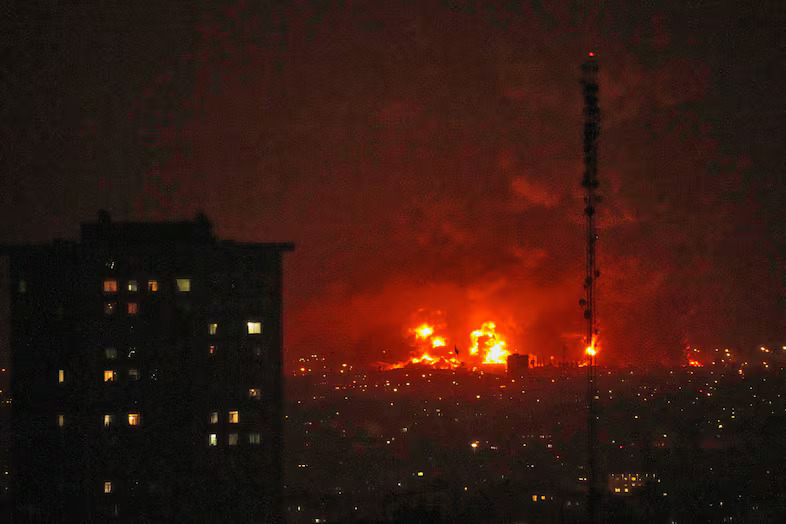
The intensifying confrontation involving Iran, Israel, and the United States has pushed West Asia into one of the most dangerous geopolitical moments of the past two decades. Military strikes, retaliatory attacks, rising oil prices, and disrupted air routes are sending shockwaves across the global economy. For countries, geographically distant from the battlefield, the crisis may appear remote. For India, however, the stakes are immediate and profound.
India’s energy security, the safety of millions of Indian workers in the Gulf, the stability of global markets, and the delicate balance of India’s foreign policy are all intertwined with developments in West Asia. As tensions escalate, New Delhi faces one of its most complex diplomatic dilemmas in recent years: how to protect national interests without alienating key global partners.
This conflict is not merely about regional rivalry or nuclear anxieties. It raises deeper questions about international law, the limits of military power, the role of global institutions, and the choices that middle powers like India must make in an increasingly polarized world.
West Asia has always been geopolitically volatile, but the current crisis marks a new phase of confrontation. Israeli strikes on Iranian targets, followed by escalating responses and American involvement, have dramatically heightened tensions across the region.
For Israel, Iran represents its most formidable strategic adversary. Israeli leaders have long argued that Iran’s nuclear ambitions pose an existential threat. Iran, for its part, views Israel as an occupying power and accuses the United States of attempting to dominate the region.
The United States has been drawn deeper into the crisis through its longstanding security partnership with Israel. Washington has repeatedly declared that it will not allow Iran to acquire nuclear weapons. However, the manner in which military actions have unfolded has sparked global debate about sovereignty, international law and the legitimacy of pre-emptive strikes.
In India, the Opposition has targeted the government for its silence and failure to condole the death of Iranian leader Ayatollah Ali Khamenei, Iran’s supreme leader, and of the bombings of hospitals and schools in Iran. Officials cite India’s stakes in the region. Now, Mojtaba Ali Khamenei, the slain Ayatollah’s ‘radical’ son who has just lost most of his family, has been chosen as the next Supreme Leader by Iran’s Assembly of Experts. Russian President Vladimir Putin has congratulated Iran’s new supreme leader, Mojtaba Khamenei, following his appointment. Putin said Mojtaba Khamenei would “carry forward and complete the work of his father”, referring to the late Iranian leader Ayatollah Ali Khamenei.
With all these developments, conflict is also spreading beyond the immediate battlefield. Armed groups aligned with Iran across the region—from Lebanon to Iraq and Yemen—have the capacity to widen the confrontation. Any escalation involving these actors could transform a localized conflict into a regional war.
For India and much of the world, the greatest fear is that the crisis may spiral out of control, triggering disruptions far beyond the Middle East.
Wars in energy-rich regions rarely remain confined to the battlefield. The Iran conflict is already sending tremors through global financial markets.
Stock markets across Asia and Europe have reacted nervously, reflecting fears that prolonged conflict could slow global growth. Investors are particularly concerned about the possibility of stagflation—a combination of rising prices and stagnant economic growth.
Such a scenario would be deeply troubling for emerging economies like India, which rely on stable global trade and investment flows.
The conflict also threatens supply chains for petrochemicals, fertilizers, and other products derived from oil and natural gas. These materials are essential for agriculture, manufacturing, and transportation. Any disruption could affect industries worldwide.
For Indian businesses, the implications are significant. Higher energy costs increase production expenses and reduce competitiveness. Industries such as aviation, shipping, chemicals, and transportation are especially vulnerable.
In navigating the Iran crisis, India must keep several strategic priorities in mind.
First is energy security. Ensuring stable and affordable access to oil and gas is essential for sustaining economic growth.
Second is the safety of Indian citizens abroad, particularly the large diaspora in the Gulf.
Third is the preservation of India’s diplomatic flexibility. As a rising global power, India benefits from maintaining constructive relations with multiple geopolitical blocs.
These priorities suggest that India should avoid taking extreme positions while actively promoting de-escalation.
India has long advocated principles such as peaceful coexistence, respect for sovereignty and non-aggression—ideas encapsulated in the doctrine of Panchsheel.
In the current crisis, India could use its diplomatic credibility to encourage dialogue and restraint.
As a country with relationships across competing geopolitical camps, India is uniquely positioned to serve as a bridge between different sides.
This does not mean acting as a formal mediator, but rather supporting diplomatic initiatives, engaging with regional actors, and encouraging multilateral solutions.
The harsh reality is that India cannot directly influence the military dynamics of the conflict. The major actors—the United States, Israel, and Iran—will ultimately determine the course of events. The opposition is quick to pick holes and allege that the PM has been “compromised”.
However, India can shape the diplomatic narrative and advocate a balanced approach rooted in international law and pragmatic interests.
New Delhi must carefully calibrate its response—protecting its economic and strategic interests while avoiding entanglement in great-power rivalries.
In an increasingly polarized world, the ability to maintain strategic autonomy may prove to be India’s greatest asset.
The Iran conflict is more than a regional crisis. It is a test of the international order.
If the conflict escalates, the consequences could include a global energy shock, economic instability, and the erosion of international norms governing the use of force.
At a time when global institutions are already under strain, the world cannot afford another prolonged conflict in one of its most strategic regions.
For India, the challenge is to navigate this crisis with prudence and foresight—defending national interests while contributing to global stability.
In a world where geopolitical storms are becoming increasingly frequent, diplomacy, restraint, and strategic clarity are more essential than ever.
Oil Markets in Panic Mode
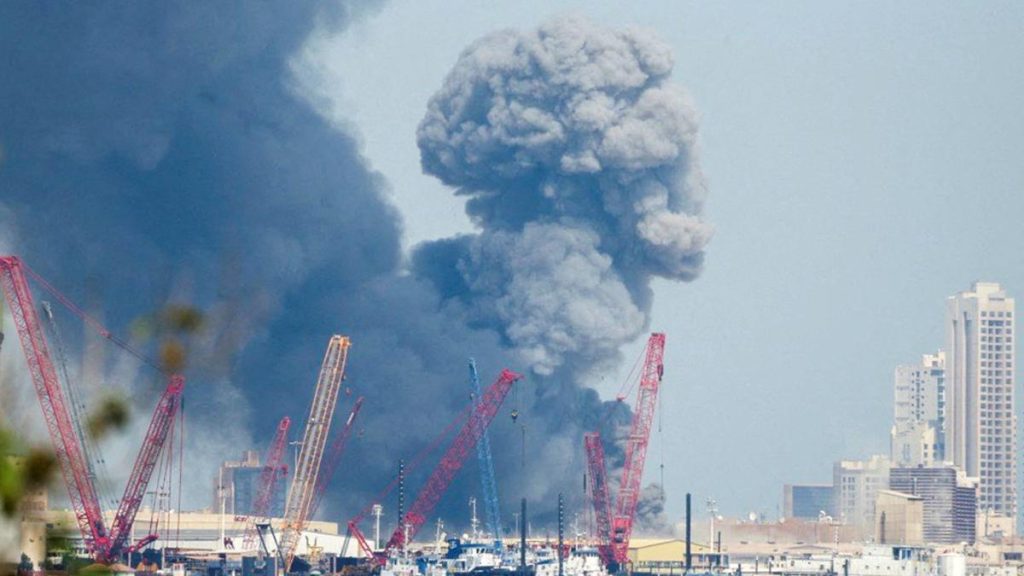
One of the most immediate global consequences of the conflict has been a sharp surge in oil prices. Energy markets are highly sensitive to geopolitical risk, particularly in West Asia, which produces nearly one-third of the world’s crude oil.
The conflict has raised fears that shipping routes or oil facilities could be targeted. In particular, the strategic Strait of Hormuz—a narrow waterway connecting the Persian Gulf to the Arabian Sea—has become a focal point of global concern. Nearly a fifth of the world’s oil supply passes through this corridor.
Even the possibility of disruption in the Strait has pushed oil markets into a state of panic. Prices have surged to levels not seen in several years, with analysts warning that sustained escalation could push them even higher.
For advanced industrial economies, higher oil prices translate into inflation and slower growth. For developing economies such as India, the impact can be even more severe.
India imports roughly 85 percent of its crude oil. Every spike in global prices increases India’s import bill and exerts pressure on the national budget. Higher fuel costs also drive inflation across the economy, raising the price of transportation, food, and manufactured goods.
The danger is not merely higher energy prices. If the conflict disrupts shipping in the Gulf or damages energy infrastructure, the global economy could face a supply shock reminiscent of the oil crises of the 1970s.
The crisis also intersects with another geopolitical challenge: India’s purchase of discounted oil from Russia following the war in Ukraine.
Since the conflict in Ukraine began, India has significantly increased its imports of Russian crude oil. The discounted prices have helped shield the Indian economy from volatile global energy markets.
However, Washington has been urging countries to reduce purchases of Russian energy. The United States has granted India a limited waiver allowing continued imports for a defined period.
This puts India in a difficult position. If it reduces Russian imports without securing alternative supplies, it risks higher energy costs. Yet continuing large-scale purchases could strain relations with Western partners.
The Iran crisis further complicates this equation by tightening global oil supply and pushing prices higher.
Disrupted Skies
The conflict has also severely disrupted aviation routes across West Asia. Airspace closures over multiple countries have forced airlines to reroute flights or cancel services altogether.
International carriers rely heavily on Middle Eastern air corridors connecting Europe, Asia and Africa. When these routes become unsafe, airlines must take longer and more expensive paths. This increases fuel consumption and operational costs.
For India, which serves as a major aviation hub linking the Gulf with Europe and Southeast Asia, these disruptions have immediate consequences. Flight cancellations and diversions have stranded thousands of passengers, including many Indian workers returning from or travelling to Gulf countries.
Airlines have had to suspend flights to several destinations and operate special evacuation services to bring stranded passengers home. The aviation industry—already struggling with rising fuel prices—faces additional financial stress as insurance costs for flying through conflict zones increase.
Beyond aviation, shipping routes across the Gulf are also under pressure. Tankers transporting oil and liquefied natural gas face heightened security risks, and insurance premiums for maritime transport have surged.
India’s stake in West Asia extends far beyond energy imports. The region is home to one of the largest overseas Indian communities in the world.
More than eight million Indians live and work across Gulf countries, including the United Arab Emirates, Saudi Arabia, Qatar, Kuwait, and Oman.
These workers play a crucial role in the Gulf economies, particularly in construction, services, and healthcare. At the same time, they send billions of dollars in remittances back to India each year.
These remittances represent one of the largest sources of foreign exchange for India and support millions of families across the country.
If the conflict escalates or spreads across the region, the consequences for this diaspora could be severe. Flight disruptions could strand workers. Economic instability in Gulf countries could affect employment. In a worst-case scenario, India might have to undertake large-scale evacuation operations similar to those conducted during earlier crises in West Asia.
Protecting the safety and livelihoods of this diaspora remains one of India’s most urgent concerns.
Diplomatic Tightrope
Amid this turmoil, India finds itself walking a delicate diplomatic tightrope.
New Delhi has neither openly condemned the military actions of the United States and Israel nor endorsed them. Instead, India has called for restraint and dialogue.
This cautious stance reflects the complexity of India’s relationships in the region.
India shares strong strategic and technological ties with Israel. Over the past three decades, Israel has become one of India’s most important defence partners.
At the same time, India maintains long-standing civilizational and economic links with Iran. Iran has historically been a significant supplier of oil to India and a key partner in regional connectivity projects such as the development of the Chabahar port.
India’s partnership with the United States has also deepened dramatically in recent years, encompassing defence cooperation, technology and trade.
Balancing these relationships requires careful diplomacy. A strongly worded condemnation of American or Israeli actions could strain strategic partnerships. Yet silence or perceived endorsement could undermine India’s traditional support for sovereignty and non-interference.
The Debate Over Sovereignty
The strikes on Iranian targets have reignited a fundamental debate in international politics: the legitimacy of pre-emptive military action.
Supporters of the strikes argue that preventing Iran from acquiring nuclear weapons is a matter of global security. Critics counter that attacking another country based on the presumption of future nuclear capability violates international law.
At the heart of this debate lies the principle of sovereignty—the idea that states should not violate the territorial integrity of other states.
Many countries have expressed concern about actions that bypass international institutions and undermine established norms. Yet only a few have openly criticized the United States, reflecting Washington’s influence in global politics.
For India, which has historically championed respect for sovereignty and non-interference, the situation raises difficult questions.
Should India oppose actions that breach these principles? Or should it prioritize strategic partnerships and geopolitical realities?
The Role of the United Nations
The crisis has also exposed the limitations of the United Nations in managing major international conflicts.
The UN was established after World War II to prevent global wars and provide a forum for diplomacy. Yet in many recent conflicts, powerful nations have acted unilaterally or through coalitions without UN authorization.
Critics argue that the UN has become ineffective, particularly because the five permanent members of the Security Council hold veto power.
However, abandoning the UN is not a realistic option. Despite its flaws, the organization remains the only universal forum where nearly all nations can engage in dialogue.
For countries like India, the UN continues to provide an important platform to advocate diplomacy, international law and peaceful resolution of disputes.
The challenge lies not in discarding the institution but in strengthening and reforming it to reflect contemporary geopolitical realities.
MEA Official Version
In the only statement issued by the Official Spokesman of the Ministry of External Affairs on the ongoing conflict in the West Asia region appears pragmatic, keeping in mind the national interests. It says, “We had expressed our deep concern at the commencement of the conflict in Iran and the Gulf region on 28 February, 2026. Even at that time, India had urged all sides to exercise restraint, avoid escalation, and prioritize the safety of civilians. Unfortunately, in the holy month of Ramadan, the situation in the region has deteriorated significantly and continuously. In recent days, we have not only witnessed an intensification of the conflict but also its spread to other nations. The destruction and deaths have mounted, even as normal life and economic activities come to a halt. As a proximate neighbour with critical stakes in the security and stability of the region, these developments evoke great anxiety.
There are almost one crore Indian citizens who live and work in the Gulf region. Their safety and well-being is of utmost priority. We cannot be immune to any development that negatively affects them. Our trade and energy supply chains also traverse this geography. Any major disruption has serious consequences for the Indian economy. As a country whose nationals are prominent in the global workforce, India is also firmly opposed to attacks on merchant shipping. Already, some Indian nationals have lost their lives or are missing as a result of such attacks in the last few days.
In this background, India strongly reiterates its call for dialogue and diplomacy. We raise our voice clearly in favour of an early end to the conflict. Already, many lives have been regrettably lost, and we express our grief in that regard.
Indian Embassies and Consulates in the affected countries remain in close touch with Indian nationals and community organizations, issuing regular advisories as appropriate. They have also extended all possible help to those stranded by the conflict. The Embassies and Consulates will continue to be proactive in addressing various consular aspects of this conflict.
We are in touch with the Governments of this region as well as other key partners. The Prime Minister and the External Affairs Minister have held discussions with their counterparts.
The MEA statement concludes with the claim that the Government will continue to closely monitor the evolving situation and take relevant decisions in the national interest.