A day after Finance Minister Nirmala Sitharaman-headed GST Council approved a complete overhaul of the Goods and Services Tax (GST) regime, an unimpressed Congress termed it “GST 1.5”, saying that time alone will tell whether it would stimulate private investment and ease burden on MSMEs. Stating that the Congress party had been demanding a simplified GST for almost a decade, its leaders said the “wait for a true GST 2.0 continues”.
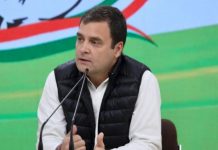
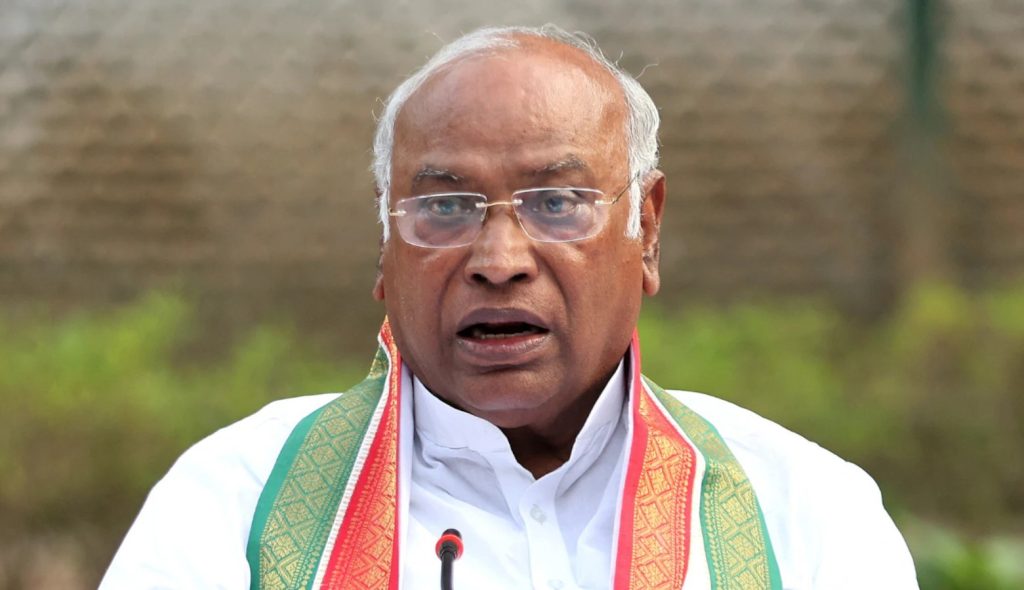
“For almost a decade, the Congress has been demanding simplification of GST and it is a good thing that although eight years late, the Narendra Modi Government has woken up from its ‘Kumbhakarana’ sleep on GST and has woken up and talked about Rate Rationalisation, Congress president Mallikarjun Kharge said, demanding extension of compensation for another five years to fully protect revenues of states.
“All states should be given compensation for a period of 5 years considering 2024-25 as the base year, because the reduction in rates is bound to have an adverse effect on their revenue. The complex compliances of GST will also have to be ended, only then will MSMEs and small industries truly benefit,” he said.
A “key demand of the states made in the true spirit of cooperative federalism— namely, the extension of compensation for another five years to fully protect their revenues— remains unaddressed. In fact, that demand assumes even greater importance now,” added Jairam Ramesh
Kharge said that two-thirds of the total GST—as much as 64% comes from the pockets of the poor and the middle class, but only 3% GST is collected from billionaires, while the rate of Corporate Tax has been reduced from 30% to 22%. In the past 5 years, Income Tax collection increased by 240% and GST collection increased by 177%.
“We had also demanded simplification of the complex compliances of GST, which had badly affected MSMEs and small businesses but the Narendra Modi government changed “One Nation, One Tax to “One Nation, 9 Taxes” with “tax slabs of 0%, 5%, 12%, 18%, 28% and special rates of 0.25%, 1.5%, 3% and 6%.”
“On 28 February 2005, the Congress-UPA government formally announced GST in the Lok Sabha. In 2011, when the then Finance Minister Pranab Mukherjee ji brought the GST Bill, the BJP opposed it. When Modi ji was the Chief Minister, he vehemently opposed GST. Today, this BJP government celebrates record GST collections, as if it has done a great job by collecting tax from the common people.
“For the first time in the history of the country, farmers have been taxed. This Modi government imposed GST on at least 36 items of the agricultural sector. The Modi government imposed GST tax on everyday things like milk-curd, flour-grains, even children’s pencils-books, oxygen, insurance and hospital expenses. That is why we named this GST of BJP as ‘Gabbar Singh Tax’,” he said
Ramesh said that it was only when faced with a lack of buoyancy in private consumption, subdued rates of private investment, and endless classification disputes, the Union Finance Minister has finally recognised that GST 1.0 had reached a dead end. In fact, the very design of GST 1.0 was flawed and this had been pointed out by the INC way back in July 2017 itself, when the PM had made one of his typical U turns and decided to introduce GST. It was meant to be a Good and Simple Tax. It turned out to be a Growth Suppressing Tax.
“However the wait for a true GST 2.0 continues. Whether this new GST 1.5, if it can be called that, stimulates private investment – especially in manufacturing – remains to be seen. Whether this will ease the burden on MSMEs, time alone will tell,” he added.