Voting is conducted by secret ballot and no party can issue a whip to its members, meaning individual MPs are free to vote and there is also scope for cross-voting
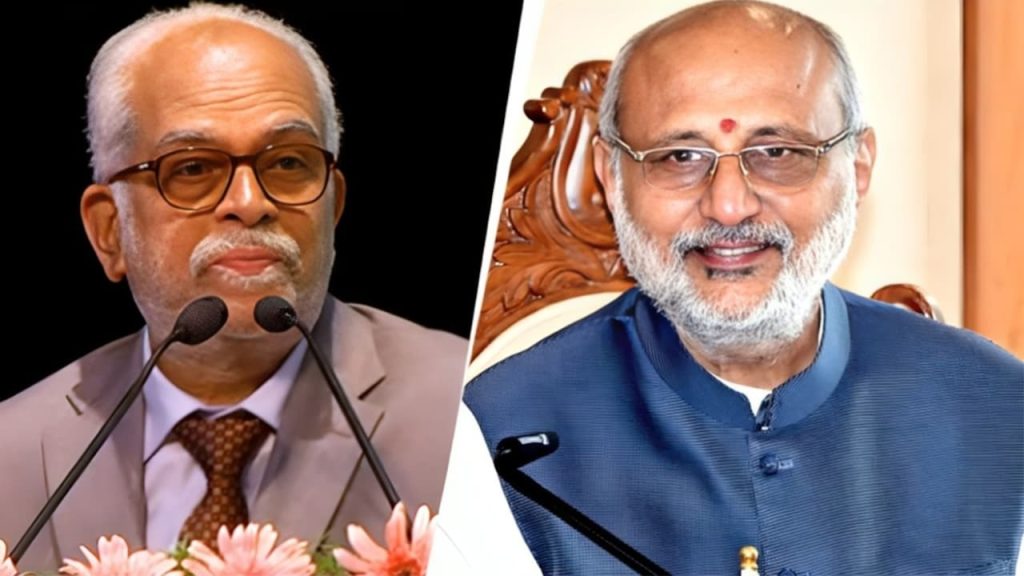
With just a day left for the vice-presidential election, fence-sitters like Odisha’s BJD and Telangana’s BRS who are expected to abstain as they want to remain equidistant from both the BJP-led NDA and the Opposition’s INDIA bloc, are playing close to the heart. While the BRS (Bharat Rashtra Samithi) seems to have officially stated its intent, there is no formal word as yet from the BJD (Biju Janata Dal).
The BRS reported announcement, citing alleged harassment by the Congress government in Telangana, is being seen as a setback for the opposition candidate—B Sudershan Reddy, a former Supreme Court judge. So far as the BJD is concerned, the regional party from Odisha lost to the BJP in the last Assembly elections and like the BRS has no love lost for either of the two sides. Though regional parties like the BRS, the BJD, and the YSRCP have supported the Narendra Modi government in passing crucial bills in Parliament in the past.
So far as the YSR Congress Party (YSRCP)—a party with a substantial block of 11 MPs—is concerned, the Andhra regional party has already pledged its support to the NDA nominee. The BRS and the BJD have four and seven MPs, respectively, in the Rajya Sabha. The BJP-led National Democratic Alliance (NDA)’s candidate CP Radhakrishnan—a BJP/RSS veteran and current Governor of Maharashtra—is the frontrunner in the contest.
In the 2022 election, the Trinamool Congress (TMC) and the Aam Aadmi Party (AAP) abstained, which helped the NDA in a way. The Vice-President is elected by an Electoral College comprising all members of both Houses of Parliament—the Lok Sabha and the Rajya Sabha.
The NDA and INDIA blocs have both intensified efforts to boost numbers and are holding workshops/ sessions to train MPs on the vote-casting process. The ruling BJP-led NDA has the numbers but it is leaving no stone unturned
The election is conducted via a secret ballot using a system of proportional representation with a single transferable vote. While India’s VP elections have generally been smooth, invalid votes due to wrong polling methods (wrong pen, multiple marks, or incorrect signatures) have occurred multiple times, thereby necessitating workshops for MPs before such polls—to avoid mistakes that could reduce their side’s tally.
The Vice President is elected by an electoral college consisting of members from both the Lok Sabha and the Rajya Sabha.
Voting is conducted by secret ballot and no party can issue a whip to its members, meaning individual MPs are free to vote and there is also scope for cross-voting.
The 2025 electoral college is composed of 788 members, including 233 elected (presently five seats are vacant in the upper house) and 12 nominated members of the Rajya Sabha, and 543 elected members of the Lok Sabha (one seat vacant in the lower house). Currently, there are 782 members in the electoral college due to vacant seats.