Kashmir’s tourism sector, one of the main pillars of the region’s economy, is showing early signs of recovery after the shock caused by the Pahalgam terror attack in 2025. While fresh government outreach initiatives, onset of spring and renewed stakeholder engagement are helping restore confidence, data suggests the recovery remains gradual and fragile rather than dramatic.
The Jammu and Kashmir government is now attempting to rebuild momentum through targeted interventions such as the Kashmir Travel Mart 2026, scheduled for April 14–15, which is expected to bring together around 250 tourism stakeholders from more than 20 Indian states. Officials see the event as part of a broader strategy to rebuild industry confidence and reposition Kashmir in the national tourism market after a difficult year.
Chief Minister Omar Abdullah has described the initiative as an important step towards strengthening tourism linkages and reinforcing Kashmir’s position as a premier travel destination. The event will include business-to-business meetings, destination tours and cultural experiences aimed at reconnecting tour operators, hoteliers and travel planners with the Valley.
“The event will highlight the region’s immense tourism potential through craft safaris, curated destination tours, and B2B engagements, offering stakeholders a rich and immersive experience of Kashmir’s culture, heritage, and warm hospitality,” the Chief Minister’s Office said on X.
A sector recovering from disruption
Tourism in Kashmir had witnessed consistent growth between 2021 and 2024, making the decline in 2025 particularly significant. Official figures show that about 11.16 lakh tourists visited the Valley in 2025, including roughly 10.93 lakh domestic tourists and nearly 23,000 foreign visitors.
This represented a clear drop compared to previous years. In 2024, Kashmir had recorded approximately 34.98 lakh visitors, while 2023 saw more than 31.55 lakh tourists. The sector had also shown strong recovery after the pandemic years, with tourist arrivals rising sharply from around 6.65 lakh visitors in 2021 to more than 26.73 lakh in 2022.
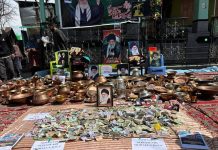
Industry observers attribute the decline in 2025 largely to the Pahalgam attack, which disrupted travel sentiment during the peak season and led to widespread cancellations. Security concerns, even when temporary, tend to have an outsized psychological impact on tourism, which depends heavily on perception and traveller confidence.
Despite the setback, the broader picture shows resilience. According to the Economic Survey 2025–26, Jammu and Kashmir still recorded around 1.78 crore tourist visits overall in 2025 across the Union Territory, compared to 2.36 crore in 2024. The figures indicate that while Kashmir Valley saw a dip, the wider tourism ecosystem remained active.
Tourism contributes nearly 7 percent to Jammu and Kashmir’s Gross State Domestic Product and supports the livelihoods of around five lakh people directly and indirectly, making its recovery economically critical.
Winter as a boon
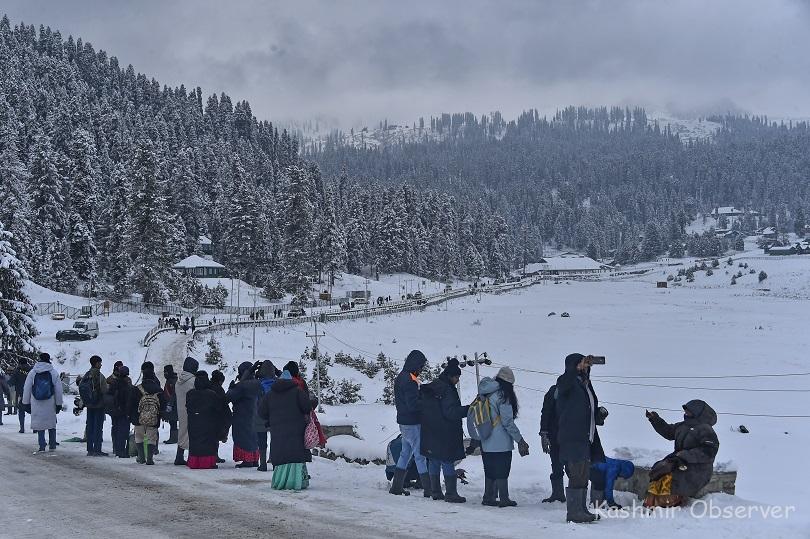
Recurring winter snowfall in higher reaches such as Gulmarg and Pahalgam provided a timely boost to tourism, offering some optimism to stakeholders. A wet January followed by an unusually dry February, and fresh snowfall in March improved skiing conditions and extended the winter sports season beyond its usual timeframe.
Gulmarg, widely regarded as India’s premier skiing destination, received several inches of fresh snow in March, attracting tourists interested in skiing, snowboarding and mountain tourism. Tourism operators say the late snowfall helped partially compensate for earlier weather deficits.
Hoteliers and tour operators remain cautiously optimistic that improved snow conditions could help extend the tourist season and improve revenues after a difficult year.
Gulmarg continues to dominate Kashmir’s tourism landscape. Assembly data shows the resort attracted about 11.07 lakh tourists in 2025, maintaining its position as the Valley’s most visited destination despite a decline from its 2024 peak of 13.64 lakh visitors.
Pahalgam, which was directly affected by the attack, recorded around 10.04 lakh tourists in 2025, down from 12.60 lakh in 2024. Other destinations also experienced declines. Sonamarg saw numbers fall to about 4.87 lakh visitors from 8.89 lakh the previous year, while Kokernag and Achabal also reported reduced footfall.
These figures reflect how security incidents can reshape travel patterns, often pushing tourists toward destinations perceived as safer or better established.
Changing tourism geography
Even as traditional destinations saw fluctuations, newer locations such as Gurez Valley, Daksum and Tosamaidan have begun attracting smaller but steady streams of visitors. This suggests that Kashmir’s tourism map is gradually diversifying beyond its traditional circuit of Gulmarg, Pahalgam and Sonamarg.
Experts say this diversification could make the tourism economy more resilient in the long run by reducing dependence on a few heavily visited destinations.
At the same time, Gulmarg’s advantage continues to rest on its infrastructure and all-season appeal. The Gulmarg Gondola, one of the world’s highest cable car systems, remains a flagship attraction that draws visitors throughout the year. Winter sports, summer trekking, golfing and scenic tourism together give the destination a unique year-round profile.
Climate uncertainty emerges as a new challenge
Even as the sector deals with recovery from security shocks, another structural concern is emerging: climate variability.
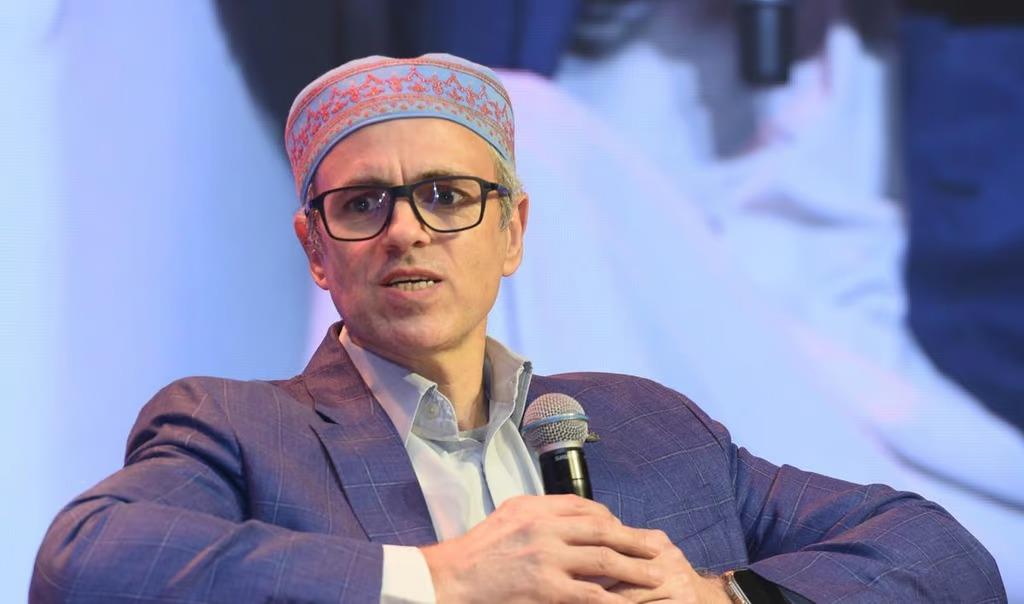
The Chief Minister has publicly acknowledged that unpredictable snowfall patterns are becoming a concern for winter tourism planning. Delayed or insufficient snowfall can significantly shorten the ski season, directly affecting hotels, ski instructors, guides and equipment operators.
The government is now exploring the possibility of artificial snow generation systems to ensure the continuity of winter sports events such as the Khelo India Winter Games. Such measures are increasingly being seen as necessary to reduce dependence on natural snowfall.
However, artificial snowmaking also raises questions about environmental sustainability, water use and costs. Policymakers will have to balance economic needs with ecological concerns, particularly in a fragile mountain environment.
Tulip season and experiential tourism
Meanwhile, spring tourism is providing another opportunity for revival. The Indira Gandhi Memorial Tulip Garden in Srinagar, one of Asia’s largest tulip gardens, has once again emerged as a major attraction.
The garden, which opened recently for the season, features around 1.8 million tulips across more than 70 varieties, along with nearly one lakh other flowering plants such as daffodils, hyacinths and narcissus. The annual tulip bloom has become an important seasonal draw, helping extend tourism beyond traditional summer months.
Officials increasingly see such experiential attractions, including cultural festivals, craft tourism and nature-based experiences, as essential to creating a more diversified tourism calendar.
The long road to full recovery
Despite encouraging signs, analysts say the sector’s recovery should be viewed as gradual rather than complete. Tourism economies typically recover in phases: first through the return of domestic travellers, then group travel, and finally international tourists.
Foreign tourist arrivals in Kashmir remain relatively modest compared to domestic tourism, suggesting there is still work to be done in rebuilding global confidence.
Experts also point out that sustained recovery will depend on multiple factors including security stability, infrastructure development, climate adaptation and consistent destination marketing.
For now, the trajectory of Kashmir tourism reflects both optimism and caution. The return of tourists to Gulmarg, strong interest in seasonal attractions like the tulip garden, and government outreach initiatives all point toward recovery momentum.
At the same time, the decline in visitor numbers after the Pahalgam attack demonstrates how vulnerable the sector remains to disruptions. Climate uncertainty is also emerging as a parallel challenge that could shape the future of winter tourism.
The coming year may therefore prove crucial in determining whether Kashmir tourism merely stabilises or returns to its earlier growth trajectory.
What remains beyond doubt is tourism’s importance to the region’s economy. Hundreds of thousands of livelihoods, from taxi drivers and hotel workers to artisans and guides, depend on the sector’s stability.
For many in Kashmir, tourism is not just an industry but a critical economic lifeline.
The Valley’s tourism story in 2026 is therefore not simply about visitor numbers. It is about the ability of a conflict-affected but globally admired destination to rebuild trust in a competitive and uncertain travel environment.
If current trends continue and stability holds, stakeholders believe Kashmir could gradually regain its tourism momentum. But the experience of 2025 has also reinforced a hard lesson: recovery in tourism is rarely instant, and sustaining it requires constant effort.