Strengthening of New Delhi-Manila axis: India-India and Philippines to work on reviewing the India-ASEAN Free Trade Agreement and pursue a bilateral Preferential Trade Agreement; “India and the Philippines are friends by choice, and partners by destiny. From the Indian Ocean to the Pacific, we are united by shared values. Ours is not just a friendship of the past, it is a promise to the future,” PM Modi
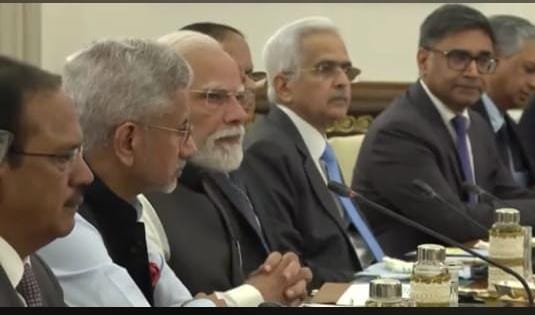
India and the Philippines on Tuesday signed key agreements aimed at bolstering ties, including defence documents laying the groundwork for deeper collaboration, agreements on maritime security, trade and economic cooperation mutual, legal assistance, science and technology, tourism among others.
Philippines President Ferdinand R Marcos Jr arrival in New Delhi marked the start of a five-day visit that carries significant geopolitical significance for the region and bolstering ties between India and Philippines. The meeting followed an India-Philippines joint naval exercise in the disputed South China Sea for the first time, which was not liked by China.
India-Philippines: long association
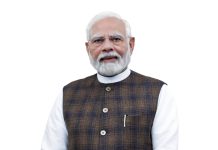
New Delhi and Manila go a long way, pointed Prime Minister Narendra Modi in his statement.
.Extending a warm welcome to the Philippines President and his delegation on the occasion of the 75th anniversary of diplomatic relations between the two countries, PM Modi highlighted the deep historical and cultural ties, including shared epics like the Filipino version of the Ramayana, between the two nations.
PM Modi said India and the Philippines are united by shared values and a vision for a peaceful and prosperous future, not just as historical friends, but as strategic partners committed to mutual growth and cooperation.
Marcos said his visit to India is a reaffirmation of the bilateral partnership that “we are strengthening”. He also asserted that Manila wants to build on the existing ties with New Delhi and explore “many opportunities” that have arisen in the past few years.
Strengthening New Delhi-Manila axis—key outcomes
Both countries committed to a free, open, and rules-based Indo-Pacific region with India supporting the Philippines’ upcoming ASEAN chairmanship in 2026.
“India and the Philippines are friends by choice, and partners by destiny. From the Indian Ocean to the Pacific, we are united by shared values. Ours is not just a friendship of the past, it is a promise to the future,” PM Modi said.
Supported by a comprehensive action plan, the aim is to upgrade the relationship to a strategic partnership. This includes cooperation on trade and economic cooperation.
The PM said bilateral trade has surpassed $3 billion and India and the Philippines will work on reviewing the India-ASEAN Free Trade Agreement and pursue a bilateral Preferential Trade Agreement. In this context collaboration across sectors like digital technology, health, automobiles, infrastructure, and minerals was emphasised.
In the science and technology sector, joint research is ongoing in fields such as AI, virology, and additive manufacturing. A new science cooperation plan has been signed; while in agriculture the International Rice Research Institute in Varanasi is working on healthier rice varieties, benefiting both countries, he added
The PM said India will increase quick impact projects in the Philippines and extend support for developing sovereign data cloud infrastructure in the Philippines. In defense and maritime cooperation, he talked of Indian naval ships participating in exercises in the Philippines for the first time. He also welcomed the Philippines to join India’s International Fusion Center for the Indian Ocean Region.
Thanks Philippines for condemning Pahalgam attack
India thanked the Philippines for condemning the recent terrorist attack in Pahalgam and supporting India’s fight against terrorism. Agreements were signed on legal cooperation, he said
Meanwhile the Philippines will offer visa-free entry to Indian tourists and India will offer free e-visas to Filipino tourists. Plans are underway to start direct flights between Delhi and Manila. A new Cultural Exchange Programme will further deepen cultural links
Why is China upset
The growing synergy between New Delhi and Manila on key issues like defence and trade deals are being closely watched by Beijing which lays claim on most of the South China Sea—a key global trade rout
These claims have led to issues with countries like the Philippines, Vietnam, Malaysia and Taiwan which too claim share of contested waters.
In this context India-Philippines joint exercise has sent a strong message to China.
The two-day joint military deployment that started Sunday upset China, who accused the Philippines of “rallying an external force” in disputed waters and conducted a maritime patrol of its own in response.
Philippine Chief of Staff Romeo Brawner Jr said the joint sail took place inside his country’s exclusive economic zone. “We did not experience any untoward incidents, but there are still those shadowing us – as we had already expected,” Brawner was quoted as saying, without naming China.
South China Sea, particularly Malacca Strait, is a lifeline for Chinese oil imports and exports but there is also a strategic, geopolitical issue. Analysts say China does not consider it in its interest India getting closer in military or other cooperation with countries surrounding China. China has been trying that with its outreach to countries surrounding India like Pakistan, Bangladesh, Maldives and Sri Lanka.
“Our military cooperation with countries like Philippines, Vietnam, Malaysia, Myanmar etc can serve as a reciprocal pressure point for China in case the pressure is applied on India for example Bangladesh. For example if China ups the ante by supplying some latest generation military equipment to Bangladesh India can do the same through a country like Philippines,” they add