Through Operation Sindoor, India dismantled terror infrastructure across Pakistan while averting wider escalation. Yet, a diplomatic tussle followed as US President Trump claimed credit for brokering peace—a narrative India forcefully rejected. A report by Priyanka Tanwer
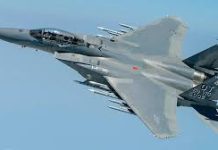
On May 7, 2025, India launched Operation Sindoor, a calibrated air strike aimed at dismantling nine terror camps believed to be operated by Jaish-e‑Mohammad and Lashkar‑e‑Taiba across Pakistan and Pakistan‑occupied Kashmir. The military action was a direct response to a terror attack in Pahalgam on April 22, in which 26 civilians were killed.
According to Indian defence sources, over 100 terrorists were neutralized—among them senior leaders including Abdul Rauf Azhar—while key air bases like Nur Khan and Rahim Yar Khan were severely degraded.
Pakistan responded with artillery shelling, drone attacks, and cross‑LoC skirmishes that led to civilian and military casualties on both sides. The confrontation intensified over three days before hostilities ceased on May 10, as India and Pakistan reached a bilateral understanding to halt fire.
Importantly, India emphasizes that Pakistan initiated the request to de‑escalate. The Indian government described Operation Sindoor as measured and non‑escalatory, aimed solely at terror infrastructure, not civilian areas.
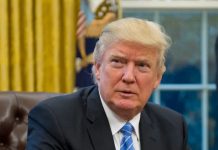
Shortly after the hostilities ended, US President Donald Trump publicly claimed he had brokered a “full and immediate ceasefire” between India and Pakistan. Trump attributed the breakthrough to US trade leverage, asserting that he had threatened both nations with halted trade deals unless they agreed to stand down.
India swiftly pushed back. The Ministry of External Affairs (MEA) clarified that trade was never mentioned or used as leverage in any discussions between Indian and US officials during Operation Sindoor. Instead, it was the force of Indian arms that prompted Pakistan to solicit a ceasefire. MEA Spokesperson Randhir Jaiswal stated plainly: “It was the force of Indian arms that compelled Pakistan to seek ceasefire” and no mediation by the US occurred.
Meanwhile, External Affairs Minister S. Jaishankar, speaking from the US and subsequently before a parliamentary consultative panel, reiterated that all de‑escalation talks occurred via direct military hotlines, after Pakistan sought dialogue through its Director General of Military Operations contacting his Indian counterpart.
Notably, Jaishankar also underlined that trade negotiations were separate and entirely irrelevant to the ceasefire discussions, dismissing Trump’s claims as a misreading or misstatement of events.
Prime Minister Narendra Modi, via Foreign Secretary Vikram Misri, conveyed the same message in a 35‑minute phone call with Trump on June 18. Modi emphasized that India had not accepted US mediation, and that the stop in hostilities resulted from Pakistan’s request, not any third‑party pressure.
A BJP statement following the call accused the Congress of being “exposed and embarrassed” by their earlier calls questioning Modi’s handling of Operation Sindoor, saying the narrative had been clarified once and for all.
Additionally, Congress MPs and public figures, including Shashi Tharoor, directly echoed Jaishankar’s position. Tharoor told media, “Trump wasn’t directly involved… we were only reacting to terrorism. When Pakistan stopped we stopped,” and asserted “mediation implies equivalence between two parties… but there can be no mediation… between terrorists and their victims”
However, Trump’s repeated claims sparked a storm in Indian political circles. Congress leaders condemned his statements as “insulting to the nation”, arguing they undermined India’s sovereign decision‑making and risked reshuffling the global perception of its independent foreign policy.
Mallikarjun Kharge demanded a government explanation in Parliament, while BJP leaders pledged to discuss the matter during the monsoon session, underscoring its national significance.
Despite the friction over ceasefire claims, India’s India–US strategic relationship remains multifaceted. A multi-party Indian delegation led by MP Shashi Tharoor was dispatched to the United States post‑Operation Sindoor to brief lawmakers and think tanks. That visit reiterated India’s precision and restraint in the strikes and sought international solidarity against terrorism, referencing parallels with 9/11 and the global fight against terror networks.
India is also accelerating its push to expand defence exports under its “Make in India” initiative. Operation Sindoor’s use of platforms like BrahMos missiles and loitering drones boosted interest in Indian defence hardware. Exports to nations including the Philippines, Armenia, and Vietnam are underway, with a goal to more than double revenue by 2029. Indian defence firms are capitalizing on the operation’s perceived success to assert India’s defence-industrial maturity.
Meanwhile, international commentary—such as from US warfare expert John Spencer and the Royal Thai Air Force—has praised the operation as a showcase of India’s military sophistication and deterrent potential. At the same time, it exposed gaps in Pakistani readiness and the limitations of its Chinese-supplied systems.
The clash over who “brokered” the ceasefire has exposed a deeper fault line in India–US relations, narrative control and respect for sovereignty. India’s consistent stance—that ceasefire was reached bilaterally, and trade was not involved—is tied to a foundational policy, no third‑party mediation on Kashmir or cross‑border terrorism. Trump’s continued assertions challenge this core tenet, and India has responded firmly to preserve its diplomatic identity.
From India’s perspective, this episode demonstrates that while strategic alignment with the United States continues, especially in counterterrorism cooperation, energy, and trade, any attempt to recast India as passive or in need of mediation challenges its self‑perception and its standing as a rising power.
On the US side, the insistence on claiming credit reflects Trump’s pattern of framing foreign policy outcomes as personal achievements. This has political value in Washington, especially during the run‑up to elections and positioning for a potential second term. However, for Indian leadership, the priority remains strict delineation between India’s independent decisions and any narratives of dependence on US pressure or trade leverage.
India–US ties remain critical, shaped by shared interests in Indo-Pacific stability, defence collaboration, and economic growth. Operation Sindoor and the aftermath illustrate both the strength and fragility of that partnership. The Modi government has not sought to escalate the matter dangerously; instead it has clarified narrative boundaries and insisted on mutual respect without aggression. At the same time, there are opportunities for deeper collaboration in defence technology, counterterrorism intelligence, and global forums.
Trump’s framing, while diplomatically disputed, may still open avenues for engagement: Indian agencies are continuing outreach in the US to highlight their strategic rationale and sovereignty claims. India’s messaging campaign, including Shashi Tharoor’s visit, has sought to reinforce the idea of India as a capable, mature global actor—less dependent, more assertive.
It also remains that domestic politics in India will keep the debate alive. Parliamentary sessions, opposition criticism, and political branding will continue to draw attention to how India’s leadership responded, both militarily and diplomatically.
Operation Sindoor represents a pivotal moment in India–Pakistan dynamics and has tested India’s diplomatic posture towards a global power. Trump’s sustained claim to have brokered peace, using trade threats as leverage, collides head‑on with India’s official position: it was India’s military deterrence and Pakistan’s outreach that ended the violence—not US mediation.
In rejecting Trump’s narrative, India has reinforced its longstanding policy of bilateral resolution on Kashmir and terrorism. It has leveraged parliamentary addresses, public statements, and diplomatic outreach to preserve its autonomy, while showcasing its military capabilities and signalling confidence to international audiences.
For observers of Indo‑US relations, the episode offers both a cautionary tale and a learning opportunity. Even among close strategic partners, narrative sovereignty matters. India’s insistence on writing its own version of events will likely shape how future interactions unfold—especially when global powers seek visibility or credit in South Asia’s fraught diplomacy.