While the staggering $100,000 annual fee on H-1B visas targets Indian tech workers, experts see potential for India’s tech sector to thrive amid the challenge. In India, the opposition Congress used the decision to attack Prime Minister Narendra Modi’s foreign policy
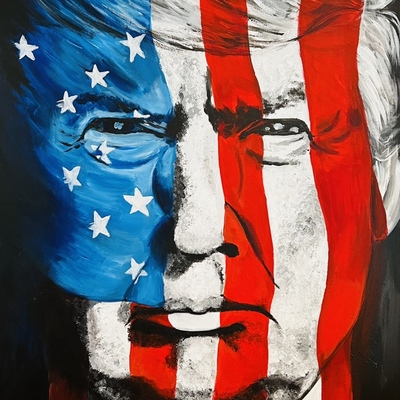
US President Donald Trump’s latest executive action, signed on Friday, brings a major shake-up to the H-1B visa system. By imposing a staggering $100,000 annual fee on companies seeking to hire foreign workers, which include a sizable number from India, Trump has sparked a wave of reactions—in the US, India and the rest of the world.
The fee, which targets companies using H-1B visas to hire skilled workers, is expected to hit Indian professionals hardest, especially those at the entry and the mid-level given that approximately 70% of H-1B visa holders are from India. While the policy has been framed as a move to protect American jobs, particularly in the tech industry, critics argue that it could have far-reaching consequences for global talent mobility, including India’s thriving IT sector.
The fact is, it is the right of a country to devise/formulate policies that suit its individual needs.
Trump framed the decision as a response to alleged abuse of the H-1B program, claiming that tech firms had manipulated the system by hiring foreign workers at lower wages, displacing American workers in the process. According to the proclamation, many American companies have laid off qualified American workers while bringing in thousands of H-1B employees, a move that Trump insists poses a threat to national security and the US job market.
In India, the opposition Congress used it to attack Prime Minister Narendra Modi’s foreign policy. Rahul Gandhi, Leader of the Opposition in the Lok Sabha, accused Modi of being weak in international diplomacy, writing on X “I repeat, India has a weak PM.” Congress President Mallikarjun Kharge echoed these sentiments, arguing that PM Modi’s approach to foreign relations was more about optics than protecting India’s interests. Kharge was scathing in his criticism, labeling Modi’s interactions with Trump as hollow, and suggesting that the $100,000 fee was a “birthday return gift” for Modi’s perceived flattery of the US president.
The new proclamation, officially titled “Restriction on Entry of Certain Non-Immigrant Workers,” stipulates that any H-1B petition filed without the $100,000 payment will be rejected. It insists that the program was initially intended to supplement the American workforce, but has been exploited to replace US workers with foreign employees at lower wages. This, according to Trump, harms American workers, particularly those in computer-related fields, where unemployment rates among computer science and engineering graduates remain high.
Despite the controversy, many experts see potential upside for India. While the policy will certainly result in a financial burden for Indian tech workers and firms, there may be a silver lining.
The increased costs could push companies to prioritize hiring only the most senior and specialised talent, leaving less room for entry and mid-level roles, which may result in a reduction of Indian IT professionals seeking US-based roles, and in turn, spark a reverse brain drain. Skilled professionals may choose to return to India, or they might shift their focus to other countries with more favorable immigration policies
Indian IT giants like TCS, Infosys, and Wipro, which have traditionally relied on H-1B visas to place thousands of engineers in US client locations, may accelerate a shift toward offshoring work back to India and other countries. Some industry leaders see this as an opportunity for India to grow its domestic tech ecosystem. The increased cost of sending workers to the US may push firms to expand their operations in India, enhancing the country’s innovation and global competitiveness, they add