India’s domestic readymade garment industry growth is expected to take a major hit this fiscal on account of the additional trade tariff that sets in on India from Wednesday. The US Customs and Border Protection (CBP) has issued a draft notice on the implementation of additional duties on products imported from India, according to which additional tariffs are being imposed to give effect to the President’s Executive Order 14329 of August 6, 2025, titled “Addressing Threats to the United States by the Government of the Russian Federation”
According to Crisil ratings, the revenue growth of India’s readymade garment (RMG) industry is set to nearly halve on-year this fiscal as the imposition of 50% tariffs by the US on its imports from India becomes effective from August 27. That, coupled with a decline in profitability, will impact credit metrics for industry players. The impact will vary by company, some of which get more than 40% of their revenue from the US, it said.
The 50% tariff puts India at a distinct disadvantage compared with competing nations like China, Bangladesh and Vietnam, said Manish Gupta from the Crisil Ratings,
“If the tariffs hold, RMG exports to the US will see a sharp decline. Post 50% tariffs, Indian exports to the US may be minimal, despite limited capacity of competing nations in value-added garments and lead time taken by big-box retailers in the US to re-align their sourcing arrangements. Overall, we expect the share of the US in India’ RMG exports to fall from 33% last fiscal to 20-25% this fiscal,” he said
Some relief may be provided by the recently signed Free Trade Agreement (FTA) with the UK, which is expected to result in higher exports to that country from the end of this fiscal. The industry will also have to realign trade with other major export destinations—the European Union (EU), United Kingdom (UK) and United Arab Emirates (UAE), which together form ~45% of India’s exports for fiscal 2025.
A point of relief may be India’s domestic market
“The domestic market for RMG, accounting for three-fourths of the sector’s revenue, will continue to see steady revenue growth of 8-10% this fiscal, fuelled by economic growth, interest rate cuts, and tax reductions. This, in turn, will cushion the tariff blow and spur overall growth at the sector level, but at a slower pace than last fiscal,” said Gautam Shahi, director, Crisil Ratings.
Otherwise weaker revenue growth and tariff-driven competitive disadvantage in US will impact profitability of India manufacturers. In case the tariffs are returned to the previously announced level of 25%, India could maintain its competitive advantage, given its higher presence in the value-added garments segment compared with its rivals. That would then limit the impact on Indian exports to the US, according to Crisil
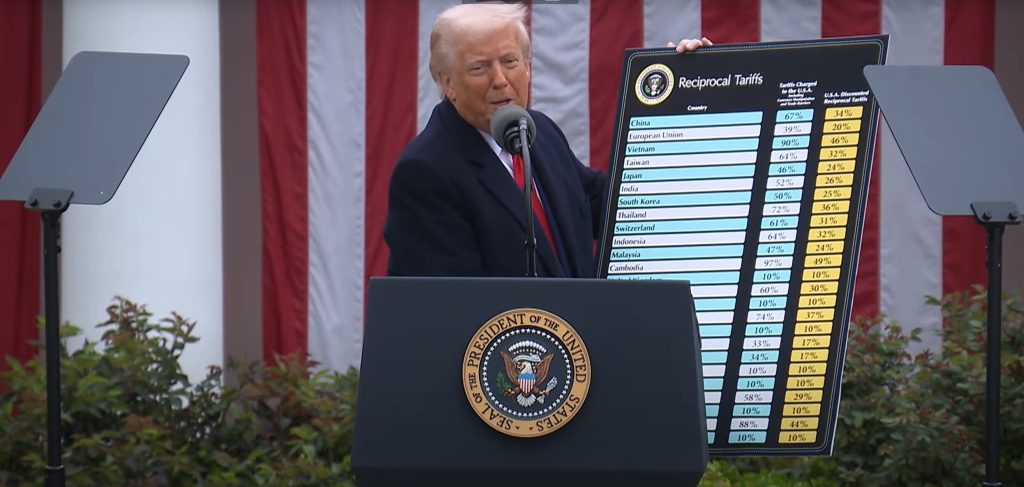
Earlier this month, US President Donal Trump unveiled plans to double tariffs on Indian goods from 25 percent to 50 percent over New Delhi’s continued purchase of Russian oil, setting an August 27 deadline.
Published Monday, the draft notice confirms the administration will proceed with the higher levies. Scheduled to be published on August 27, 2025, the new duties will come into effect on August 27, 2025. From 12:01 am eastern daylight time on that day, the higher tariffs will apply to all products of India that are either entered for consumption in the United States or withdrawn from warehouses for consumption, it says
Prime Minister Narendra Modi has already said that his government will find a way out “no matter how much pressure comes”, assuring farmers, small shopkeepers, and entrepreneurs that their interests would be protected despite rising trade tensions with the US. “We will keep increasing our strength to withstand it. Today, the Atmanirbhar Bharat Abhiyan is getting a lot of energy from Gujarat and behind this are two decades of hard work,” he said in Ahmedabad on Monday
Global politics was increasingly being shaped by economic interests but India’s rural economy would remain safeguarded, he added.
The Commerce and Industry Ministry is consulting exporters and export promotion councils to gauge the impact of the existing 25 percent levy, say officials
Officials said shielding farmers and export-oriented units and small and medium enterprises (SMEs) remains central to the government’s approach, given their vulnerability to external shocks. The PMO meeting is expected to firm up the contours of India’s response as exporters brace for the hike.
India has suspended parcel services to US as new customs rules kick in under 50 percent Trump tariff