‘If Washington believes that such coercive tactics can sway India’s decisions, it must recognise that today’s India is not the India of a decade ago,’ says SJM
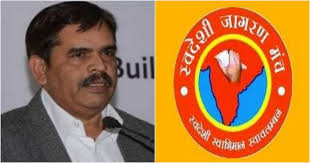
It is time to stay firm and protect national Interest, RSS affiliate Swadeshi Jagran Manch (SJM) said while expressing “deep concern” over US President Donald Trump’s statement threatening “unspecified penalties” against India’s trade ties with Russia, in addition to the already announced 25 percent tariff hike.
“India’s sovereign right to procure defence equipment to strengthen self-reliance in defence production and to secure crude oil at the most competitive prices—essential to keeping domestic inflation under check—cannot be subjected to external pressure,” said Ashwani Mahajan National, Co- Convener of the Manch
Mahajan said if Washington believes that such coercive tactics can sway India’s decisions, it must recognise that today’s India is not the India of a decade ago. “We are emerging as a global power, demonstrated decisively during Operation Sindoor, and committed to building robust indigenous capabilities in arms production. The United States, too, needs to move beyond the inertia of a unipolar worldview and embrace the reality of a multipolar, cooperative order,” he said
The SJM called it “unfortunate” that “the US has chosen to adopt punitive measures against a strategic partner at a time when the world must collectively respond to the far greater challenge posed by China’s weaponisation of trade and global value chains”
“We congratulate the Government of India for standing firm against pressure during the ongoing India–US Free Trade Agreement (FTA) negotiations. Despite threats of reciprocal tariffs and the missed deadlines of July 9 and July 31, Indian negotiators have rightly resisted attempts to force open our markets to genetically modified (GM) agricultural products, dairy imports, and other sensitive sectors.
“It is worth noting that the US continues to exert pressure on multiple countries to lower tariffs outside the framework of WTO rules, often invoking non-trade considerations under the guise of “reciprocity”. The key sticking points in the current negotiations remain the US demand for market access for GM crops, deregulation of medical devices, and unrestricted cross-border data flows. India, on the other hand, has legitimately sought exemptions from steel, automobile, and pharmaceutical tariffs and defended its policy of data localisation.
“India’s principled stand—that GM food imports threaten both our biodiversity and food security, and that sensitive data must remain within sovereign control—is fully aligned with our long-term national interest.
“Whether or not a trade agreement is reached, Indian exports to the US will continue on the basis of mutual economic benefit. We must avoid concessions that undermine our farmers, small-scale industries, or long-term economic self-reliance. The experience of recent years has shown that India can leverage shifting global trade patterns—including those resulting from US–China tensions—to its advantage without compromising core interests, Mahajan said
He said that the SJM believes this is a moment to accelerate diversification of trade beyond traditional partners, deepening ties with Latin America, Africa, the expanded BRICS bloc, and the Global South. While the US remains India’s largest trading partner, trade must always serve mutual benefit—not be used as an instrument of pressure.
“The Swadeshi Jagran Manch urges the Government of India to maintain its firm stance and to use this moment to strengthen strategic autonomy, protect national interest, and advance a truly multipolar and equitable global trade order, and make decisive moves towards ‘Aatmanirbhar Bharat’,” he said