– Systemic corruption in Dynamic Programmable Façade Lighting project by bypassing tender conditions
By K.P. Malik
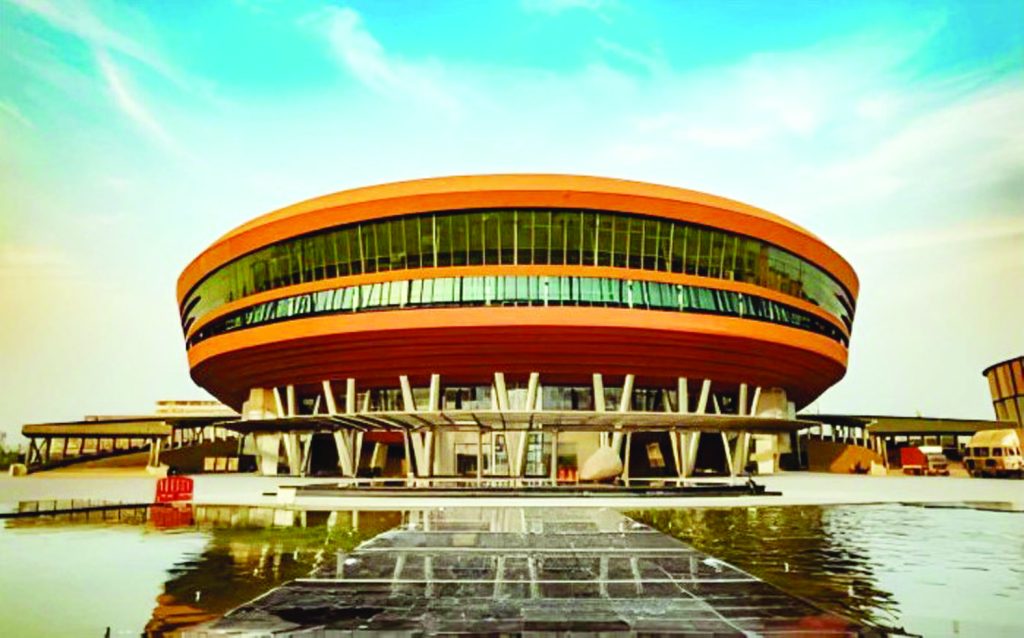
During the G-20 summit hosted under the Modi government’s flagship venue, Bharat Mandapam, several global leaders attended the event. However, it now appears that the schemes executed under such grand projects have fallen prey to corruption. A recent example has emerged in the form of corruption linked to the tender for the design of dynamic programmable façade lighting at the ITPO Convention Centre, New Delhi—under the Ministry of Housing and Urban Affairs—where tender conditions were blatantly ignored.
Ignoring tender conditions
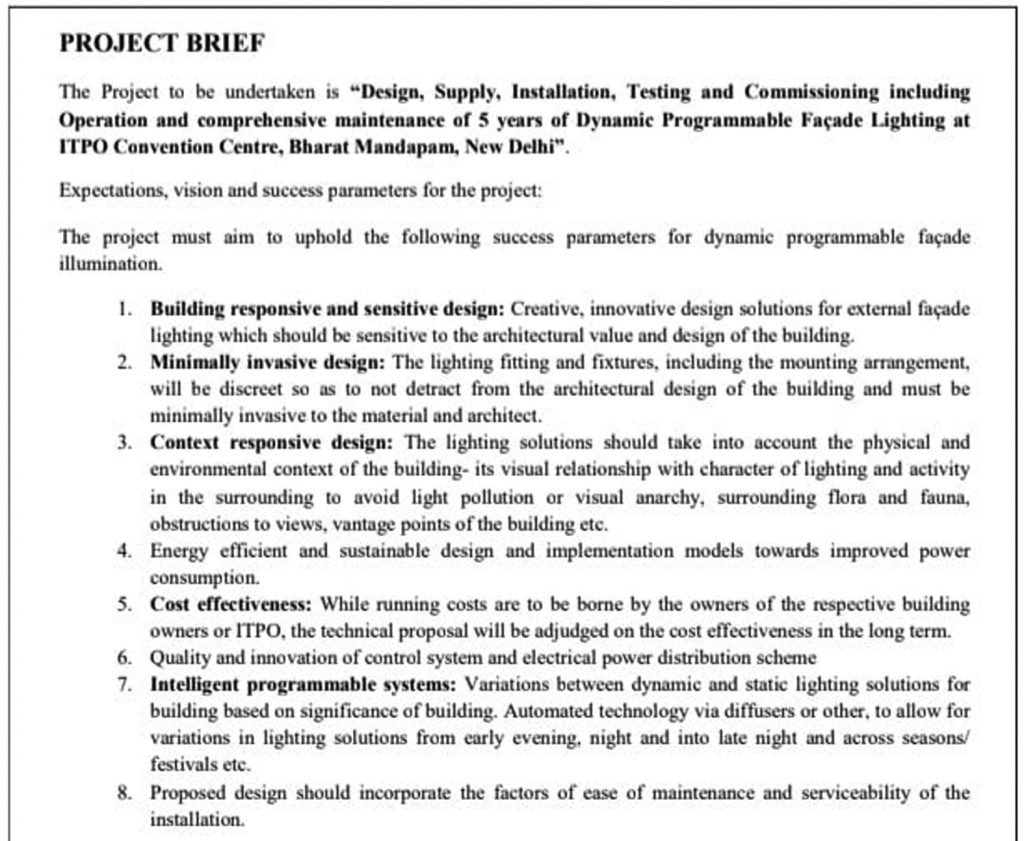
The tender for the design, supply, installation, testing, and commissioning of the dynamic programmable façade lighting explicitly recognized only work orders received from the Government of India and Central Public Sector Undertakings (CPSUs) as valid for eligibility. However, in implementing the project, these eligibility conditions were overlooked. Chinese-made lights—which were expressly prohibited—were used during the mock-up phase. More shockingly, companies that showcased Made in India lighting solutions during the demo received lower marks and were disqualified, whereas the Chinese brand received the highest marks and was ultimately selected.
This raises serious questions: If Chinese lights were awarded top scores and chosen, should this not be considered a major act of corruption and a significant loss of public funds? Another question: How many façade lighting projects have actually been undertaken by the Government of India and CPSUs so far? Are such high-value façade lighting projects even within their scope or responsibility?
Typically, such lighting works are minor parts of larger civil construction contracts. In contrast, ample evidence shows that state governments have independently floated façade lighting tenders, often funded by the central government itself. So why were work orders issued by state governments deemed ineligible?
Organized Corruption
This tender was floated in line with the Make in India initiative, aimed at promoting Indian-manufactured products. If Make in India was clearly stated as a key eligibility criterion in the tender documents, why was it ignored during the project’s execution? And why, during the mock-up, were Made in China lights used instead of Made in India? Awarding the highest marks to the Chinese brand and selecting them ultimately caused a considerable loss to the public exchequer—why is this not being treated as such?
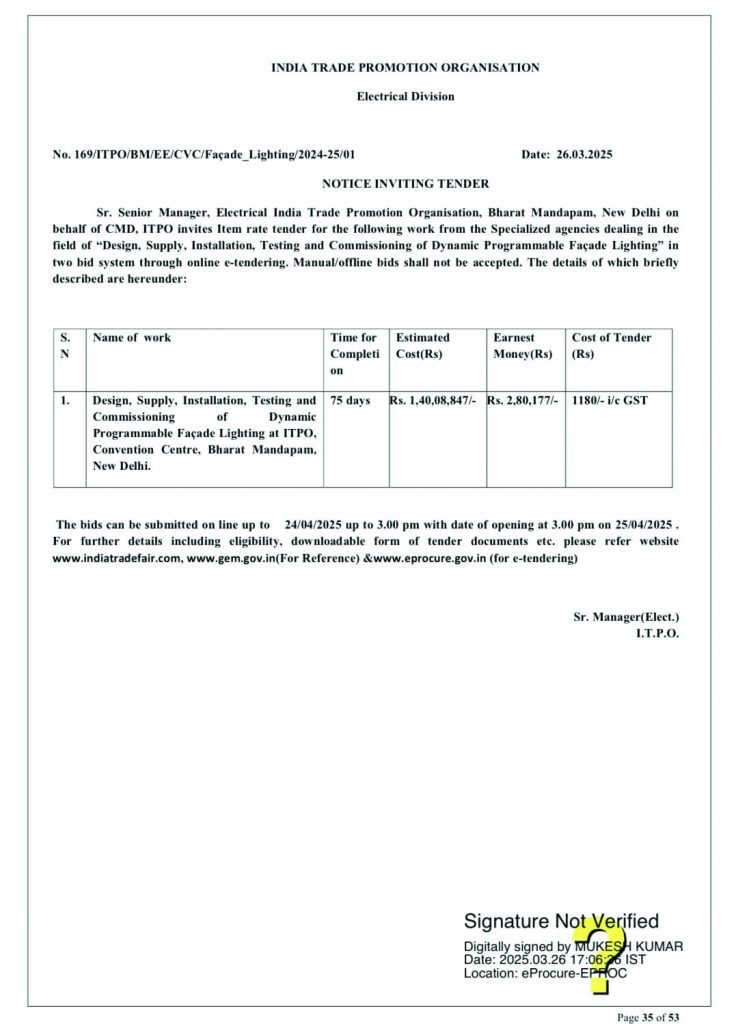
Moreover, if the full Bill of Quantities (BoQ) had already been provided by the department, what was the justification for introducing a point system? When all bidders met the technical specifications, what was the need for a mock-up at all? This suggests that the department itself lacked confidence in the lighting effects. Point systems and mock-ups are typically applied under the Quality-Cum-Cost Based Selection (QCBS) model, where design flexibility is given to the bidders. But when both the design and specifications were pre-defined, what was the logic behind holding a demo?
The tender only allowed work orders from CPSUs and the Government of India for eligibility. But how many such façade lighting projects have actually been undertaken by them? And even if they had done any, such projects would be of low value, typically forming a small part of a larger civil contract. In contrast, state governments have indeed floated independent tenders for façade lighting—many of which were centrally funded—yet their work orders were not considered.
Furthermore, this tender was issued with the explicit expectation that the products used would be manufactured in India, in line with the Make in India initiative. If Make in India was clearly listed as a core eligibility requirement, why was this ignored during project execution? Does this not indicate that the mock-up using Made in China lights was a product of corruption? And if so, why is no one answering for it?
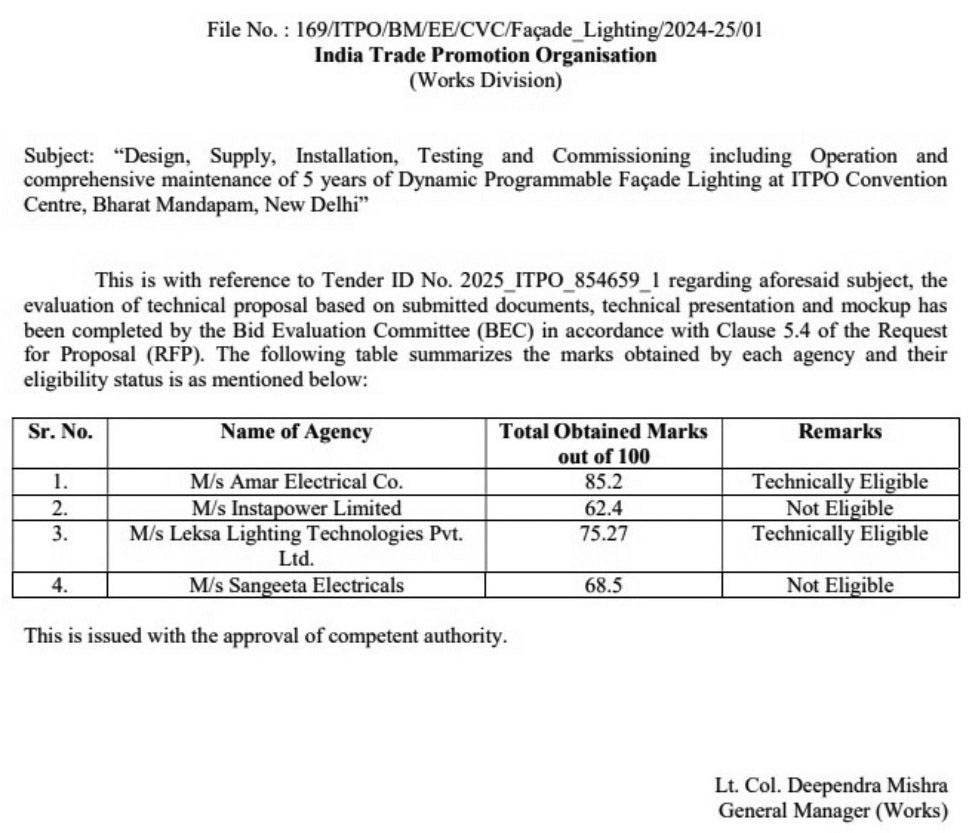
It appears that those responsible for clearing this tender are actively engaged in corrupt practices, completely disregarding the central government’s zero-tolerance policy toward corruption. Awarding top marks to a Chinese brand, despite Make in India being a stated condition, and thereby inflicting a financial loss on the treasury, raises serious concerns.
Also, with the BoQ already defined, what justified the use of a point system and a mock-up? This implies that the evaluation team was unsure about the lighting effects. The point system typically applies only under QCBS when bidders are allowed to propose their own designs. But here, all bidders followed predefined specifications, so what was the point of a mock-up?
According to information available, it is surprising that even the BoQ had been provided by the department. And yet, in this dream project of the central government—Bharat Mandapam—corruption has deeply penetrated the façade lighting tender process at the ITPO Convention Centre in New Delhi. The tender’s approval has paved the way for large-scale corruption, yet neither the central government nor the Ministry of Housing and Urban Affairs has taken any notice.
Officials are not responding
To investigate these allegations of corruption, I attempted to contact ITPO’s Chairman & Managing Director and Executive Director Prem Jeet Lal through email, WhatsApp messages, and phone calls. Despite repeated efforts over several days, there has been no response, which strongly suggests that something is amiss.
The key question remains
Why were only work orders from the Government of India and CPSUs considered valid for eligibility? The refusal of the officials to respond and eventually cutting off communication further reinforces the suspicion of serious systemic wrongdoing.
(The author is a senior journalist and political analyst.)