A Tehelka SIT report exposes the thriving fake vehicle registration racket in Delhi-NCR and its deep security implications.
The Commission for Air Quality Management (CAQM) announced in Delhi that all polluting vehicles exceeding the permissible age limit—10 years for diesel and 15 years for petrol—also called End-of-Life Vehicles (ELVs), would be barred from refuelling at Delhi’s fuel stations from July 1, 2025. The move was implemented across the National Capital on July 1, impacting 62 lakh vehicles on Delhi roads. But within days of its rollout, the CAQM postponed the enforcement of the ELV fuel ban following a public backlash and opposition from the Delhi government. The new implementation date is now November 1, 2025, with its scope expanded to key NCR districts.
No doubt, controlling air pollution in the National Capital is an important priority. Yet another issue, equally critical but largely overlooked by the authorities, is the fake registration of vehicles on fraudulent addresses in Delhi-NCR—a threat, no less, to national security. In the world of document fraud, our attention often gravitates towards travel papers, identity cards, driving licences and counterfeit banknotes. However, one critical area that rarely gets attention is fraudulent vehicle registration. These documents play a significant role in organised crime and have a profound impact on victims.
Fraudulent vehicle registrations represent a valuable resource for organised crime syndicates. Such vehicles enable a range of illegal activities—from smuggling and trafficking to evading law enforcement and facilitating the sale of stolen cars. By using fake registration documents, along with forged plates and tampered VIN (Vehicle Identification Number) markings, criminals can conceal the true identity of vehicles. This makes it difficult for authorities to trace and apprehend offenders, prolonging investigations and complicating recovery efforts.
To expose this growing menace, Tehelka decided to investigate the racket involving fake vehicle registrations on fraudulent addresses in Delhi-NCR, and the nexus between used-car dealers and their clients. Our investigation has revealed that dealers in the region are selling vehicles to buyers with the assurance that registration can be arranged in any Delhi-NCR city, including Delhi—regardless of whether the customer has valid identity or address proof for that location.
“Since the man buying the car from me is known to you, I will give my Aadhaar and address proof of Delhi, on which his car can be transferred. If it had been someone else, I would never take this risk. Who knows—he could be a criminal, commit a crime in that car, and I would end up in jail,” said Sanjay Singh Baliyan, a used car dealer from Delhi, to Tehelka’s undercover reporter.
“You don’t have to worry about the address proof. The broker will arrange a fake rent agreement from Delhi, and your vehicle will be transferred on a Delhi address,” Baliyan added.
“Recently, I sold a car with a Gurugram number to a man from Meerut, using an address proof of Meerut. I gave Rs 10,000 to the broker, who got the car transferred on a Gurugram address using a fake rent agreement, showing that the man was living on rent in Gurugram. In reality, he never lived there. For this, I paid Rs 10,000 to the broker,” said Mohammad Nabi, another used car dealer from Ghaziabad, Uttar Pradesh, to our undercover reporter.
“In an original car transfer, agents charge between Rs 3,000– Rs 4,000. But for a fake transfer, they charge around Rs 10,000. In such cases, if a crime is committed using the vehicle, the police will go to the registered address. At that address, they will find someone else, who will confirm that the person in question was indeed living there on rent,” said Nabi.
“I live in Delhi but run a Haryana-number car without any address proof of Haryana. The Regional Transport Officers [RTOs] are doing this. They are not even verifying addresses,” said Ashish Walia, another used car dealer from Delhi, reassuring the reporter.
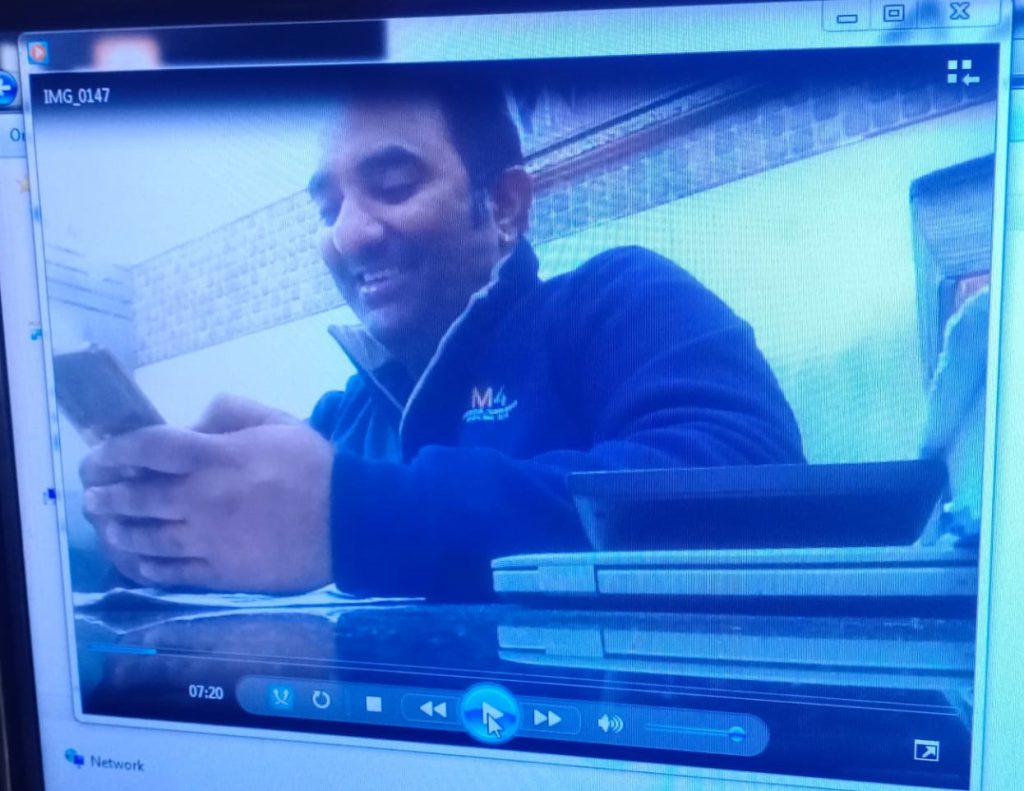
In this investigation, Mohammad Nabi was the first dealer Tehelka spoke to. Nabi runs a used car business in Ghaziabad, Uttar Pradesh. We offered him a fake deal, saying that our friend, a resident of Gurugram, wanted to buy a used Crysta Innova car with a Delhi number. We wanted to know the procedure for getting the vehicle transferred in our friend’s name. Nabi explained in detail that a broker would show a fake rented address of our friend in Delhi. He added that our friend would not actually live at that address—but if someone visited, they would find someone there. “That is what they charge money for,” Nabi said.
In the following exchange, Mohammad Nabi explains how agents legitimise fake addresses using ‘care of” arrangements. He admits that brokers place their own address and ensure someone is present to mislead checks — all for a price.
Reporter – Farzi ye bhi to hota hai? Aadmi us address par na ho farzi raseed katwa lee?
Nabi- Wo farzi nahi hai kaam, wo bhi genuine kaam hai, aisa hai wo c/o mein transfer hoti hai.
Reporter- Jab aadmi raha nahi hai us address par to kaise ho jayega?
Nabi- Wo agent address lagata hai, us address par aap jaoge to banda aapko milega.
Reporter – Kaunsa banda milega?
Nabi- Wo jiska address laga hoga.
Reporter – Wo banda to milega… magar jiske naam gadi hai wo thodi milega?
Nabi- Na, wo nahi milega.
Reporter- To wo farzi hi to hua.
Nabi- ‘Care of’ ka matalab hi yahi hai. Jaise aapka relative rehta hai wahan, usmein jo agent hota hai wo apna address karata hai.
Reporter- Magar banda rehta thodi hai?
Nabi- Usmein kya karte hain.. agent apna lagata hai.. paise leta hai.
Reporter – Haan to ‘care of’ ke paise leta hai na wo karane ke?
Nabi- Haan.
[This tells us how the loophole works—an artificial cover of legitimacy through ‘care of’ transfers. It reveals the ease with which intermediaries commercialise fraud under the guise of procedure.]
In the following dialogue, Nabi defends the practice by claiming agents only process transfers for people they “know.” He told us that they handle transfer cases only for people known to them. However, he failed to explain how he distinguishes a genuine buyer from a potential criminal. According to him, they avoid taking transfer cases for criminals. If something goes wrong later, the broker would be in trouble. Nabi admitted that if a crime is committed using a car transferred on a fake Delhi rental address, the police will visit that address but will not find the actual owner. Instead, they will find someone who provided their address for money—and that person will end up in trouble.
Reporter – Main wahi to keh raha hoon.. farzi to ho gaya?
Nabi- Farzi thodi hai address. Lag raha hai chahe kisi ka bhi lag raha hai, bina address ke thodi transfer ho jayegi.
Reporter – Nahi samajh nahi rahe ho tum. Maan lo koi criminal nikla jiske naam gadi transfer hui ho, usne koi wardaat kar di?
Nabi- To usey transfer ke liye aise koi dega bhi nahi. Sakhti bahut zyada hai… aise bande ko gadi di bhi nahi jayegi.
Reporter- Kisi ke chehrey par thodi likha hai ki wo apradhi hai.? Maan lo aapse kisi ne gadi kharidi.
Nabi- Dekhiye jo transfer karwate hain na wo bhi jo hai ‘care of’ mein har bande ke liye transfer nahi karate hain. Wo bhi bande ko pehchan kar hi karate hain. Maan lo hum jaanney wale hain to wo bata deta hai, hum keh dete hain ki apna banda hai.. jo apna banda hoga wo kara dega. Wo keh deta hai zimmedari aapki hogi.
Reporter- Mein wahi to pooch raha hoon… kisi criminal ki aapne karwa di to us mein to phas jyega na aadmi..
Nabi- Us mein har banda address aise nahi lagata hai… mein aapko bata raha hoon. Ab Maan lo hum aapke apne bande hain theek hai..,aapne kaha ki Nabi bhai mera address nahi hai Delhi ka aur aapki Delhi ki ID hai to aap transfer karwa do …ab maan lo is gadi se koi crime bhi hota hai, ab maan lo accident bhi ho gaya khuda na khasta, ya koi vardaat ho gayi to usmein address par hi to police jaati hai…to address par police jayegi aur jiske naam hai.. owner ke.. usko pakdegi
Reporter – Maan lo is address par aadmi rehta hi nahi hai?
Nabi- Wo to nahi rehta magar jo rehta hai usko to pakdegi na police.
Reporter – Wo to bechara phas gaya na jiske address par lagaya hai.
Nabi- Haan bilkul phas jaayega.
[This reveals the dealer’s casual attitude towards the process fraught with risk. The blame would fall on an innocent person whose address is used, proving that fraud survives on blind trust and poor checks.]
As the talk progressed, Nabi reveals how deeply normalised the system of fake transfers has become. He told us that they pay money for the car transfer, and the people providing their addresses for fake rent agreements also charge for it. If the police visit that fake address, the occupant will claim that the car owner was living there on rent and has since left. The priority, as Nabi bluntly says, is not legality but getting the vehicle transferred—come what may.
Reporter- Is aadmi k saath to galat ho gaya na?
Nabi- Haan…dekho Aisa hai hum to laga hi nahi rahe.. maan lo hum paisa de rahe hain to usi cheez ka de rahe hain …agent jiska address laga raha hai wo bhi paisa le raha hai…Jo banda apna address lagata hai na agent se wo paise bhi leta hai….‘care of’ ke paise deta hai warna aise koi lagayega thodi? Ab mein to aapka apna banda hoon.. aapse maine koi paisa nahi liya.. apna address laga diya, wo to ho gayi bhaicharey wali baat. Ab agent to din mein sainkdon gadiyan transfer karwate hain, wo to peene khane wale jo hote hain na nashedi…wo apna address laga dete hain…unko to bas paise chahiye. Unko koi dikkat hi nahi…paise se matlab hai.
Reporter – Challan to online aa jaate hain uski koi dikkat nahi hai. Maan lo koi vardaat ho jaaye to police number se address nikalegi na…par us address par wo aadmi milega nahi.
Nabi- Nahi.
Reporter- Ye to gadbad ho gayi na?
Nabi- Jo address lagayega wo apne bal bootey par lagata hai… ki jo bhi hoga mein dekh lunga, hamko kya matlab is baat se, hamko to transfer se matlab hai. Hamari gadi transfer honi chahiye..bas.
Reporter – Police jayegi to bol dega: mere yahan kiraye par rehta tha?
Nabi- Haan wo to rent agreement bhi lagta hai na bakayda. Wo rent agreement bhi lagate hain.
Reporter- Accha Aadhar bhi to lagta hai transfer mein?
Nabi- Aadhar card uska lagta hai jiski gadi hoti hai.
Reporter -Haan to usmein bhi to address hota hai?
Nabi- Haan to wo update karate hain, wo rent agreement banwate hain ye banda is address par rehta tha aur rehta hai. Wo ek LIC type ka banate hain, rent agreement banate hain… tab transfer hoti hai.
Reporter -Wo paise lete honge rent agreement banane ke?
Nabi- Haan bilkul lete hain.
[This shows the brazenness of the racket, where paperwork is easily manipulated for a price. We learn that even official documents like Aadhaar and rent agreements are routinely misused to mask fraud.]
Here, Nabi breaks down the cost difference between a normal transfer and a “care of” transfer. According to him, the charges for using a fake address are higher compared to a normal transfer. A fake transfer costs between Rs 10,000 and Rs 12,000, while a normal one is around Rs 3,500 to Rs 4,000. He explains why fake transfers are more expensive, citing agent fees and expenses involved in fabricating documents like rent agreements and utility bills.
Reporter- Paisa zyada lagega is kaam mein?
Nabi- Kam se kam 10-12 hazar lagenge.
Reporter -Itna zyada?! Aur normal transfer mein kitna lagega?
Nabi- Rs 3500-4000 k. ‘Care of’ mein zyada lagta hai.. agent khayenge paisa, rent agreement banta hai. Aadhar card, bijli ka bill doosre ka lagega.. ye saara kaam hoga.
[We see how fraud is monetised. Everything—from fake rent agreements to false address proofs—costs money, turning deception into a regular, organised service.]
Now, Nabi shares how a fake rent agreement helped him transfer a car from Gurugram to a buyer from Meerut, revealing the ease and cost of bending the rules. He said he had paid Rs 10,000 to a broker who arranged the transfer on a fake Gurugram rent agreement, claiming the buyer lived there. In reality, the man never stayed in Gurugram, he said.
Nabi- Ek bande ki ID thi Meerut ki. Maine Alto 800 bechi thi.. abhi usper Meerut ki gadi hai aur address tha Haryana ka..Gurgaon ka, HR 26 thi car. Is car ko maine abhi transfer kraya hai… 2-3 mahine ho gaye agent ne Gurgaon ka address dikhaya, wahi karata hai sare kaam humko to paise dene hain bas, kaam hona chahiye. Maine gadi bechi hai to mere through hi to hoga.
Reporter- Kitne paise liye ?
Nabi- Usne 10 k liye they.
[This reveals how routine and organised the fraud is. We learn that geography is no barrier; fake addresses and hefty payouts make almost any transfer possible.]
Sanjay Singh Baliyan is the second person Tehelka contacted during this investigation. Sanjay is also in the used car business, selling vehicles to interested buyers. We presented him with a fictitious deal, saying that our friend wanted to buy a used Crysta Innova in Delhi-NCR, but the buyer was from Gurugram (Haryana) and had no address proof for Delhi. We wanted to know how the transfer would be arranged in his name. In response, Sanjay assured our reporter that there was nothing to worry about—the car would be transferred to our friend’s name using a fake Delhi rental address.
Reporter – Kharidaar Gurgaon ke hain.
Sanjay – Naam kara denge.
Reporter – Kaise naam karwaoge? Wo Delhi mein nahi hai…ID nahi hai?
Sanjay- ‘Care of’ mein ho jayegi sir ji.
[This highlights the casual ease with which loopholes are exploited. Sanjay’s quick solution—using the “care of” method—shows how easily rules are bypassed.]
In this exchange, Sanjay reveals how rent agreements and Aadhaar details are manipulated to push through transfers. He explained in detail that the broker he would use for transferring the vehicle would create a fake rent agreement for an address in Delhi, showing that we had lived there before moving to Gurugram. He said this despite knowing we had never lived in Delhi and that the car would be transferred using that fake address.
Sanjay- Rent agreement karwa denge yahan ka, aajkal to Aadhar bhi change ho jata hai. Yahan se kisi ka rent agreement banwayenge ki rent par reh rahe hain ye yahan. Aadhar number to wahi rahega.
Reporter – Kisi aur ka rent agreement lagaoge?
Sanjay- Haan ji. Kisi ke makaan ka hoga.. dalaal hi banwate hain….ho jata hai ‘care of’ mein.
Reporter- Unka Delhi mein koi rishtedar nahi hai na. Wo rent par rahe hain, kuch address nahi hai unka.
Sanjay – Haan.. to wo ho jata hai ji, banwa dete hain.
[We learn that Aadhaar and rent agreements—meant for security—are easily misused to legitimise fraudulent transfers of vehicles. Sanjay admits that brokers arrange everything, even without real ties to the address, under the guise of a “care of” setup]
We told Sanjay that this would be wrong—our friend had never lived in Delhi, yet a fake rent agreement would show he had lived there for the car transfer. Sanjay, however, brushes aside concerns about wrong addresses, claiming that even someone from Bihar can get a transfer done through the “care of” route. He reveals that brokers manage everything—rent agreements and Aadhaar details—often using their own or a relative’s credentials.
Reporter -Wo to galat ho jayega na?
Sanjay – RC to by post hi aayegi.
Reporter -Haan magar wo rahe to hain nahi us address par. Galat na ho jayega?
Sanjay – Aajkal to sabkuch aadhar number hai, Agar koi Bihar ka bhi ho uske naam bhi ‘care of’ mein ho jayegi.
Reporter- Aadhar kiska lagaoge?
Sanjay-Aadhar dalal lagwate hain apna…rent agreement banwate hain. Rent agreement banwa denge. Aadhar dalal kisi ka bhi lagayega apne rishtedar ka ho chahe.
Reporter- Kyunki inka Aadhar Gurgaon ka hai.
[This shows how identity and address proofs, meant to ensure authenticity, are reduced to mere formalities. We learn that brokers confidently override legal safeguards for anyone willing to pay.]
Sanjay later admitted that he had purchased a car registered in Himachal Pradesh using a fake rent agreement and kept it in Delhi for two years before selling it, openly acknowledging how “care of” arrangements make such transfers effortless.
Sanjay- Koi dikkat nahi. Abhi maine Himachal mein gadi karwai ‘care of’ mein. Maine 2 saal rakhi HP 16.
Reporter- Aapne 2 saal gadi rakhi Himachal ki?
Sanjay- Haan. Abhi bechi hai pichle mahine.
Reporter- Matlab Himachal ki gadi Delhi mein chala rahe they aap?
Sanjay- Haan ji do saal tak rakhi. Maine kharidi thi sahi rate mein mil gayi thi.
Reporter- To aapne apne naam transfer karai?
Sanjay –Haan…maine apne naam transfer karwai.
[Here, Sanjay boasts about using the same system’s loophole for himself. This underlines the sheer normalisation of fraud.]
Sanjay then introduced us to Sandeep Girdhar, who would handle the transfer of our vehicle to a Delhi address. After speaking to Girdhar, Sanjay said he was willing to provide his own address and Aadhaar number for the transfer. He explained that he was doing this only because he knew us; otherwise, he would never take such a risk for a stranger. If a crime were committed using that car, Sanjay admitted, he would be the one in trouble, as the vehicle would be registered to his address. He also claimed that anyone else would have charged Rs 50,000 for the same job.
Sanjay – Sir ji, naam ho jayegi.. naam ki tension mat lo aap.
Reporter- Ye kaun they?
Sanjay – Sandeep Girdhar… Pakistani baniye hote hain ye, inka gadi transfer ka bhi kaam hai. Theek hain.. paisa accha lagatey hain ye. Gaadi to ho jayegi transfer ek baar gadi ke photo aa jaane do.
Reporter- Aap apne naam se lagwa doge?
Sanjay- Lagwa dunga ‘care of’ hi to lagana hai…Aadhar hi to lagega…mera bhi lagega unka bhi lagega…mera authority mein lagega. Aapka aadmi hai isliye mein de raha hoon… warna kaun deta hai. Aap janne wale ho isliye kar rahe hain warna nahi. Koi garbar hui to mein to jaunga jail. Koi aur hota to kehta 50 hazar rupaye do….. pata nahi kya crime karega gadi se, kaun is chakkar mein padega… ab meri aisi umer thodi hai ki lath kha lo.
[This reveals how personal networks and trust drive the fraud market. We learn that even those facilitating the scam acknowledge its dangers, yet carry on for money and connections.]
Our investigation then moved to a third used car dealer in Delhi, Ashish Walia. We told Ashish that we wanted to buy a Crysta Innova for ourselves. He offered us a used Crysta Innova with a Gurugram registration number and assured us that, even without any Gurugram address proof, the car could be transferred to a Gurugram address. To support his claim, he gave his own example: he lives in Delhi, yet his car is registered in Haryana, even though he owns no property there. According to Walia, physical presence at an address is irrelevant in an online-driven process where RTOs complete the formalities.
Reporter- Ye transfer aap hi karwaogey Gurgaon ka mera. Address to hai nahi?
Walia- Haan bilkul.
Reporter- Koi galat to nahi ho jayega. Gurgaon ki gadi Delhi mein transfer?
Walia- Meri khud ki gadi hai. HR XXXXX number daal lo.. mere naam hai jabki meri koi property nahi hai, ye to Ambala ke pass Narayangarh hai wahan ki hai.
Reporter- Koi dikkat to nahi hogi?
Walia- Kaise? Maan lo mein aaj ek jagah reh raha hoon… kal doosri jagah reh raha hoon, address thodi na roz roz change honge.
Reporter- Hum to rahe hi nahi wahan par?
Walia- Wo alag baat hai.. ab to sab kuch online hai. Jab online nahi tha tab bhi ye ho raha tha kyunki kar to RTO hi raha hai na, Public mein se thodi koi kar raha hai
[Here, Walia confidently claims he can handle the transfer despite the buyer lacking a Gurgaon address. This shows how official systems indirectly enable fraud. We learn that online processes, meant to simplify governance, are being exploited to bypass verification, making fake transfers almost effortless.]
In the following exchange, Walia dismisses concerns about address checks, revealing that verification is practically nonexistent. According to Walia, his broker would show that we were living on rent in Gurugram by preparing a fake rent agreement, even though he knew we had never lived there. The car would then be transferred using that address. Walia was aware that we had shifted to Noida and that our Aadhaar carried a Delhi address—meaning we neither lived in Gurugram nor currently in Delhi—yet the car would still be registered on a fake Gurugram address. He reassured us that no one comes to verify the address.
Reporter- Koi verify bhi nahi hoga?
Walia- Kya hota hai actually wahan par wo ‘care of’ mein lagta hai. Ye banda filhaal yahan par hai, iska permanent address ye hai jo aapka Aadhar card hoga.
Reporter- Jo aap address dikhaogey wo verify nahi hoga?
Walia- Nahi.. koi verify nahi hota. Waise bhi sab kuch online hai… total online.
[Walia’s explanation that everything is processed online, making “care of” arrangements easy and unchecked confirms that digital systems without ground verification create perfect conditions for fraud. We learn that absence of physical checks makes fake transfers almost risk-free.]
Fake registration of vehicles is mostly linked to used cars, and Delhi is a major hub for it. Fake rent agreements are routinely used to register vehicles in Delhi-NCR, while Aadhaar cards in such transfers are sometimes updated to rented addresses that the holder has already vacated. The government’s current focus on ELVs is understandable, but it must also turn its attention to the rampant fake registration of vehicles—a menace that has now become a serious threat to national security and law enforcement.