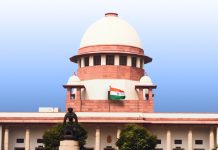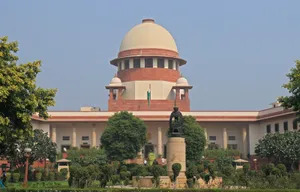
In a development that has sent ripples through both the education system and the legal fraternity, the Supreme Court of India on Friday became the stage for a high-stakes debate—one that sits at the intersection of truth, trust, and the minds of millions of young students.
At the center of the storm is a Class 8 textbook published by the National Council of Educational Research and Training (NCERT), carrying a chapter on corruption in the judiciary. What began as an educational inclusion has now escalated into a matter of national scrutiny.
Representing the Centre, Solicitor General Tushar Mehta addressed a bench led by Chief Justice Surya Kant, alongside Justices Joymalya Bagchi and Vipul M Pancholi. His message was clear: the government has acted—and decisively so.
A powerful expert committee has been constituted to re-examine and redraft the controversial chapter. But this is no ordinary panel.
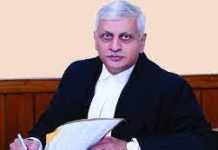
In a move that underscores the gravity of the issue, the committee brings together some of the most formidable legal minds in the country. Leading the intellectual charge is K K Venugopal, a towering figure in constitutional law. He is joined by Indu Malhotra, known for her sharp judicial insight, and Aniruddha Bose, currently heading the National Judicial Academy.
An academic voice, in the form of a vice chancellor, will add balance—ensuring the final content is not only legally sound but also suitable for young learners.
Behind the legal formalities lies a deeper tension as to how to teach children about corruption in the judiciary without shaking their faith in it. How do you present reality without breeding cynicism?
The courtroom, usually a place for resolving disputes, briefly turned into a forum for confronting these uncomfortable questions.
Sources suggest that the original chapter had raised concerns for potentially painting the judiciary in a negative light without sufficient context. The Centre’s response—swift and strategic—aims to recalibrate that narrative.
Yet, the stakes remain high. For some, this is about protecting the dignity of one of democracy’s most vital institutions. For others, it is about preserving the honesty of education—even when the truth is complex.
As the newly formed committee begins its work, the nation watches closely. What emerges from this exercise may not just rewrite a chapter in a textbook—it could redefine how future generations understand power, accountability, and justice.
The final verdict, it seems, will not just belong to the court—but to history itself.