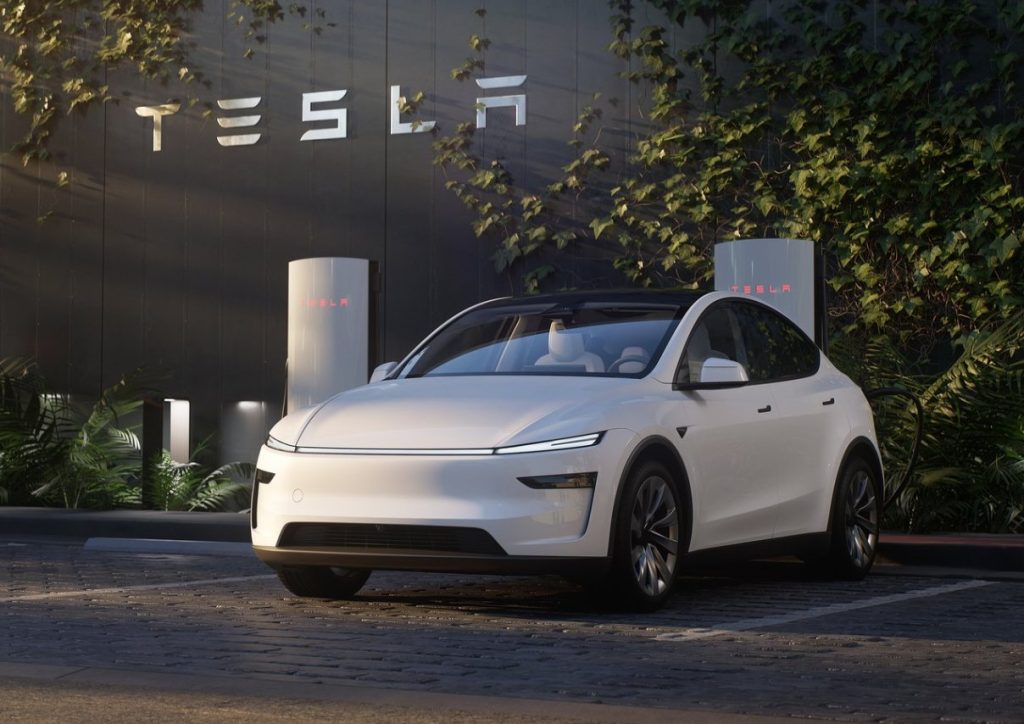
Tesla, the electric vehicle (EV) giant that redefined the automotive industry, is finally entering India—a market long eyed but cautiously approached. The official opening of Tesla’s first showroom in Mumbai in July 2025 marks a symbolic and strategic pivot.
Yet this move comes amid a challenging global backdrop: intensifying competition in China, regulatory and political headwinds in the US, and Elon Musk’s public fallout with Donald Trump. As Tesla tiptoes into the Indian market, it carries both high ambitions and heavy baggage.
India, the world’s third-largest car market, is in the midst of a mobility transformation. The government’s push toward electrification through schemes like FAME II, state-level subsidies, and tax breaks for EV infrastructure has created a promising, albeit complex, environment for electric mobility.
However, Tesla had long avoided India, citing prohibitively high import duties—as much as 100 per cent for fully built vehicles—which could double the retail price of its cars. In contrast, local players like Tata Motors and Mahindra already offer electric models at Rs 10–20 lakh, well within the reach of India’s value-driven consumers.
Tesla’s current move is exploratory, importing a limited number of Model Y SUVs and showcasing them in luxury showrooms like the one in Mumbai’s Bandra-Kurla Complex. But the cars remain too expensive for mass adoption, with estimated prices crossing Rs 70–80 lakh.
So why move now? The Indian government recently introduced an EV policy that reduces import tariffs to 15 per cent for companies committing at least USD 500 million to domestic manufacturing. Though Tesla hasn’t yet signed up for this, it may be laying the groundwork for future localization, especially amid global pressure to diversify its manufacturing base.
Subhabrata Sengupta, Partner, Avalon Consulting, and an auto expert said that Tesla’s entry into India is largely going to be focused on imported vehicles. “I don’t think they have any plans to manufacture, and I don’t think that’s going to change even in two, three years,” he said.
Subhabrata feels that move is neither a pivot nor defensive and said, “I think it’s neither, because India is not a large enough market to be either. So they have been looking at India as a potentially interesting market to experiment, and they’re doing that, they’re basically just going to test the waters in India to see how much they can sell at their price point, their product in India.”
Tesla’s situation in China, once its crown jewel outside the US, is rapidly deteriorating. For years, Tesla thrived on the back of government incentives and the prestige of being the first foreign company to own a plant in China without a local partner. Its Gigafactory in Shanghai symbolized Tesla’s global ambitions.
However, 2024 and 2025 have seen a dramatic reversal. Tesla’s market share has dropped from over 11 per cent in early 2021 to around 4 per cent in 2025, due to a wave of competition from aggressive domestic automakers like BYD, Xiaomi, Xpeng, and Nio. These companies offer compelling alternatives, often cheaper and better adapted to local tastes.
Xiaomi’s SU7 electric sedan, launched in March 2025, registered over 240,000 bookings in one day, directly undermining Tesla’s dominance. Moreover, Tesla’s Full Self-Driving (FSD) software has struggled in China, where regulatory hurdles and strong local rivals have neutralized one of Tesla’s biggest competitive advantages.
Back home in the United States, Tesla is facing headwinds on multiple fronts. In Q2 2025, the company reported a 12 per cent drop in global sales year-over-year (YoY), a rare retreat for a company used to breakneck growth. Part of the reason is rising competition from legacy automakers like Ford and GM, both of which have rolled out cost-effective EVs with strong dealer networks and customer service.
Subhabrata said that Tesla right now is under a lot of pressure in Europe, US, and even in China. Things are slowing down. So, I would think that even in the next five years, there is very little chance of Tesla selling and manufacturing in India. The key thing would be they will test out their products and see how much they can sell in India at their price point and that’s something which we will figure out over the next few years.
Another issue is Tesla’s reputation crisis. Elon Musk’s controversial comments on politics, immigration, and his handling of mass layoffs at Tesla have triggered protests and boycotts under the umbrella of a movement dubbed “Tesla Takedown.” Activists, some of them former employees and Tesla owners, accuse the company of losing its mission and turning into a political football.
Investor confidence has also been rattled. Tesla’s stock has been volatile, impacted by Musk’s political flirtations—including his founding of the “America Party” in early 2025. The move alienated both major parties and was seen as a direct provocation of Donald Trump’s electoral ambitions.
Once viewed as strange bedfellows, Elon Musk and Donald Trump have become outspoken critics of one another. Their alliance began to unravel in late 2024 when Musk began openly criticizing Trump’s stance on clean energy and free speech. Tensions escalated when Trump, back in the White House, revoked key EV subsidies, including the USD 7,500 federal tax credit for Tesla buyers. Instead, Trump has focused subsidies on companies with strong union ties—something Tesla notably lacks.
However, this does not seem to affect the growth of the company in other geologies, Subhabrata said, adding that the bigger challenges for Tesla are different.
“So competitively, the Tesla price value equation has been significantly undermined by Chinese players, particularly BYD and there are competitive products that significantly lower prices from the Chinese. Tesla is finding it difficult in China as well as Europe fighting against these Chinese brands. There has also been a lot of hue and cry in Europe over autonomous driving software of Tesla and their responsibility in some accidents which had happened. So there has been a lot which could be potentially quite damaging to them, both from a brand standpoint and also simply financially in terms of the compensation liabilities and so on and so forth. So I think they have enough problems in their hands. So without having to worry about the impact of the political standout, of course that would help; but I would say these are much more pressing business issues than any political drama,” he told Tehelka.
Success in India won’t be easy. To move beyond urban elites and tap into the broader Indian market, Tesla will need to manufacture locally, launch a sub Rs 30 lakh model, and build out its charging network, ideally powered by solar and renewable energy, another Musk specialty.
Reports suggest Tesla may be eyeing states like Gujarat or Maharashtra for a Gigafactory, but there has been no formal commitment yet. Without this, Tesla will remain a niche brand, admired but largely out of reach.
Tesla’s India foray is both bold and cautious. It’s dipping a toe, not diving in—unlike China in 2019. This incremental approach reflects the complexity of the Indian market, the company’s strained global position, and Musk’s own political distractions.
However, if Tesla gets it right—by localizing production, engaging with Indian R&D talent, and launching region-specific products—it could not only conquer a new market but also regain momentum lost in China and the US.
“It’s going to be an interesting player to watch, but I don’t think anything at the price point and I don’t think it is going to be a mass market player anytime soon. So it’ll be a good new entrant, an option for the customers, which is always a good thing, but I doubt if they’re going to shake up the market at least the lower end of the pyramid,” he said.
He said, “If Tesla makes a dent, given the overall numbers here, they will probably sell 10,000 at most 20,000 units, even if they do very well.”
But if it fails to adapt, India could become another missed opportunity, similar to the struggles in Southeast Asia and Latin America.
Tesla’s entry into India is more than a business move—it’s a strategic recalibration. As it grapples with saturation and hostility in China, and growing skepticism in the US, India offers a fresh playing field. Yet it’s a field that demands humility, patience, and local wisdom.