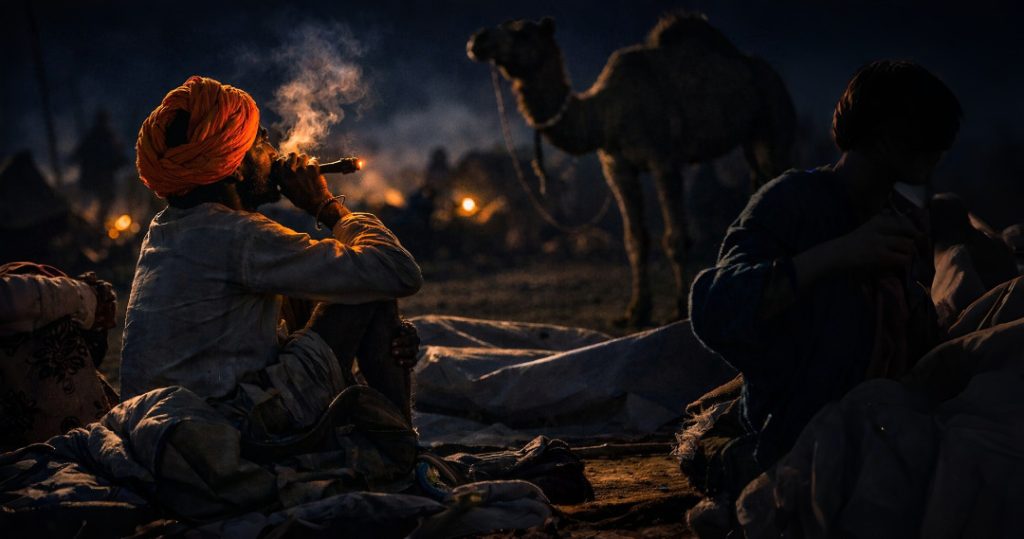
A Tehelka SIT report reveals how illegal drugs are readily available in Rajasthan’s towns, with local peddlers, resort staff and tour operators facilitating access as narcotics from across the Pakistan border find their way into the desert state.
The opening scene of hit Bollywood film Udta Punjab shows drugs from Pakistan being tossed into the fields of Punjab. The film captured the scale of the drug menace in the border state. But today, the problem is no longer confined to Punjab. In neighbouring Rajasthan too, drugs have quietly spread across the state’s towns and districts.
In the towns of Ajeetgarh and Mandawa in Jhunjhunu district, Tehelka found how easily drugs are available. During its investigation, our reporter discovered that ganja and other narcotics are sold openly, with suppliers, middlemen and even locals aware of the thriving trade.
“I consume ganja [marijuana or weed] daily, three-four times a day. I purchase ganja from a local lad once every twenty days or in a month. I buy 250 grams of ganja from the supplier, who claims that the ganja is from Manipur,” said Gopal Saini, a drug peddler, to Tehelka’s undercover reporter in Rajasthan.
“I will supply you both ganja and afeem [opium] for your party of 250 people in Rajasthan. If you take 2 kg ganja and 2 kg opium, the total cost will be Rs 5 lakh. For that, you have to pay me at least Rs 4 lakh in advance,” Gopal told Tehelka.
““The afeem I will give you is from Pakistan. It comes to Jaisalmer and Jodhpur after being smuggled from Pakistan into India,” said Gopal speaking to Tehelka.
“While talking to me over the phone, use code words, like wood for ganja and tea leaves for afeem. And please see that I should not get into any trouble,” Gopal told Tehelka’s reporter.
“I can bring ganja for you from the drug peddler. But I cannot take you there with me; otherwise the peddler will get suspicious, and may not give ganja to me,” said Mohit Kumar, a resort employee in Rajasthan, to Tehelka’s reporter.
“Some guests coming to my resort, and drivers carrying foreigners in their cabs and staying at our resort, ask for ganja. The staff of the resort ask me to bring ganja for them. It takes half an hour for me to bring ganja to the resort. Several times, on the demand of the guests, I have brought ganja for them. The cost is Rs 450 for 25 grams,” Mohit told Tehelka.
“Had you asked me for ganja in the afternoon today, I would have arranged it for you by now. Now, the issue is that the person who brings ganja has gone to attend a wedding. Next time when you come, inform me in advance, and I will arrange ganja for you,” said Pooran Singh, a bar manager at a resort in Rajasthan, to Tehelka’s reporter.
“You will get as much ganja as you want. Ganja is easily available in this town in Rajasthan. Just go and you will see people sitting on the roadside enjoying ganja. If you ask them, they will give it to you,” said Gopal Singh, a camel cart owner in a town in Rajasthan.
“Film stars ask for drugs when they come for shooting in this Rajasthan town. But they don’t ask directly; their staff members ask on their behalf. Since we arrange other things for them, we arrange drugs for them as well,” said Sandeep Singh, a senior tour guide in a town in Rajasthan, to Tehelka.
How easily illegal drugs are available in Rajasthan’s towns of Ajeetgarh and Mandawa can be judged from the above excerpts. What to talk about Ajeetgarh and Mandawa, towns like Jaisalmer, Jodhpur, Sri Ganganagar, Barmer and Bikaner have been witnessing a growing drug menace. It is said that more than 20 percent of the entire population of Rajasthan is involved in substance abuse. With the result that the term “Udta Rajasthan” [Flying High Rajasthan] has emerged in recent years, drawing parallels with the drug crisis depicted in the film Udta Punjab.
Rajasthan, the desert state, has replaced Punjab as the main entry point for narcotics supplied by Pakistani gangs, who use drones to send consignments across the border. Pakistani narco gangs send multiple drones along the long border every night. The drones are cheap—Rs 10,000 to Rs 15,000 each. Drugs fetch huge returns. Losing a few drones is just a small operational expense for the smugglers.
The film Udta Punjab, starring Shahid Kapoor, opens with a scene that shows drugs from Pakistan making their way into the fields of Punjab. The state is also used as a transit route for supplies to other states, such as Rajasthan and Haryana. Presently, drugs coming from Pakistan into Rajasthan through its border towns are supplied across the entire state.
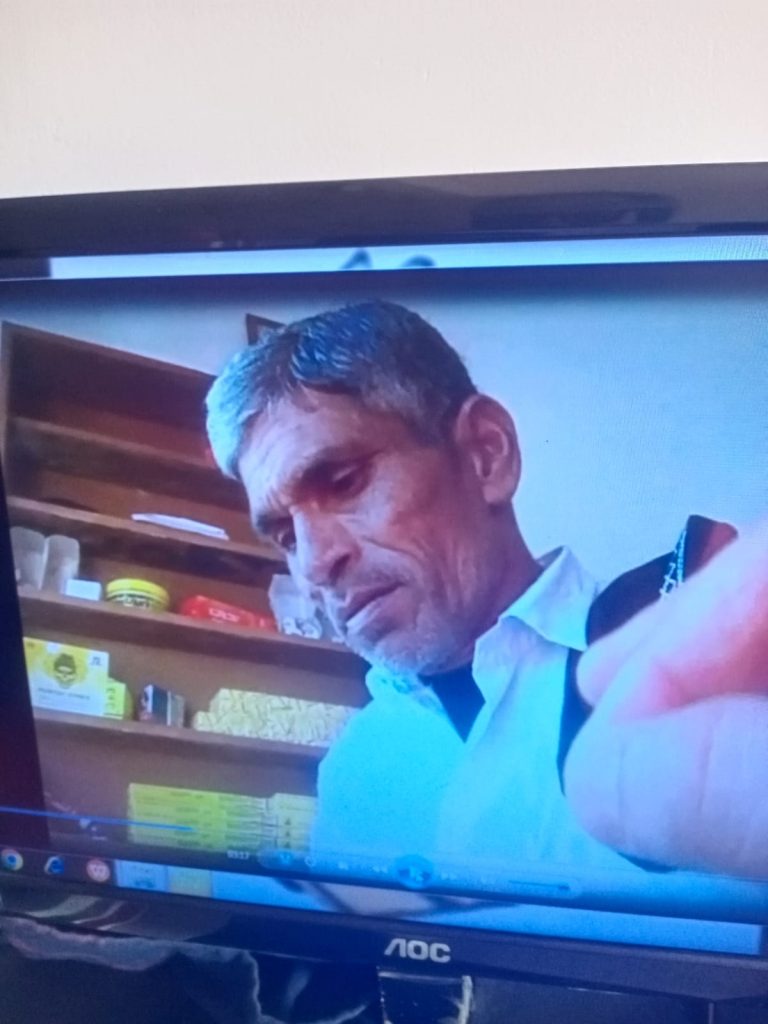
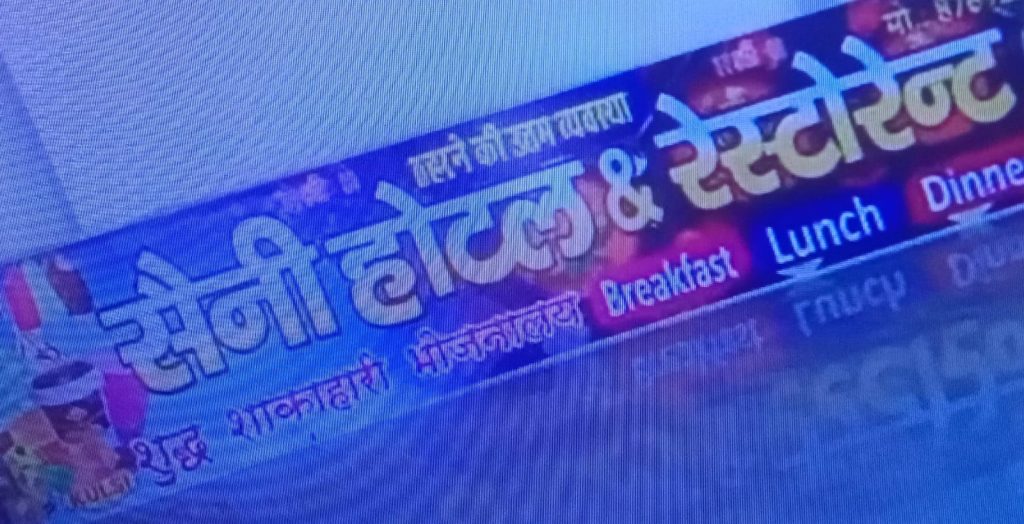
Tehelka’s reporter witnessed how drugs are sold openly on the streets of Ajeetgarh and Mandawa in Jhunjhunu district, in the Shekhawati region of Rajasthan. During the investigation, Tehelka’s reporter met Gopal Saini in Mandawa, who runs a restaurant in his name, Saini Hotel & Restaurant. As instructed by the source, Tehelka approached Gopal Saini and asked for illegal drugs.
Gopal, after an initial hesitation, as we were strangers to him, confessed that he sells ganja from his restaurant. He said he himself consumes ganja three-four times a day after purchasing it from a local supplier. Saini said he buys 250 grams of ganja for himself every twenty days or once a month. According to Saini, the supplier sells him ganja from Manipur.
In the following chat with Tehelka’s reporter, Gopal Saini speaks openly about his use of ganja.
Reporter- Accha aap khud petey ho ganja?
Gopal- Haan.
Reporter- Ye Rajasthani ganja hai kya?
Gopal- Ye hamko maloom nahi, hamare pass Manipuri bolke aata hai.
Reporter- Aap kitna lete ho?
Gopal- Mein zyada nahi leta, sirf paao.
Reporter- Kitna lete ho aap.. 250 gram?
Gopal- Haan.
Reporter- Roz lete ho?
Gopal- Roz nahi, mahina-20 din mein ek baar.
Reporter- To wo local yahin ka rehne wala hai banda?
Gopal- Yahan ka nahi, aas pass ka hai.
Reporter- Uske pass kahin aur se aati hogi?
Gopal- Haan.
Reporter- Manipur ka bol kar de jaata hai?
Gopal- Jaise alag-alag bolkar de jaata hai.. Manipur ka, Orissa ka, alag alag aate hain.
Reporter- Nasha hota hai is wale ganje se?
Gopal- Dekh lena aap pee kar taste kar lena.
Reporter- Cigarette mein daalkar peetey ho.. kaise peetey ho?
Gopal- Hum to chilam mein daalkar petey hain.
Reporter- Daily petey ho, ya kabhi kabhar?
Gopal- Din mein 3-4 baar peetey hain hum log.
Reporter- Daily?
[This exchange shows how casually the drug trade is discussed. A local user talks freely about supply sources and regular use. It emerges that ganja from distant states reaches small Rajasthan towns without much difficulty.]
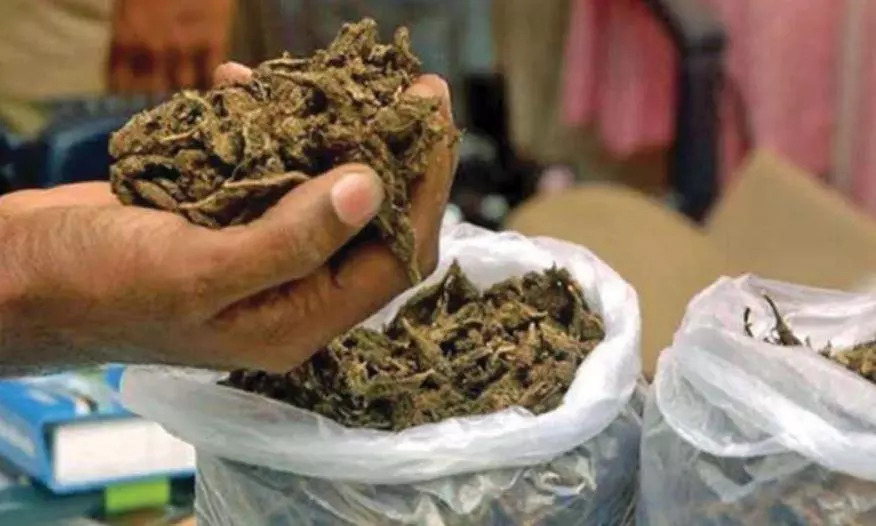
In the chat below, the reporter, posing as a customer, tells Gopal about a purported party in Mandawa where 200–250 people are expected to assemble and asks if ganja can be arranged in large quantities. Gopal replies without hesitation. He says he has a supplier and can arrange as much as required. Even 4–5 kg, he says, can be procured if informed in advance. He also mentions the price of ganja available with him.
Reporter- Accha suno meri baat, hamari ek party hai 26-27 tareekh mein yahin Mandawa Rajasthan mein; to hame chahiye ganja badi maatra mein.
Gopal- Kitna chahiye?
Reporter- Kitna dilwa saktey ho?
Gopal- Kitna, phir bhi?
Reporter- 200-250 log hain.
Gopal- Bata dena, dilwa denge
Reporter- Hai aapke paas banda? Supplier hai?
Gopal- Hai.
Reporter- Kitne ka mil jayega, 200-250 logon ke liye, kitna hona chahiye aapke hisab se?
Gopal- Jitna aap kahao.. 1 kg, 2kg, 5 kg?
Reporter-1 kg, 2kg, 3kg!?
Gopal- Jitna aapko chahiye utna bata dena, usi hisab se mangwa dunga.
Reporter- 4-5 kilo bhi mil jayega?
Gopal- Mil jayega.
Reporter- Kya rate hoga?
Gopal- Dekho, ye hai mere pass 250 rupees ka 10 gram.
[This dialogue shows how easily large quantities of ganja can be arranged through local contacts. A simple request for a party turns into a ready offer of several kilograms. It emerges that supply networks operate quite openly. Such casual ease for procuring drugs should worry authorities.]
When asked for his phone number, Gopal was initially reluctant to share it with us. Later, however, he yielded and gave us his number, reassured that we were customers seeking illicit drugs for an upcoming party at a resort in Mandawa. Gopal also told us that a similar party had recently been organised in Mandawa.
Reporter- To aap mujhe apna number de do… mujhe chahiye 200-250 logon k liye.
Gopal- Hum number nahi de saktey. Ye meri dukaan hai, yahan mujhse baat karo.
Reporter- Lekin hum to chale jaayenge, hum to 26-27 ko aayenge, to mein pata kaise karunga aapse?
Gopal- Nahi bhaiyya darr lagta hai.
Reporter- Whatsapp par baat kar lenge kisi aur tareeke se?
Gopal- Chalo theek hai.
Reporter- Hame chaiye 200-250 logon ke liye, party hai.
Gopal- Accha peeche ber bhi party hokar gayi thi.
Reporter- Kahan?
Gopal- Dessert mein. Aapki kahan hai, mere ko maloom nahi hai?
Reporter- Hamari bhi wahin hai dessert mein.
Gopal- 5-7 din pehle bhi hokar gayi thi yahan se, 15 din pehle maan lo aap.
Reporter- Accha, 1-2 Feburary ko?
Gopal- Haan.
[The chat shows the caution used by small suppliers while dealing with unknown buyers. Yet it also reveals how drugs are quietly arranged for large gatherings. It emerges that such supplies are not unusual in the area.]
As we probed further, Gopal confessed that apart from ganja he could also supply afeem [opium] to us for our party. He further said that the afeem comes from the Jodhpur–Jaisalmer side after being smuggled into India from Pakistan. Gopal also told us the opium rate, which is Rs 2,500 for 10 grams.
Reporter- Sirf ganja hai, aur kuch nahi hai.. jaise heroine, charas?
Gopal- Nahi wo nahi hai afeem mil jayegi..
Reporter- Afeem kahan se aati hai?
Gopal- Afeem aati hai ye Jodhpur side se.
Reporter- Pakistan border se aati hogi Jaisalmer, Jodhpur mein?
Gopal- Haan.
Reporter- Afeem ka kya rate hai?
Gopal- 10 gram ka Rs 2500 hai.
Reporter- Pure hogi, milawat to nahi?
Gopal- Badiya cheez aayegi.
[The dialogue offers a glimpse into how different drugs circulate through local networks. A small supplier speaks casually about the source and price of opium. It emerges that border routes remain crucial for such supplies.]
After Gopal told us that he could supply afeem as well, we gave him a fake order for our fictitious party. We asked Gopal to provide 2 kg of ganja and 2 kg of afeem for a party of 200–250 guests in Mandawa. Gopal agreed and told us the combined rate of both the substances. According to him, we would have to pay Rs 5.50 lakh for the two.
Reporter- Aap ek kaam karo, hame 2-2 kilo karwa do, 2 kilo ganja aur 2 kilo afeem.
Gopal- 2 kilo afeem… paise bahut ho jayenge?
Reporter- Wo to de denge hum. paise kitne ho jayenge?
Gopal- 10 gram ke 2500 ho gaye, to lakh rupees ho jayenge.
Reporter- Haan wo de denge.
Gopal- Dono ke milakar Rs 5.50 lakh ho jayenge.
Reporter- Afeem aur ganja dono ke?
Gopal- Haan. 2 kilo ganja aa jayega aur 2 kilo afeem.
Reporter- Theek hai, aap karwa do.
[The chat shows how quickly a deal for large quantities of drugs can take shape. Prices are calculated and supply is assured with little hesitation. It emerges that such transactions are treated almost like routine trade. The alacrity with which such deals are discussed is unsettling.]
Gopal then gave us two code words for the deal to be used while talking over the phone. As a professional, he was taking precautions to ensure that he did not get into any trouble for supplying illegal drugs. He asked us to use the code word “lakdi” (wood) for ganja and “chai patti” (tea leaves) for afeem. Gopal also told us that we should inform him about the delivery one hour in advance, and his man would deliver the substance. We also told Gopal not to arrange the substance before we asked him to do so.
Gopal- Aap ‘lakdi’ ke naam se bol dena.. iske liye to ‘lakdi’.
Reporter- Ganja ke liye?
Gopal- Aur uske liye ‘chai’ bol dena.
Reporter- Afeem ke liye chai?
Gopal- ‘Chai patti’ bol dena.
Reporter- Ye batao dono lene hame aana padega ya aap resort par pahucha dogey?
Gopal- Pahucha denge.
Reporter- Desert wale main.
Gopal- Aap aa jana desert mein, kya dikkat hai, aap jabhi bologey tabhi ladka 1 ghanta aadha ghanta pehle dekar jayega, 1 ghante mein aap aakar le jaana.
Reporter- Mein jab phone karun tab hi mangwana, uske pehle mat mangwana.
[In the exchange above, Gopal advises the reporter to use code words to avoid suspicion during phone calls. The chat reveals the small precautions used by those involved in the trade. It emerges that deliveries are planned quietly and quickly. Such practices show how organised the network is.]
Gopal initially demanded the full Rs 5 lakh in advance from us for the illicit drugs. But we refused to pay the entire amount beforehand, saying we also needed a guarantee for our money. Gopal then reduced the advance to Rs 4 lakh, but insisted that this amount too had to be paid in advance He says there is no need to worry as he runs a shop there and will not disappear with the money. Gopal also asked us to ensure that he did not get into any trouble for supplying drugs to us.
Gopal- Payment pehle karna padega aapko?
Reporter- Payment kitna karna padega?
Gopal- Rs 5 lakh to karna padega.
Reporter- Poorey 5 lakh.. advance?
Gopal- 4 kar dena.
Reporter- 4 lakh cash, paise ka nuksan na ho jaye?
Gopal- Mein betha hoon na yahan pe, tension kyun le rahe ho? Ye meri dukaan hai.
Reporter- Aisa na ho hum paise dein, wo chale jaayen?
Gopal- Aap paise ki koi tension mat lo, bas aap uska dhyan rakhna wo kahin gadbad ho jaye.
Reporter-Kaunsi gadbad?
Gopal- Waise to ye meri property hai, paise ki tension mat lena.
[In the exchange above, Gopal talks about the payment for the drugs asked by the reporter. The chat shows how such deals are pushed forward once price and quantity are settled. Advance payment is demanded to secure the supply. It emerges that trust is built through local presence.]
After we returned from Rajasthan, Gopal Saini continuously called us, asking when our party was going to take place in Mandawa so that he could supply the drugs. We told him that it had been postponed indefinitely. Since our party was fake, we did not take any drugs from Gopal Saini. The deal was meant only to expose him.
Gopal Saini is a drug peddler whom Tehelka met in Mandawa, allegedly selling illegal drugs from his restaurant. We were also shocked to learn that even a staff member of a resort in Ajeetgarh, where Tehelka’s reporter was staying, was involved in selling drugs. Mohit Kumar, a heritage hotel staffer from Bihar, told our reporter that ganja is easily available on the streets of Mandawa and that he knows the place where it is sold. According to him, one only has to place the order and he will fetch it from a nearby village.
In the chat below, the reporter asks Mohit about the availability of drugs in the area. Mohit says that only ganja is easily available. When asked how it can be obtained, he explains that it has to be brought from a nearby village. Mohit also says that he knows the place where it can be sourced. He indicates that he has seen the location himself.
Reporter- Kya- kya milta hai?
Mohit- Ganja milti hai.
Reporter- Ganja milta hai, aur?
Mohit -Bas ganja milta hai.
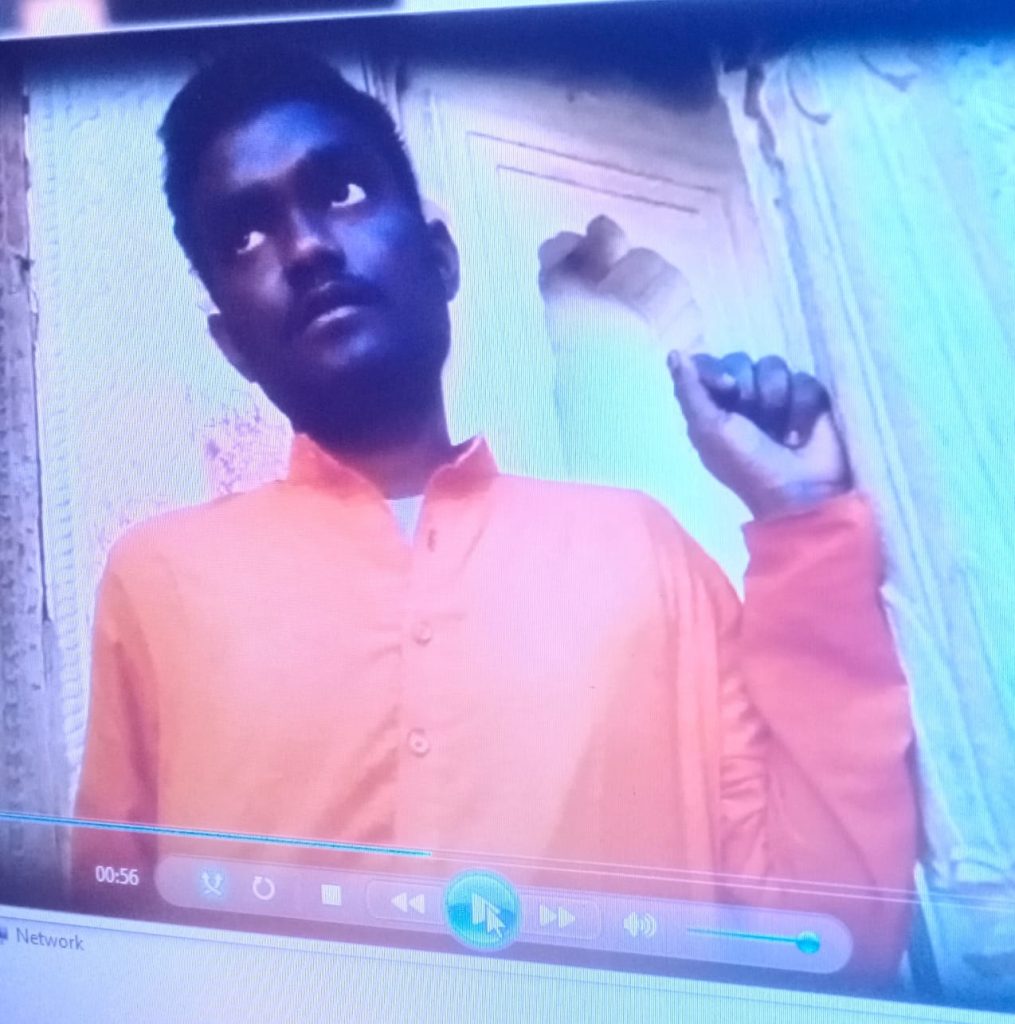
Reporter- To kaise milega kisi ko chahiye ho to?
Mohit- Laana padega jakar bahar gaon mein.
Reporter- Dekhi hai tune jagah?
Mohit- Haan.
[In the exchange above, Mohit says that he knows the place where ganja can be sourced. It seems that nearby villages act as supply points. Such openness reflects the spread of the trade.]
When we insisted that we would go with Mohit to fetch ganja from the drug peddler, he refused. Mohit said the peddler knew only him and would give ganja to him only if he went alone. He added that if he took us along, the peddler would become suspicious and would refuse to give the drug.
Reporter- To chal.
Mohit- Paise denge to hum le aayenge jaakar.
Reporter- Hame mangwana nahi, ussey baat karni hai.
Mohit- Nahi sir, bhadak jayega wo.
Reporter- Kyun?
Mohit -Darr jayega wo.
Reporter- Darne ki kya baat hai?
Reporter (continues)- Accha tu lekar nahi jayega, hame laa dega?
Mohit- Shaq karega na sir, ye doosre type ka area hai, isliye shaq karega.
Reporter- Hum doosre type ke dikh rahe hain?
Mohit- Haan isliye dega hi nahi aapko.
Reporter- Tere ko de dega?
Mohit- Haan.
[The chat shows the caution used in such small drug networks. According to Mohit, the supplier would deal only with people he already knows. So, sellers prefer dealing only with familiar faces and avoid strangers. It emerges that middlemen often handle such requests. That quiet layer of trust helps the trade survive.]
Mohit then revealed that this would not be the first time he had brought ganja to the hotel. On many previous occasions, he said, he had brought ganja for hotel guests and for drivers accompanying foreign visitors. Mohit also indicates that other people, including some guests, make similar requests. He then mentions the price of ganja available in the area. According to Mohit, the cost of ganja is Rs 450 for 25 grams.
Reporter- Tu laya hai pehle ?
Mohit -Haan drivers ko laya hoon.
Reporter- Kaunse drivers?
Mohit- Ye jo aate hain angrez ka, koi-koi mangta hai, to hum dila detey hain.
Reporter- Drivers mangtey hain, ya aur log bhi?
Mohit- Haan aur bhi mangtey hain.
Reporter- Guest log bhi?
Reporter (continues)- Kya rate hai yahan par?
Mohit- 450 rupees ka 25 gram.
Reporter- Kitna hota hai?
Mohit- 25 gram itna hota hai.
[The chat suggests that such arrangements are not unusual in the area. Requests for ganja come not only from drivers but also from others around the hotel. It emerges that small local contacts help keep the supply going.]
We spoke to Mohit on the first day but did not place an order for ganja. The next day he called us, saying he would go to the drug peddler in half an hour. If we needed ganja, we would have to pay him Rs 450. When asked about the quality, Mohit said it would be good and assured us that nothing would happen to him while bringing the ganja from the peddler to the hotel where we were staying.
Reporter- Tu kab free hoga?
Mohit – Chale jayenge aadhe ghante mein.
Reporter- Mujhe kitne paise dene hain tujhe?
Mohit- Rs 450 ka 25 gram.
Reporter- Theek hai aur kuch nahi milega?
Mohit- Nahi.
Reporter- Tu la dega, Ganja theek hoga?
Mohit –Haan.
Reporter- Pehle laya hai.,.accha to hoga?
Mohit- Haan, peene mein bhi accha hai.
Reporter- Nasha hai?
Mohit -Haan
Reporter- Tujhe lane mein dikkat to nahi hogi?
Mohit- Aadha ghanta lagega.. mein laakar de dunga.
Reporter- Kitne paise de doon?
Mohit- Rs 450.
[The chat shows how casually the deal is discussed. Mohit speaks with confidence about the price, quality and quick delivery. When Mohit says there will be no difficulty in bringing the ganja, it becomes clear that arranging the contraband is treated as a routine task rather than something fraught with risk.]
We asked Mohit not to tell anyone in the hotel that we were asking for ganja. In response, Mohit said that everyone in the hotel already knows that he is the one who brings ganja for guests on demand and that he knows the peddler. He says that whenever someone asks, he brings it for him.
Reporter- Yahan batana nahi kisi ko …kisi ko pata hai?
Mohit- Staff ko pata hai.
Reporter- Kya?
Mohit – Staff ko pata hai mein lakar deta hoon,
Reporter- Accha koi mangta hai to tu laakar de deta hai?
Mohit- Hmm.
Reporter- Tu kitne baar la chukka hai?
Mohit- 4-5 baar la diye hain.
Reporter- Koi dikkat to nahi hui hotel mein lane mein?
Mohit- Na na.
[Mohit admits that he has done this four to five times earlier, adding that he has never faced any difficulty bringing it into the hotel. This chat suggests that such activity is not hidden within the hotel. It becomes clear that the practice is treated casually, raising questions about how easily such supply chains operate.]
We left the hotel without ordering ganja, as our purpose was to investigate the racket rather than buy the substance. Mohit kept asking for Rs 450 for 25 grams of ganja. We gave him Rs 450, not for the ganja, but as a tip.
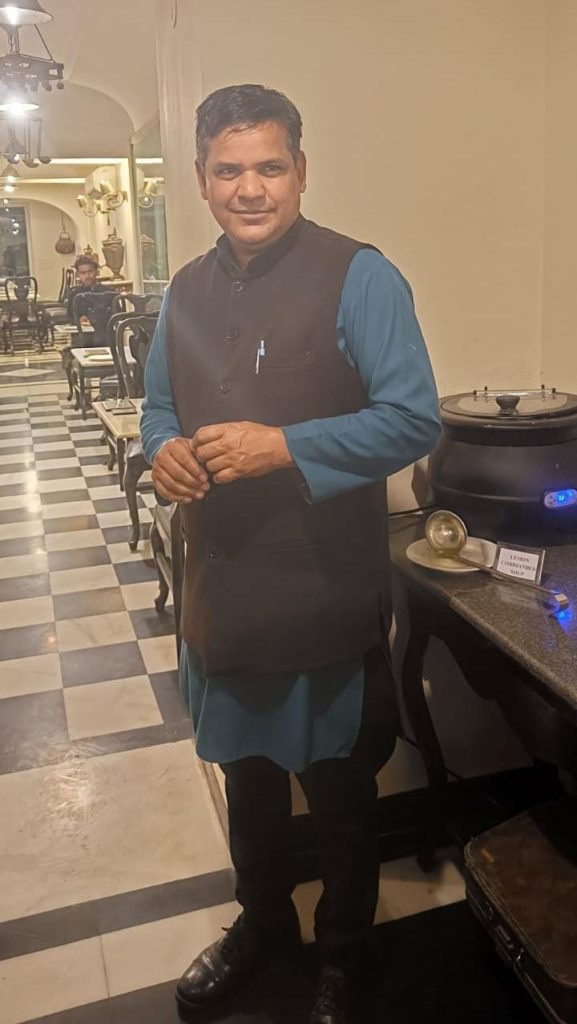
In the same hotel in Ajeetgarh, before meeting Mohit, we asked Pooran Singh, the bar manager, to arrange ganja for us. We made the request at around 9:30 pm. Pooran said ganja was available in a nearby village, but since we had asked late at night, it would be difficult to arrange. He added that had we asked during the day, he could have arranged it. Even then, Pooran said he would try and let us know. He also admitted that he consumes ganja after finishing his day’s work.
Reporter- Yahan kaise milega Mandawa mein?
Pooran- Aap din mein boltey… chalo abhi bhi poochta hoon.
Reporter- Din mein kahan se mangwate?
Pooran- Kahin se bhi.
Reporter- Yahan Mandawa mein hai?
Pooran- Haan, isi gaon mein hai.
Reporter- Ajeetgarh mein?
Pooran-Haan.
Reporter- Mangwaya hai pehle kabhi?
Pooran- Peetey hain hum kaam khatam karne ke baad.
[This chat shows how easily such substances can be accessed locally. Pooran speaks about their availability in the village without hesitation. It becomes clear that the supply is known to locals, revealing how normalised the practice has quietly become.]
After some time, Pooran informed us that the man who brings ganja to the hotel was out of town for a wedding and would return in two or three days. He said that the next time we come to stay at the hotel in Ajeetgarh, he would arrange ganja for us. Pooran even shares a phone number and asks the reporter to call in advance the next time. He assures that the arrangement can then be made.
Reporter- Accha ye bata kab mil jayegi wo, kab aa jayega tera banda laut ke?
Pooran- Wo gaya hai shaadi mein, maine usko phone kiya hai.
Reporter- Raat ko aa jayega?
Pooran- Na na.. uske nanihaal mein shaadi hai.. wo aayega 2-3 din mein lautkar.
Reporter- Aage kabhi aaon to mil jayegi, Mein bhang ki baat kar raha hoon?
Pooran- Haan haan.
Reporter- Aage mil jayegi agar aaon to? Kya rate hai ?
Pooran- Wo to poochna padega.
Reporter- Kya number hai.
Pooran-772XXXXX………………
Reporter- Haan, bhang nahi, ganja mangwana hai.
Pooran- Haan.
Reporter- Agli baar mein aaun to Delhi se phone kar dunga, manga diyo.
Pooran- Haan haan.
Reporter- Theek hai.
[This chat shows that the supply depends on a small local network. Even when the usual supplier is away, Pooran remains ready to arrange it later. It becomes clear that such access works through informal contacts.]
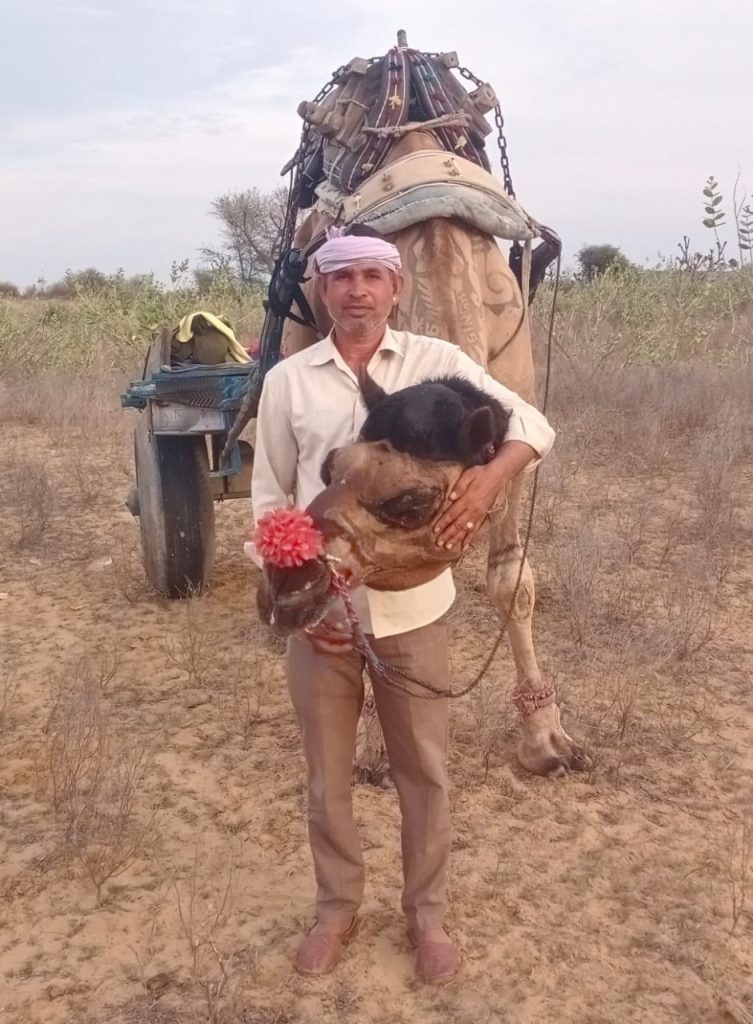
How easily ganja is available in Mandawa and Ajeetgarh can be judged from the fact that we asked about it from a camel cart owner, Gopal Singh, he told us that ganja is available in Mandawa in any quantity. He also said that recently a driver who had come to attend a wedding managed to fetch ganja from there. Gopal even guided us to the place where people sit and consume ganja and said we could get it from them.
Reporter- Ganja kahan milega?
Gopal- -Ganja Mandawa mein.
Reporter- Pakka?
Gopal- Arey khoob, jitna chaho.
Reporter-Itni guarantee se kaise keh rahe ho?
Gopal- Log peetey hain. Mein to nahi peeta, mein bata dunga. Wahi, wahin jo jagah log peetey hain, aap chale jaana.
Reporter- Wo to apne peeney ke liye log laatey hain, bechne ke liye thodi hi?
Gopal- Kal yahan shaadi mein ek driver yahan se gaya, bola mein Jaipur se aaya hoon, wo gaya aur 500 mein lekar aa gaya.
Reporter- Usi se?
Reporter- To aaram se mil jayega, koi dikkat nahi hai?
Gopal- Haan, aap wahan kisi aadmi se bhi pochogey, wo bata dega ‘bhai yahan milti hai.’
Reporter- Hum to bahar ke hain, hame kaise dega?
Gopal- Aap pooch to saktey ho, ‘bhai, daru kahan milegi?’
Reporter- Par ganja koi khule aam thodi bechta hai?
Gopal- Bechne wala bechte hain.
[This chat suggests that the availability of ganja in the area is widely known. Gopal speaks openly about how easily it can be found. It emerges that local knowledge often acts as the first link in such supply chains.]
Now we met a senior tour guide in Mandawa who claimed that even film stars who come there for shooting sometimes ask for illegal drugs. According to Sandeep, they do not ask directly; their staff make the request on their behalf. Since Sandeep handles the arrangements for film shoots in Mandawa, he said he ends up arranging the drugs as well.
Reporter- Mein dekh raha tha yahan Ganja bhi bik raha tha, Ajeetgarh-Mandawa mein?
Sandeep- Haan peene wale hain wo sab jagah hotey hain, chori chori se milta hai, illegal hai sab jagah, milta hai par kheti nahi hoti yahan.
Reporter- Film stars to letey honge?
Sandeep- Haan.
Reporter- Kya…ganja ya afeem?
Sandeep- Ganja peene waaley ganja peetey hain, depend karta hai pocket kitna afford karti hai.
Reporter- Film stars ki to pocket afford karti hogi?
Sandeep- Film stars direct nahi maangtey, unke neeche wale hotey hain wo kartey hain sab arrange. Bombay se log aate hain, sabki alag alag demand hoti hai.
Reporter- To aapa kaise provide karte ho?
Sandeep- Hamara to kaam hi hai batana, sab cheezein kartey hi hain hum log.
[In the exchange above, the reporter asks Sandeep about the availability of ganja in Mandawa and Ajeetgarh. The chat suggests that the demand is not limited to local users. Even visiting film stars sometimes seek such substances through intermediaries. It becomes clear that informal facilitators quietly keep these arrangements moving in the background.]
Tehelka’s investigation was carried out in Ajeetgarh and Mandawa, where illegal drugs are easily available. The idea of the investigation is to expose the drug syndicates operating in the region. Rajasthan has also emerged as a significant centre for manufacturing synthetic drugs, particularly Mephedrone [MD], with multiple clandestine labs busted in districts like Sirohi, Barmer, Jalore and Sriganganagar. Drones are also utilised by drug smugglers to bring narcotics from Pakistan.
Rajasthan, which shares borders with both Punjab and Pakistan, has been witnessing a steady rise in the drug menace. The desert state is increasingly emerging as a key entry point for narcotics supplied by Pakistan-based gangs, replacing Punjab, with drones being used to send consignments across the border. Our findings from small tourist towns suggest that the problem is quietly spreading beyond border districts and big cities.
After Udta Punjab, is it Udta Rajasthan now?