In an interview with Tehelka Group Editor Arvind Chaturvedi, former Maharashtra chief minister Prithviraj Chavan alleges irregularities in the 2024 Assembly elections and questions the role of the Election Commission. He also discusses the INDIA alliance’s strategy, the functioning of the Prime Minister’s Office and accountability in matters of national security and foreign policy.
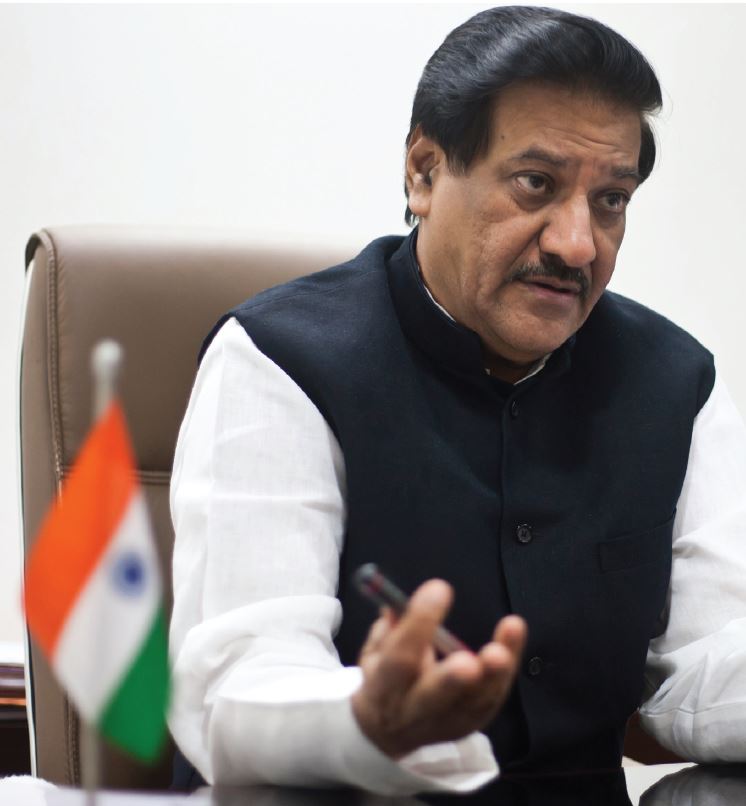
You have raised questions about the Election Commission and the electoral process in Maharashtra. Were the Opposition’s losses in the 2024 Assembly elections linked to the Special Intensive Revision (SIR) of electoral rolls?
Prithviraj Chavan: No. SIR was not in place then. I believe the Election Commission had a role in what happened. I have filed an election petition, which is pending before the Kolhapur bench of the Bombay High Court. In the petition, I raised several issues, including concerns that I formally brought to the election officer’s notice before the election. I can provide a copy of that letter.
The Maharashtra Assembly election was held in October 2024, just five months after the Lok Sabha election. In the Lok Sabha polls, the Opposition alliance had performed well, winning around 31 of the state’s 48 seats. The BJP had suffered a major setback, and the Congress had emerged as the largest party.
Yet, within five months, the political picture changed dramatically. Amit Shah went to Nagpur and addressed party workers. He reportedly asked them to increase the vote by 10% at every booth. This was publicly recorded.
Our country’s population grows by around 0.9% a year. Over five months, the increase would be approximately 0.5%. So how could the number of votes increase by 10% in such a short period?
I suspected that party workers were being encouraged to register voters multiple times. The law does not permit a person to be registered at more than one place. If someone moves, their name should be deleted from the previous location before being registered elsewhere.
Before the election, I complained to the election officer. I also printed around 6,000 names in my constituency where the same name appeared more than once and asked that the entries be scrutinised and, where necessary, removed. But I was told there was no time to examine the objections because online registration was allowed until the last day. Nothing was done about the names we had identified.
I eventually lost the election. Later, leaders such as Sharad Pawar and Uddhav Thackeray urged Opposition candidates to file election petitions. I filed one as well. But election petitions can take a long time to be decided.
The problem is that an election petition should be heard and decided within the elected House’s term. If a case is not decided within five years, what purpose does it serve? Filing a petition is not enough; it must be adjudicated in time for the outcome to have any practical meaning.
Critics argue that Opposition parties question the electoral process when they lose but do not raise similar concerns when they win, as in Tamil Nadu or Karnataka. How do you respond?
Chavan: If the Election Commission is responsible for conducting elections, then we must examine how the system is functioning. If the process is being manipulated to benefit the government, that is a serious concern. The only way to establish what has happened is to examine the system and the evidence.
I spent five to six months converting electoral-roll PDF files into Excel sheets so that I could analyse them. My constituency had around 3.15 lakh voters. When I examined the electoral roll, I found that the names of around 21,000 people appeared across approximately 48,000 entries or locations. This suggested around 27,000 additional entries in the constituency.
My constituency is compact and largely urban, so I also examined the rolls of five adjoining constituencies. I found around 5,000 to 6,000 names common to my constituency and neighbouring constituencies.
I submitted a list of around 58,000 names to the Election Commission that appeared to be duplicates. Of course, two different people can have the same name. But in Maharashtra, electoral records generally include the voter’s name, father’s name and surname. When all three details match, the entries need careful examination.
My claim is that these details matched in the entries I flagged. I brought the matter to the Election Commission’s attention. I believe multiple registrations were created and that some people may have been able to vote more than once. If there were so many additional entries, the election process deserves serious scrutiny.
In my view, the Maharashtra election was rigged with the Election Commission’s help. The ruling side recorded an 89% strike rate. Winning 89 out of every 100 candidates is extraordinary and raises serious questions about the way the election was conducted.
Opposition parties have come together on several issues, but in states such as Punjab, Uttar Pradesh and Uttarakhand, they may still contest against one another. Why has the INDIA alliance not developed a mechanism to fight elections together?
Chavan: The INDIA alliance still exists, and almost all Opposition parties are part of it. We meet, discuss issues, and take decisions collectively. We have to decide our strategy and the next steps. The alliance is meeting on September 30, and we must discuss these issues.
On the Chief Election Commissioner, I have made some suggestions. Opposition leaders should first meet the President and raise their concerns. If that does not lead to action, they should approach the appropriate constitutional and legal forums, including the Supreme Court.
The Opposition should collect all relevant documents, including the letters written to the Election Commission, the responses received, and the action taken. This exercise should establish the facts.
If evidence shows that the Chief Election Commissioner acted improperly, appropriate action should follow. The Constitution provides a procedure for removing the CEC, similar to that for a Supreme Court judge. Legal proceedings should also be considered if the evidence warrants them. If these efforts do not succeed, people will have to decide how to raise the issue through public action.
The Opposition needs to coordinate and decide on a common way forward. A meeting of Congress Gathbandhan is taking place on September 30. We should also speak with the CJP separately.
In Punjab, for instance, should the Congress speak to Arvind Kejriwal to avoid a contest between two Opposition parties?
Chavan: The political circumstances differ from state to state. Delhi is different from Bengal, and Punjab has its own political situation. But I believe Opposition parties should come together wherever possible because our common objective is to defeat the BJP. Parties opposed to the BJP should try to ensure that their votes are not divided.
This is a broad strategy; its application will depend on the circumstances in each state. There may be disagreements, but we should still explore ways to work together.
So, in your view, should Opposition parties avoid splitting votes?
Chavan: Yes. In my view, votes should not be divided. Narendra Modi wins even though the BJP does not receive more than 50% of the votes. When Opposition votes are divided, it benefits the BJP.
You served in the Prime Minister’s Office. How would you compare the PMO during your time with Manmohan Singh to how it functions today?
Chavan: I do not know exactly how the PMO functions today, but from what has been said publicly, there appears to be a greater concentration of power in the office. Ministers and secretaries do not seem to have the same authority.
During our time, if a minister brought forward a new proposal, we examined and discussed it. We would take it to the Prime Minister, who encouraged ministers to bring new ideas and initiatives. We would consider the proposals and, where appropriate, take them forward. Today, it appears that much of the work is concentrated in the PMO.
Do you recall any particular instance from your time with Manmohan Singh?
Chavan: The basic principle of the Cabinet system is that the Prime Minister is first among equals. The Prime Minister is not a boss, and other ministers are not simply subordinates. Everyone is part of the Cabinet, and the Prime Minister’s role is to coordinate.
When a minister or secretary brings forward a proposal, the PMO should examine it to ensure that it does not conflict with the work of another ministry. That is one of its important responsibilities.
The PMO also helps resolve differences between states. For example, if Karnataka and Maharashtra have a border dispute, the PMO can bring the two sides together. The Chief Minister of Karnataka may not want to travel to Mumbai, and the Chief Minister of Maharashtra may not want to travel to Karnataka. But if the Prime Minister calls them to Delhi, they will come.
The PMO can also resolve differences between ministries. If two ministries have conflicting views, it can coordinate between them and help find a solution.
During our time, the National Advisory Council also made proposals on social justice. We considered those proposals and discussed whether to take them forward.
Another responsibility was to maintain contact with visiting foreign ministers. If the Prime Minister was unavailable, another official or I would sometimes meet them on his behalf. The PMO also has an important role in foreign policy. Jawaharlal Nehru, for instance, held the foreign affairs portfolio for many years while serving as Prime Minister. The Prime Minister’s involvement in foreign policy is important.
You have also raised questions about the division of responsibilities in national security and foreign policy. What concerns you about the present arrangement?
Chavan: There are questions about how foreign policy and national security responsibilities are divided in the present government. The Prime Minister meets political leaders from around the world, but we need clarity about the respective roles of the National Security Adviser, the External Affairs Minister and the Home Minister.
The government has given Cabinet rank to National Security Adviser Ajit Doval, who is also involved in foreign policy matters. At the same time, S. Jaishankar heads the Ministry of External Affairs, while Amit Shah oversees internal security. The NSA is also involved in internal security.
If the NSA and the Home Minister both deal with internal security, and the NSA and the External Affairs Minister both handle foreign policy, how are their responsibilities divided? Has the government clearly explained who is responsible for what?
The NSA, External Affairs Minister, and Home Minister all report directly to the Prime Minister. They may offer different advice, but it is unclear how they resolve differences. The government should clarify each office’s responsibilities and the chain of command.
Accountability is also an issue. The External Affairs Minister is accountable to Parliament, but the NSA is not a Cabinet minister. Parliament can question the External Affairs Minister and the Prime Minister, but the same form of parliamentary accountability does not apply to the NSA.
Parliament has a right to know what is happening. If the NSA is involved in discussions with other countries, Parliament should be able to seek information about those discussions and the decisions taken. For example, when the NSA visits China, what is discussed? What is happening along the borders in Ladakh and Arunachal Pradesh? Parliament must be able to seek answers to these matters.