Apparently, for successful cloud seeding, the most crucial requirement is the presence of suitable clouds—typically cumulus or cumulonimbus with enough moisture
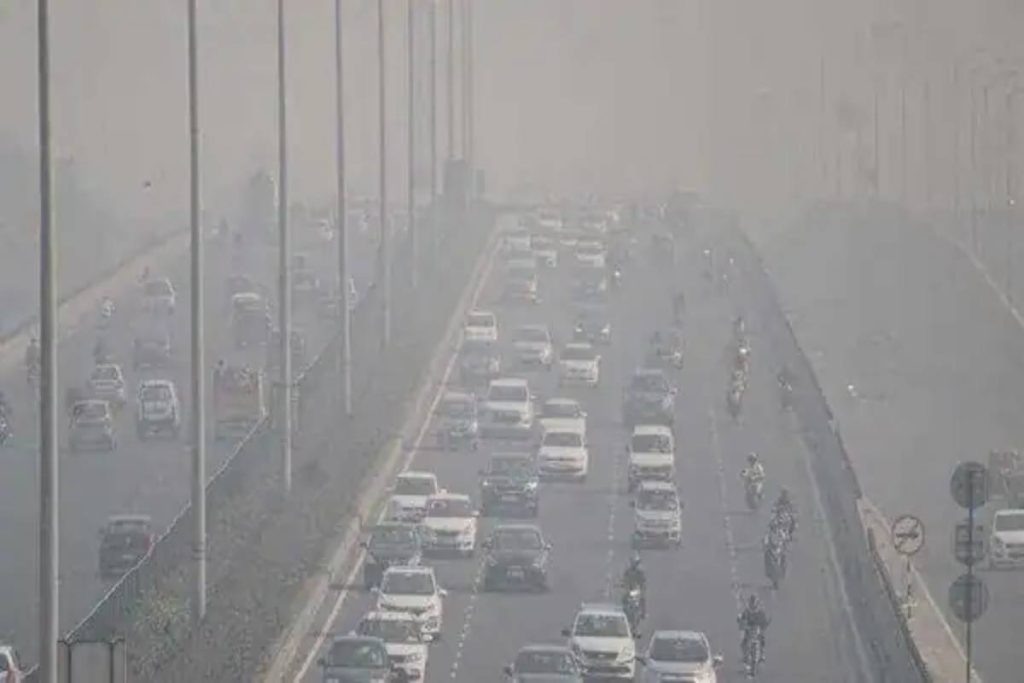
Turns out, you need clouds for cloud seeding, only the BJP’s Delhi Government learned that the hard way. Two much-hyped trials on Tuesday, aimed at making it rain over the smog-choked capital, failed to deliver a single drop. IIT Kanpur, which executed the operation, claimed some success — citing a drizzle of 0.1 mm in Noida and 0.2 mm in Greater Noida, data credited to a private weather app. Environment minister Manjinder Singh Sirsa, however, insisted it’s too early to call it a bust. “Rain after seeding can occur within 24 hours,” he said, pointing to “light rainfall” spotted near the Delhi-Noida border around 4 p.m.
Opposition Aam Aadmi Party slammed the Delhi government’s cloud seeding attempt as a political gimmick rather than a scientific exercise. AAP leaders, including Saurabh Bhardwaj, accused the BJP-led administration of copying Arvind Kejriwal’s earlier artificial rain plan but executing it without preparation or transparency. They questioned why only select areas were chosen and why residents and MLAs weren’t informed about the chemicals used. The party also mocked the government’s failure to produce rain, saying it was chasing publicity instead of real pollution control. AAP argued the trials were scientifically unsound given Delhi’s low moisture conditions.
According to reports, the first sortie — a Cessna aircraft loaded with 4 kg of seeding material — took off from Kanpur around noon and flew across Khekra, Burari, Karol Bagh, Mayur Vihar, Sadakpur and Bhojpur before landing in Meerut. The second round followed a similar route later in the afternoon. Both flights released a silver iodide-based mixture designed to coax moisture from thin clouds.
But thin is exactly what they were. IIT Kanpur’s sensors showed moisture levels of just 10–15%, far below ideal seeding conditions. Still, the institute reported a dip in air pollution levels — PM2.5 readings at Mayur Vihar, Karol Bagh and Burari dropped by about 10% post-seeding. With winds nearly still, IIT scientists speculated the seeding particles might have made airborne pollutants heavier, causing some of them to settle.
This was Delhi’s third such attempt; the first, on October 23, was equally dry. Under the Rs 3.21 crore MoU between Delhi’s environment department and IIT Kanpur, five trials were planned — though IIT Kanpur says it will stretch that to nine in the name of science, not profit. “This is one of India’s boldest steps in urban air-quality management,” Sirsa said, adding that the initiative reflects Delhi’s determination to take on pollution “with full political will and scientific backing.”
IIT Kanpur director Manindra Agrawal reportedly admitted the effort didn’t yield rain but confirmed two more trials are on the cards. Experts remain skeptical. Without rain, they say, cloud seeding can’t wash away particulate matter — humidity alone won’t do the job. Basically, the particles are too fine to be brought down just by moisture, so unless it rains, PM2.5 won’t budge.
For successful cloud seeding, the most crucial requirement is the presence of suitable clouds—typically cumulus or cumulonimbus with enough moisture. Relative humidity should be at least 60–70%, and the cloud base should be cool enough for condensation. Favourable wind conditions help spread the seeding material evenly. Atmospheric instability encourages vertical cloud growth, improving rainfall chances. The seeding agents must be released at the right altitude and time to trigger droplet formation. In short, moisture-rich clouds, proper temperature, adequate wind flow, and precise timing together determine whether seeding actually produces rain, experts say