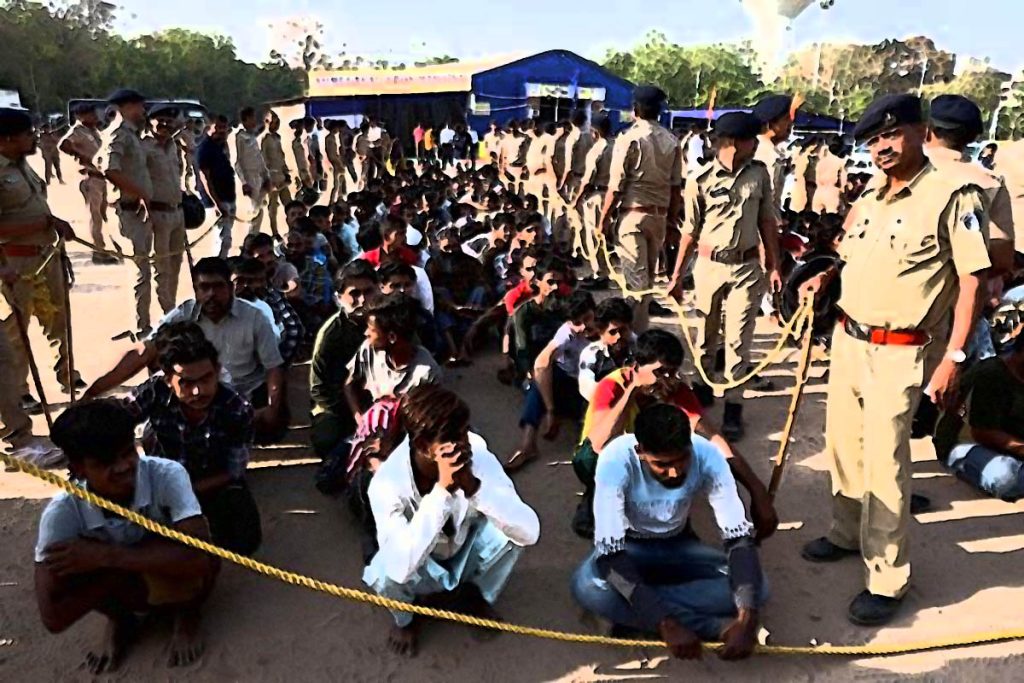
“Except for Rajya Sabha MP Mamata Bala Thakur of the Trinamool Congress (TMC), no one from the party came to meet us when the Gurugram Police launched a verification drive targeting alleged illegal Bangladeshis and detained several Bangla-speaking migrant workers from West Bengal. Minakshi Mukherjee, a CPI(M)) leader, sent some people to meet us when we were in crisis. But no TMC leader came to meet us, despite the fact that we are solid voters of the TMC,” said Bablu Sarkar, a West Bengal migrant worker in Gurugram, to Tehelka.
“Around 400 Bangla-speaking migrant workers from West Bengal were kept at the detention centres in Gurugram. They were picked up from different areas of the city. Some were detained for two days, others for three or four days, before being released after police verification established that they were not Bangladeshi nationals living illegally in Gurugram,” Bablu Sarkar added.
“According to unofficial figures, around 30 lakh Bangla-speaking migrant workers from West Bengal live in Haryana, mostly in Gurugram. Of these, around 23 lakh are Muslims and the rest are Hindus. Out of the 30 lakh, around 10 lakh Bengal voters have multiple voter cards — both in Haryana and West Bengal,” said Khadimul Islam, a Congress worker from West Bengal, who has been living in Gurugram for years.
“Out of this 30-lakh population, around 25 lakh will go to West Bengal during the 2026 Assembly elections to vote in favour of Mamata Banerjee. Some will travel by train, while others will go by buses arranged by travel agents. Gurugram will have a deserted look during that time. In the last West Bengal Assembly elections, around 20 lakh people from Haryana went to West Bengal to vote for the TMC. This time, because of the SIR narrative, more people will go to vote for the TMC and uproot the BJP. I will take around 3,000–4,000 voters with me. Although I am from the Congress, I vote for the TMC in Assembly elections,” Islam told Tehelka.
“I am from North Dinajpur in West Bengal. In the last Assembly elections, our local MLA paid the travel expenses of voters living in Gurugram, so that they could travel by train or bus to vote in West Bengal. This time as well, a large number of Bangla-speaking migrant workers living in Gurugram will go to West Bengal to vote for the TMC and ensure that the BJP bites the dust,” said Ramzan Ali, another West Bengal migrant worker living in Gurugram, to Tehelka.
“I am from South Dinajpur. I have sent all my documents for SIR in West Bengal to my parents and brother. I do not think Muslims in West Bengal are afraid of the SIR. It is opposition parties’ propaganda that Muslims will lose their votes after the SIR. On the ground, it is largely Hindus from Bangladesh who are losing their voting rights. Around 80 per cent of those who came to my area from Bangladesh are Hindus, while only 20 per cent are Muslims,” said Farooq Abdullah, another West Bengal migrant worker in Gurugram, to Tehelka.
West Bengal has often remained in the news for one reason or another. Even before the current controversy over the Centre’s move to rename the Mahatma Gandhi National Rural Employment Guarantee Act (MGNREGA) as the Viksit Bharat Guarantee for Rozgar and the Ajeevika Mission–Gramin Bill (VB G-RAM G Bill) —which drew strong resistance from West Bengal Chief Minister Mamata Banerjee, who in turn renamed the state’s flagship 100-day employment scheme from “Karmashree” to “Mahatmashree” in honour of Mahatma Gandhi—the state had been at loggerheads with the central government over the alleged harassment of Bangla-speaking migrant workers living in different parts of the country. These workers were reportedly targeted by security forces on the suspicion of being illegal Bangladeshis, detained at centres in Gurugram, and later affected by the recently concluded Special Intensive Revision (SIR). Together, these developments have kept West Bengal in the headlines.
Tehelka carried out a ground-level check in Gurugram (Haryana), which hosts a significant population of migrant workers from West Bengal, primarily employed in the service sector as domestic help, sanitation workers, construction labourers, auto-rickshaw drivers and car washers. Since 2025, however, many had temporarily fled the city due to fears triggered by police verification drives to weed out the illegal immigrants from Bangladesh, before gradually returning. Most of them live in informal settlements and jhuggi colonies in areas such as Sector 10, Bengali Market, Khatola village and Chakarpur of Gurugram. Tehelka visited Chakarpur to understand the views of Bangla-speaking migrant workers on the SIR, detention centres and the forthcoming West Bengal Assembly elections.
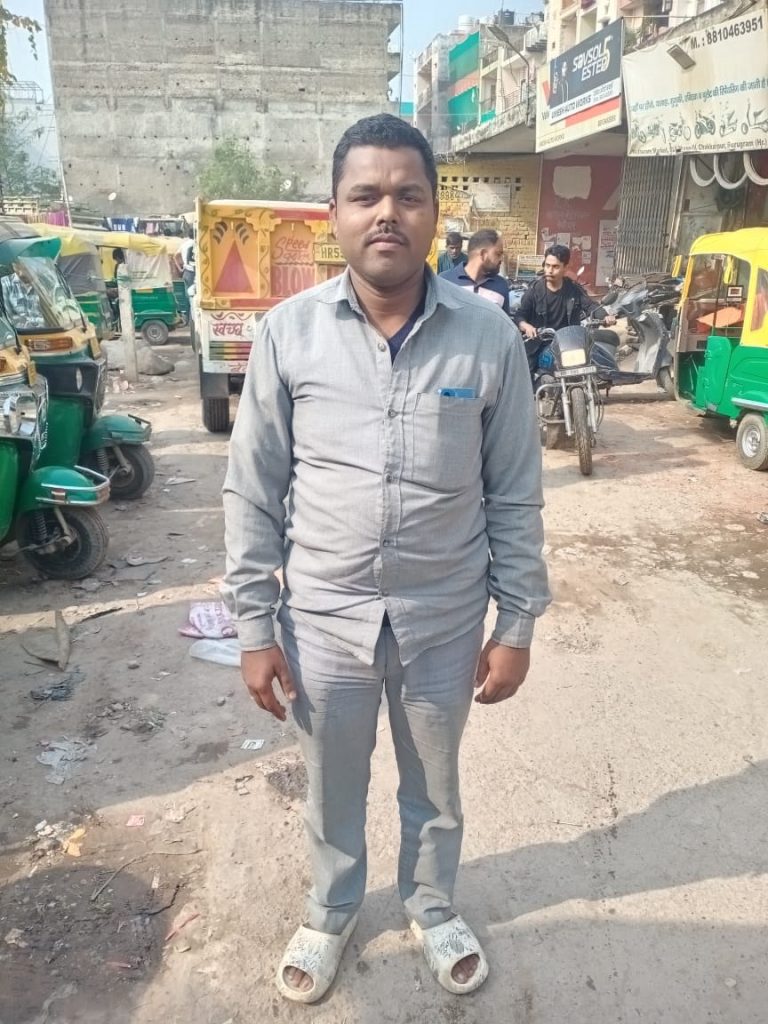
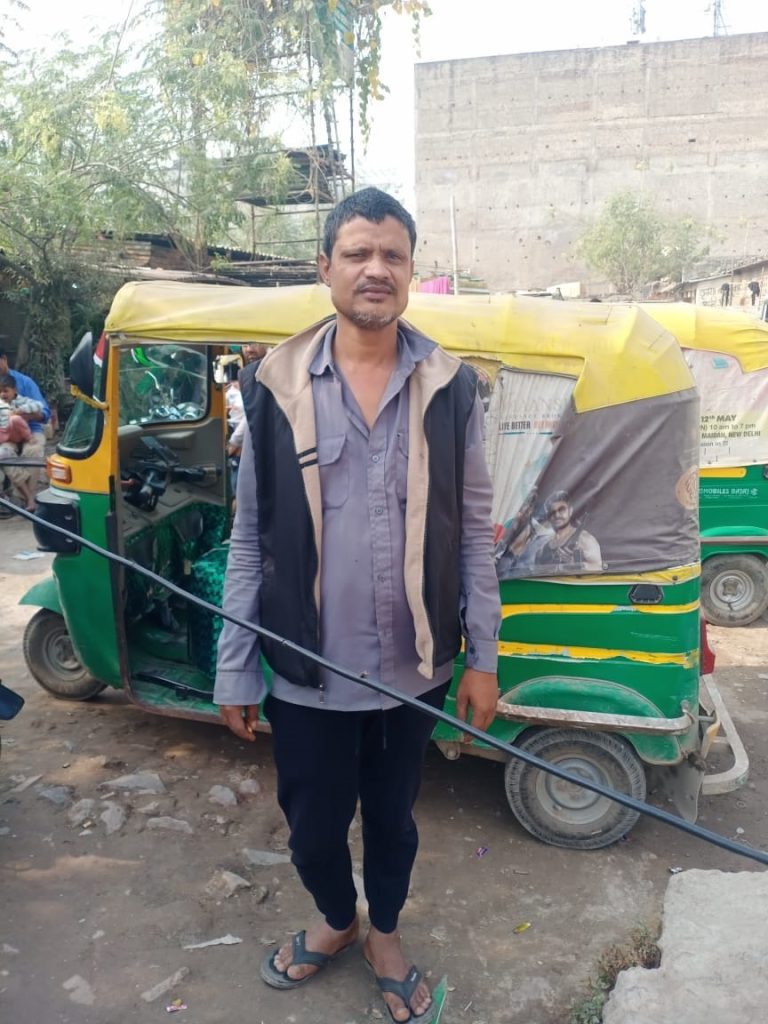
We first met Bablu Sarkar, an auto-rickshaw driver and a Bangla-speaking migrant worker from North Dinajpur in West Bengal, who has been living in Gurugram for several years. The interaction took place while the Special Intensive Revision (SIR) exercise was underway in West Bengal. Bablu told Tehelka that Muslims in Bengal were not afraid of the SIR as they possessed the necessary documents. He also claimed that while illegal immigrants from Bangladesh were present in West Bengal, they were mostly Hindus, with fewer Muslims.
Reporter- Accha Musalmano mein (SIR ke bare mein) ek darr hai ki Modi government sajish kar rahi hai hamare khilaf…hamara naam kaat degi. Iske bare mein kya kehna hai?
Bablu- Iske bare mein mujhe ye kehna hai, mera personal jo vichardhara hai, ismein mujhe koi belief nahi hai. Mein Indian constitution ko bahut believe karta hoon, aur mujhe ye pata hai agar hum sahi hain to government kuch nahi kar sakti hai.
Reporter- Matlab Muslamano mein darr nahi hai?
Bablu- Ye mein apna personal vichardhara se bol raha hoon, log agar soch rahe hain to wo mere hisab se galat soch rahe hain, agar aisa hota to human rights kis liye banaya gaya, manav adhikar bhi to hai, koi agar galat karega to manav adhikar hai.
Reporter- Ye jo kaagaz mange gaye hain SIR ke, aapko lagta hai Bengal ke Musalmano ke pass honge?
Bablu- Maximum hai, kyunki Bengal ke Musalman hain. Yeh narrative jo taiyar kar rahe hain rajneeti ke log ke ‘Bengal mein Rohingya Musalman hai’, ye bhi galat ha. Mein aapko ek udahran aur de raha hoon. Bangladesh ek Muslim country hai, agar Bangaldesh mein kuch problem hoga jaise hum log yahan bhi dekhte hain news mein, ki wahan par Hindu par attyachaar ho raha hai, agar wahan koi problem hoga to Hindu par hoga, kyunki wo Muslim country hai. To yahan Muslim kyon aayega.
Bablu (continues)-Bharat Hindu bahusankhyak desh hain, haalaki documents mein aisa nahi hai, democracy hai yahan par. Isliye mein bata raha hoon, Bangladesh se koi aayega to Hindu polulation se aayega, mein ye nahi bol raha ki wahan par (West Bengal mein) Bangaldeshi nahi hai; hai par wo zyadatar Hindu population se hai, Muslim nahi hai.
Reporter- Aapka manna hai Bengal mein ghuspethiye hain?
Bablu- Bilkul. Magar wo Hindu population zyada hai, mein ye bhi nahi bol raha Muslim population nahi hai; hai, ikka dukka hai.
[In this exchange, Bablu Sarkar responds to fears among Muslims over the Special Intensive Revision (SIR). He rejects the idea of a targeted conspiracy and places faith in the Constitution and human rights. Bablu also challenges political narratives around Rohingyas and illegal migrants in West Bengal. His remarks draw a sharp distinction between perception, politics and lived reality.]
Bablu then spoke about the Gurugram Police’s verification drive against illegal Bangladeshis, during which several Bangla-speaking migrant workers from West Bengal were detained and kept in detention centres. According to him, around 400 migrant workers from different parts of Gurugram were held for several days before being released after verification established that they were not illegal Bangladeshi nationals.
Bablu- Mujhe personally nahi hui thi magar mere yahan se ek banda ko utha le gaya tha.
Reporter- Kya naam tha unka?
Bablu- Shafiuddin.
Reporter- Shafiuddin… accha auto chalate they? Bengal se they? Kya hua tha?
Bablu- Haan unko le gaya tha police kamre par aaya tha, pass mein hi rehte hain, chotta chotta kamra bana hua hai, slum area hai, police aaya, ye unka statement tha, unko bulaya, naam poocha, aadhar card dikhao, lekar bola gadi mein betho. Usne bola ‘kya ho gaya sir.’ Bole 5 min aapko thane mein le jayenge phir chodh denge. Aaisa bolkar wahan se 15-16 logon ko le gaya tha utha kar.
Reporter- Kya karte they wo?
Bablu- Auto chalate they.
Reporter- Kab se hain wo yahan par?
Bablu- Wo bhi hai 18-20 saal se, pariwar bhi hai, unko le gaya the. Phir hum log gaye wahan pe, wo le jakar un log ko detain kiya gaya tha. Do din rakha tha wahan par.
Reporter- Sabhi logon ko?
Bablu- Wahan lagbhag 175 log they.
Reporter- Detention centre mein?
Bablu- Haan.
Reporter- Detention centres mein sab ek hi gaon ke they?
Bablu- Nahi nahi 3-4 gaon ke they. Aas pass ke gaon ke… Chakarpur gaon, ward number 23.
Reporter- Accha.
Bablu- Chakarpur gaon se, Nathupur gaon se , Harijan colony hai, aur kuch log Badshahpur mein detain kiya gaya tha wo Bengali market hai Sona road par, udhar se bhi le gaya tha.
Reporter- Aapka jo detention centre hai usmein kitne log they?
Bablu- Kam se kam 150 se zyada.
Reporter- Alag-alag mila lein to zyada honge.
Bablu- Mota moti hame idea mila tha, kareeb 400 log ka idea mila tha.
Reporter- Kitne detention centre they?
Bablu- Hamare yahan 2 tha, ek yahan tha, ek 10 sector.
Reporter- Accha, total 400-500 log, kitne din rakha gaya?
Bablu- Kisi ko 3 din, kisi ko 4 din, 2 din.. matlab ye log gaon mein inka verification kar rahe they, inka Id lekar inka verification kar rahe they.
Reporter- Bengal mein?
Bablu- Haan.
[Bablu’s account highlights how the police verification drive unfolded on the ground. He recalls how familiar faces from his neighbourhood were picked up without warning. The account moves through the process of detention, the number of people held, and the areas they came from. What emerges is a picture of fear, confusion and routine livelihoods suddenly disrupted.]
According to Bablu, except for Rajya Sabha MP Mamata Bala Thakur of the Trinamool Congress (TMC), no leader from the party came to meet them when the Gurugram Police launched a verification drive targeting illegal Bangladeshis and detained several Bangla-speaking migrant workers from West Bengal. Bablu said Minakshi Mukherjee, a leader of the CPI (M), sent some people to meet them during the crisis. However, no other TMC leader came to meet them despite the fact that they are solid TMC voters, he added. Bablu also claimed that there are around 30 lakh Bangla-speaking migrant workers in Haryana and that most of them vote for the TMC, yet no party leader reached out to them during the crisis.
Bablu- Sabse pehle yahan par hamare Minakshi Mukherjee hain Left ke, unse hamare dost ne baat kiya tha
Reporter- TMC se koi aaya tha?
Bablu- Nahi, TMC se koi door se aaya tha, koi Rajya Sabha ka member aaya tha, Mamata kuch naam hai, yahan nahi aaya tha, doosri jagah aayi thi. CPM se Minakshi Mukherjee nahi aayi thi, unhone bheja tha ek.
Reporter- Gurgaon mein kitna Bengali hoga?
Bablu- Kam se kam 30 lakh hoga, at present 30 lakh voter hain.
Reporter- Poore Gurgaon mein 30 lakh voter hain?
Bablu- Bengal ka voter yahan par kamane ke liye aa rakha hai, kam se kam 30 lakh voters.
Reporter- Sirf Gurgaon ya poora Haryana?
Bablu- Poora Haryana mein 30 lakh, usmein 99 pc jo hai wo Mamata ka hi voter hai, mein aapko bata raha tha pehle bhi. Mujhe isliye ruling party se shikayat hai ki apke itne voter hote hue bhi aapke community ke oopar itna atyachar hua hai, aur aapne ek bhi baar aakar jayeza nahi liya..
Reporter- Ye 30 lakh jo voter hain ye jaate hain TMC ko vote dene?
Bablu- 90 percent jaate hain.
[In this account, Bablu speaks about political outreach during the police verification drive. He contrasts the response of Left leaders with what he describes as the absence of the TMC. The exchange also turns to the size of the Bangla-speaking voter base in Haryana. At its core, it reflects a sense of hurt felt by migrant workers by the apathy shown by the party.]
Bablu also admitted that he has two votes—one in Gurugram and another in his home state of West Bengal—but said he has never voted in West Bengal and always votes in Gurugram. He said he had sent his voter ID and Aadhaar card to his father in West Bengal for the Special Intensive Revision (SIR). According to Bablu, if both his voter IDs remain intact after the SIR, he has no issue. Even if his name is removed from the West Bengal electoral roll, he said he would not have a problem.
Reporter- To aapne kya- kya bheja apne walid saheb ko?
Bablu- Aaj to maine bheja hoon Aadhar card, voter card.
Reporter- Voter card Gurgaon ka?
Bablu- Nahi maine wahan ka bheja..Bengal ka.
Reporter- Bengal ka voter card chal raha hai aapka?
Bablu- Haan maine vote daala nahi hai magar mera wahan bann gaya tha bahut pehla.Ye mera aapka inside. Isko aap highlight na kijiye, wahan maine abhi vote daala nahi, mein yahan vote daalta hoon…
Reporter- Accha, Gurgaon mein?
Bablu- Haan wahan ka jab mujhse manga hai, to mein wahi bhejunga.
Reporter- Accha to us vote ko ab aap katwaoge, ya rakhogey?
Bablu- Ab main katwonga ya rakhunga mein nahi jaanta hoon. Mere se manga, maine bheja. Survey ke baad pata chalega, agar wo log kuch na boley to jaisa hai waisa rahega, katna hoga to kat jayega.
Reporter- Accha nahi bolega to dono jagah chalta rahega?
Bablu- Mein to vote daalta nahi hoon wahan par, daalta hoon yahan pe.
[The account shows how migrant workers navigate overlapping voter records without much clarity. In this exchange, Bablu speaks openly about having voter IDs in two places. The exchange captures his uncertainty about what will happen after the survey. It also reflects his practical, almost detached approach to the process. The larger takeaway is that verification exercises can help expose long-standing flaws.]
After Bablu, Tehelka met Khadimul Islam, another Bangla-speaking Congress worker from South Dinajpur in West Bengal, who has been living in Gurugram for several years. He told Tehelka that there are around 30 lakh Bangla-speaking migrant workers from West Bengal in Haryana, according to unofficial estimates. Of these, around seven lakh are Hindus. Out of the 30 lakh, he said, at least 10,000 people may have two voter cards—one in Gurugram and another in West Bengal.
Reporter- Yahan 2 voters wale kitne log honge?
Islam- 30 lakh mein 10 hazar aadmi ka hoga
Reporter- Double votes, Bengal mein bhi yahan bhi?
Islam- Haan.
Reporter- Wo to katwayenge apna ya nahi?
Islam- Katwayenge, bilkul.
Reporter- Accha 30 lakh mein se kitne Hindu honge yahan pe?
Islam- laga lo 7 lakh Hindu honge.
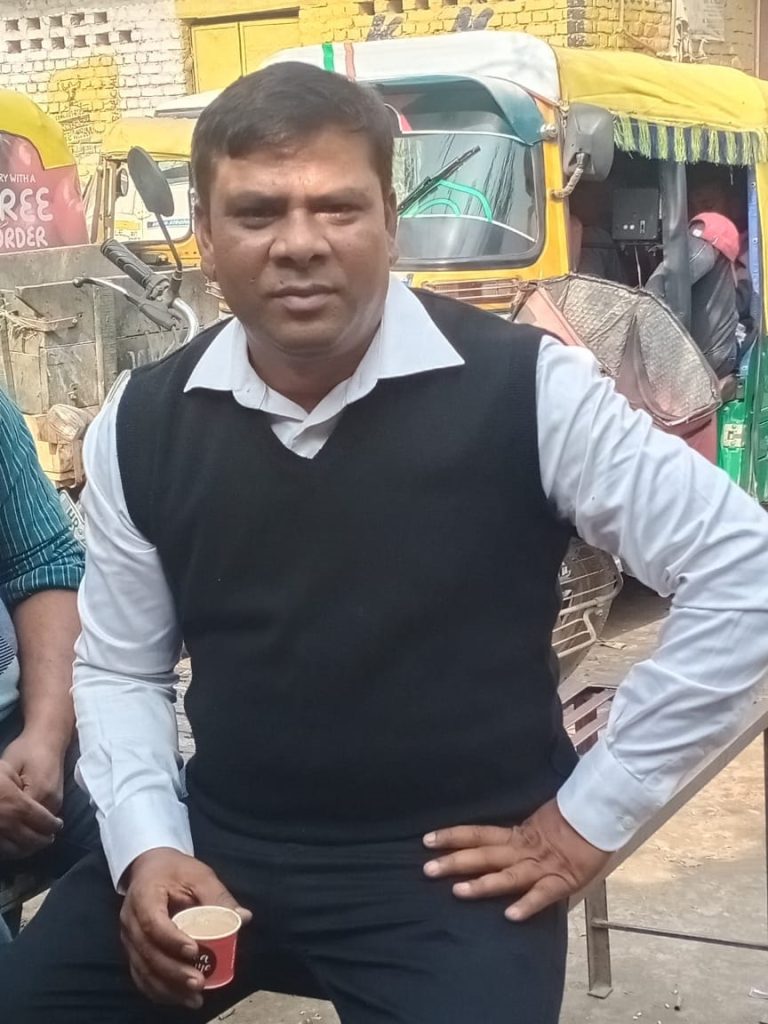
Reporter- Muslim zyada hai, 30 lakh ki ginti sahi hai ya…ye official hai kya?
Islam- Ye official nahi hai, unofficial hai..ek idea hai.
Islam (continues)- Agar aap sham ko hota na, to hazar aadmi sham ko yahin hota
Reporter- Aisa kyun?
Islam- Din bhar kaam karta sham ko yahan chai peene aata.
[In this interaction, Islam speaks about numbers—how many migrants live in Haryana and how many hold voter cards in more than one place. He explains that these figures are unofficial and based on daily observation. The exchange also shifts to everyday life. It shows how work and routine shape where migrants gather.]
Islam then spoke about the forthcoming West Bengal Assembly elections. According to him, out of the estimated 30 lakh Bangla-speaking migrant workers in Haryana, around 25 lakh will travel to West Bengal in 2026 to vote in favour of Mamata Banerjee. Some will go by train, while others will travel in buses arranged by travel agents. Gurugram, he said, will have a deserted look during that period. Islam recalled that during the last West Bengal Assembly elections, around 20 lakh people from Gurugram went to vote for the TMC. This time, he claimed, the SIR narrative would push even more people to vote for the party. He added that he would take around 3,000–4,000 voters with him. Although he belongs to the Congress, Islam said he votes for the TMC in Assembly elections.
Islam- Aankh band karke hamare North Bengal se lekar South Bengal tak jitna voter hai sab jayega aur BJP ko wahan se aisa bhagayenge, aisa bhagayenge, ki BJP jaisa soche bhi na.
Reporter- Matlab is baar Gurgaon khali ho jayega?
Islam- Bilkul ek haftey ke liye bilkul khali.
Reporter- Train bhar bhar kar jayengi?
Islam- Train bhar kar jayengi yahan se, buses chalti hain yahan direct Gurgaon se bus bhi, train bhi.
Reporter- Kaun le jata hai ?
Islam- Jinhone travel agency ka kaam kar rakha hai, 8-10 bus kiraye ka lekar jata hai.
Reporter- Har baar jaati hai?
Islam- Har baar.
Reporter- 2021 mein kitne gaye honge?
Islam- 30 lakh mein se samajh lo 20 lakh to gaye honge; 70 percent to jata hai aur is baar samajh lo 90 percent jayega…
Reporter- Iski wajah?
Islam- BJP ko bhagana hai.
Reporter- Aap kitne voter lekar jaate ho?
Islam- Mere jaaney wale kam se kam 3-4 hazar to honge hi, bol dete hain ghar jana hai.
Reporter- To aap Congress ke liye jate hain ya TMC ke liye?
Islam- Jo hamare centre wala vote hai wo Congress, jo assembly wala hai uske liye TMC.
Reporter- Aisa kyun?
Islam- Aisa isliye ki BJP ko bhaga sakte hain ek hi insaan, wo hai Mamata.
[The account shows how migrant voters remain deeply tied to politics back home. It underlines the emotional pull of state elections, as Islam lays out how migrant workers plan to return home during elections. He speaks of scale, logistics and motivation behind the journeys.]
Islam then narrated his account of the Gurugram Police verification drive against alleged illegal Bangladeshis. He said many Bangla-speaking migrant workers were picked up late at night from their homes on the pretext of verification. Islam claimed he personally knew around 100–200 people who were taken away by the police. He said that he and Bablu knew some local police personnel and, with their help, managed to secure the release of a few migrant workers from the police post. Those days, he said, people were scared. Out of fear, many returned to West Bengal, though they have now come back.
Reporter- Abhi jo drive hua tha yahan par Bangladeshyon ko lekar, usmein aapke saath koi dikkat?
Islam-Mere saath nhi hua, par mere jaanney wale key saath bahut hua, itna darr ka mahaul ho gaya tha yahan par aap yakeen nahi karenge. Gareeb aadmi poora din kaam karke aata hai, raat ko sota hai, aur achanak raat 2 baje-3 baje aakar bolta hai tum log Bangladeshi ho, jabki poora India ka proof hai.
Reporter- Aapke kitne logon ke saath dikkat hui ye?
Islam- Kam se kam 100-200 logon ke saath.
Reporter- Detention centre mein rakhe gaye they?
Islam- Bilkul rakhe gaye they. Upper se ye local police chauki se Bablu bhai ke saath mein khud lekar aaya tha. Kafi aadmi ko chudakar laaye they local police se, yahan ke local police mein thoda jaan pehchan hai. Hum bolte ye hamara bhai bandhu hai, hum inko jaante hein, ye Bangladeshi nahi hain.
Reporter- Ab wo log Bengal se aa gaye jo chale gaye they?
Islam- Haan aa gaye saare.
Reporter- Koi bhi Bangladeshi nahi nikla usmein?
Islam- Nahi koi bhi nahi..
[In this account, Islam recalls the fear that spread during the police verification drive. He describes late-night visits, sudden detentions and the panic that followed. It comes to fore how fear forced many workers to leave Gurugram, even if briefly. The clear lesson is that trust breaks easily when verification turns into intimidation rather than reassurance.]
Islam also disclosed that he earlier had two votes—one in Gurugram and another in West Bengal. He said that he later chose to give one up, so he surrendered his Gurugram voter registration and retained only his West Bengal vote. The discussion reflects foresight and caution.
Reporter- To vote aapka Bengal ka hi hai?
Islam- Haan ji Bengal ka hi hai.
Reporter- Gurgaon ka nahi bann paya?
Islam- Nahi ek baar banwaya tha, phir uske baad hamne katwa diya.
Reporter- To ek baar dono jagah tha aapka, Bengal bhi aur Gurgaon bhi?
Islam- Hamne ek hi baar daala tha vote.
Reporter- Phir katwa kyun diya?
Islam- Kyunki hame pata tha kahin na kahin ye situation hona hai; ek din naam kat jana hai, kyonki meri zameen jayezad sab Bengal mein hai..
[The account highlights how some migrants self-correct gaps in the system. It seems that fear of scrutiny often pushes individuals to act before the law compels them. It also shows how migrants weigh future risks while dealing with electoral rules.]
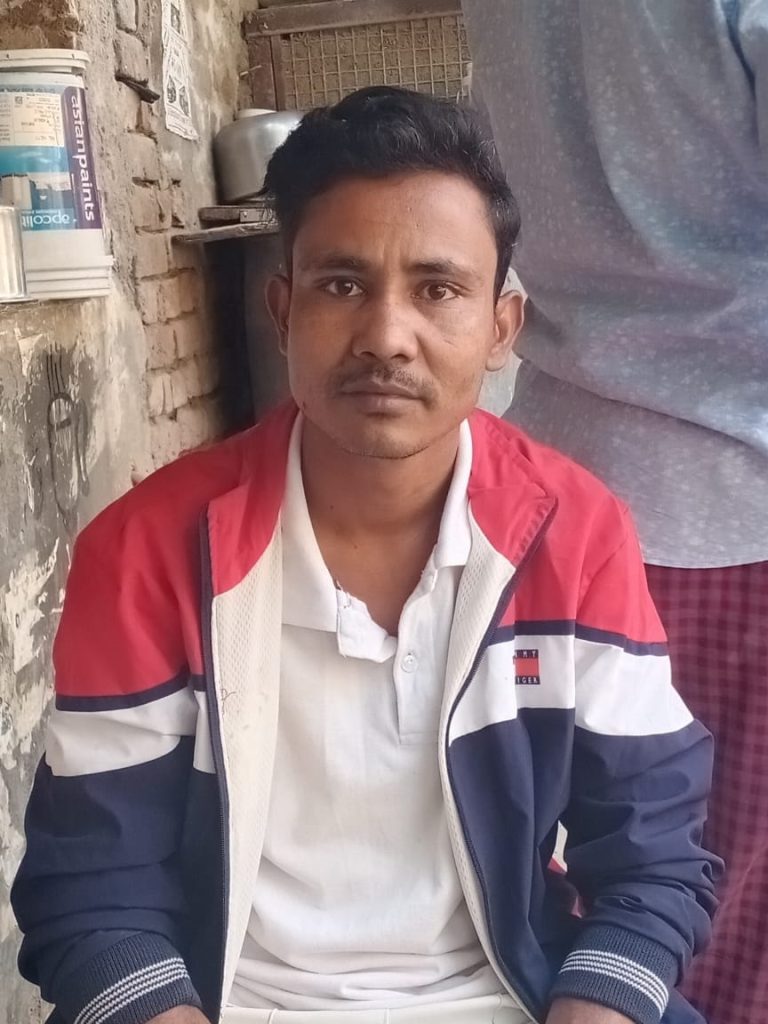
What follows is a candid exchange that offers a glimpse into how migrant workers view elections back home. When we met Ramzan Ali, another Bangla-speaking migrant worker from North Dinajpur in West Bengal, he told us that during the last Assembly elections, his local MLA had arranged travel for voters living in Gurugram to return to West Bengal by train or bus to cast their votes. He said this time too, a large number of Bangla-speaking migrant workers in Gurugram would travel back to vote for the TMC and to ensure that the BJP loses.
Reporter- Kitne log jayenge yahan se Bengal?
Ramzan- Maan ke chalo kam se kam 80 percent jayega.
Reporter- Mamata ko vote daalne Gurgaon se?
Ramzan- Haan. Bahar mein jitna hai.
Reporter- Kaise jayega?
Ramzan- Kaise bhi jaaye; train mein, bus mein.
Reporter- Kharcha kaun dega?
Ramzan- Kharcha apne aap dega ya wahin se koi party se dega…
Reporter- 2021 mein kaise gaye they aap?
Ramzan- Wahin par tha mein.
Reporter- Yahan ke log kaise gaye they?
Ramzan- Train se, bus se.
Reporter- Kharcha kaun diya?
Ramzan- Hamara wahi ka MLA diya tha.
Reporter- Is baar 26 mein zyada log jayenge?
Ramzan- Haan.
Reporter- Kyun? Wajah uski?
Ramzan-Jaise chal raha hai, dekh nahi rahe ho aap?
Reporter- BJP ko harana hai?
Ramzan- Haan, bilkul.
[The exchange reveals how political loyalties travel with migrant workers as Ramzan speaks openly about voting plans, numbers, travel, and funding. It also shows how election logistics are often informally organised. What it tells us is simple: distance does not weaken political commitment, and parties know it well.]
The exchange that follows centres on SIR and the fear being linked to it. When Tehelka met another Bangla-speaking migrant worker, Farooq Abdullah, from South Dinajpur in West Bengal, in Gurugram, he said that he had sent all his documents related to SIR to his parents and brother in West Bengal. According to him, Muslims in West Bengal are not afraid of SIR, and the fear around it is being spread by Opposition parties. Farooq said that in his area, it is mostly Hindus who came from Bangladesh whose votes are being cut. He claimed that around 20 per cent Muslims and 80 per cent Hindus have come to his area from Bangladesh.
Reporter- Documents bhej diya aapne ya bhejogey?
Farooq- Bhej diya, papa hain.
Reporter-Kaun kaun hai wahan?
Farooq- Maa hai, baap hai, bhai hai. Hamne documents bhej diya tha, papa ne sign karke jama kar diya.
Reporter- Aapko lagta hai Musalmano ko SIR se darna chahiye?
Farooq- Mere ko to lagta hai nahi darna chahiye.
Reporter- Phir itna daraya kyun ja raha hai?
Farooq- Ye rajniti ka fayda le raha hai neta.
Reporter- Opposition keh raha hai vote katenge?
Farooq- Hamare wahan to dekh raha hoon Hindu ka hi zyada kat raha hai. Bangladeshi zyada aaya hai wo Hindu hi zyada aaya hai, agar 20 percent Muslim aaya hai to 80 percent Hindu aaya hai.
Farooq (continues)- Hamare agal bagal mein sab Bangladeshi hai.
Reporter- Aas pados mein sab Bangladeshi hai?
Farooq- Haan, Hindu hain sab.
Reporter- Unke kagaz hain ya nahi?
Farooq- Ye to hamne nahi dekha, magar wo log vote daal raha hai.
[The exchange suggests a gap between political claims and what some residents say they see on the ground. Farooq speaks about sending documents, the role of family members back home, and how SIR is viewed locally. He questions the political messaging around Muslim voters. What we learn is that SIR is being read very differently at the local level.]
Tehelka’s ground-zero reality check in Gurugram among Bangla-speaking migrant workers from West Bengal was carried out at a time when SIR was underway in West Bengal. All migrant workers Tehelka met were upset that despite being core TMC voters, no TMC leaders came to meet them during the crisis, except one Rajya Sabha MP, Mamata Bala Thakur, who visited them during a Gurugram Police verification drive against alleged illegal Bangladeshi nationals. During the drive, several Bangla-speaking migrant workers from West Bengal were detained and sent to detention centres.
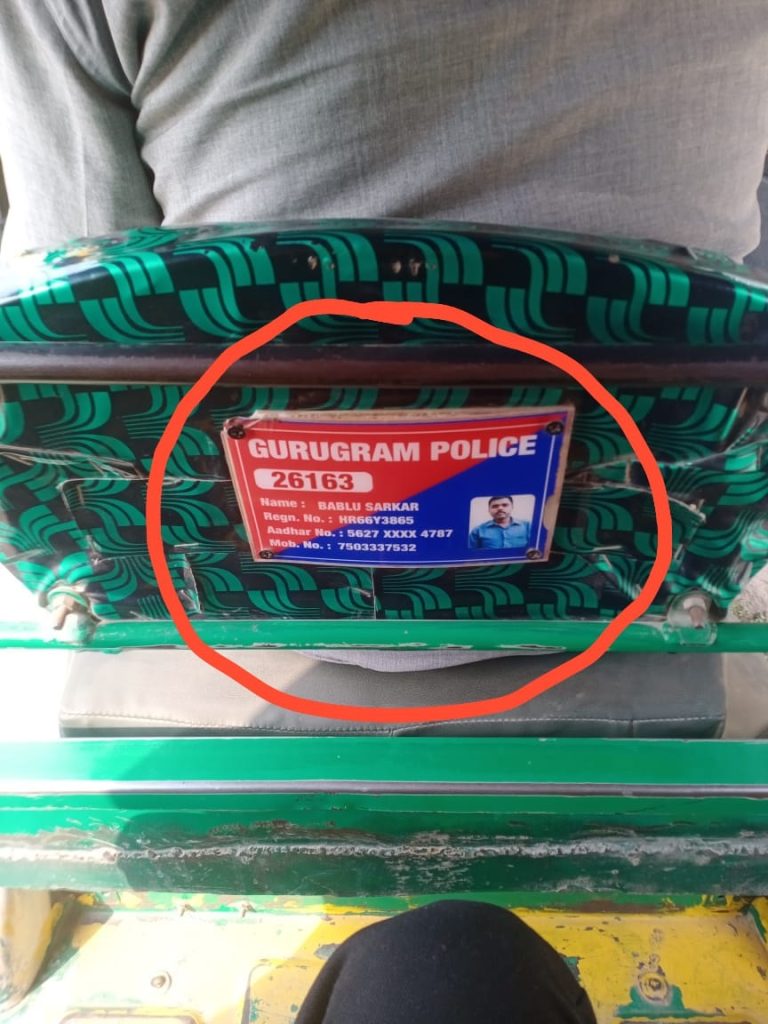
Despite this, the migrant workers told our reporter that they would vote for the TMC in the 2026 West Bengal Assembly elections in a big way to keep the BJP out of power. They also said Muslims in West Bengal are not afraid of SIR, claiming they possess all documents to prove their Indian citizenship. Nearly all auto-rickshaws driven by migrant labourers carried Gurugram Police certificates pasted on them, verifying that the drivers had no criminal records.
One migrant worker Tehelka met levelled serious allegations against a sitting TMC Member of Parliament, claiming his calls for help went unanswered when several Bengal migrants were sent to detention centres on suspicion of being illegal Bangladeshi nationals. Since the worker failed to provide evidence to substantiate the claim, Tehelka decided to withhold details of the incident. The account, however, reflects a deeper sense of political abandonment amid fear, uncertainty and official scrutiny.