Home Minister Amit Shah on Wednesday introduced three bills aimed at removing the Prime Minister or Chief Ministers or ministers facing allegations of corruption or serious offences and detained for 30 consecutive days.
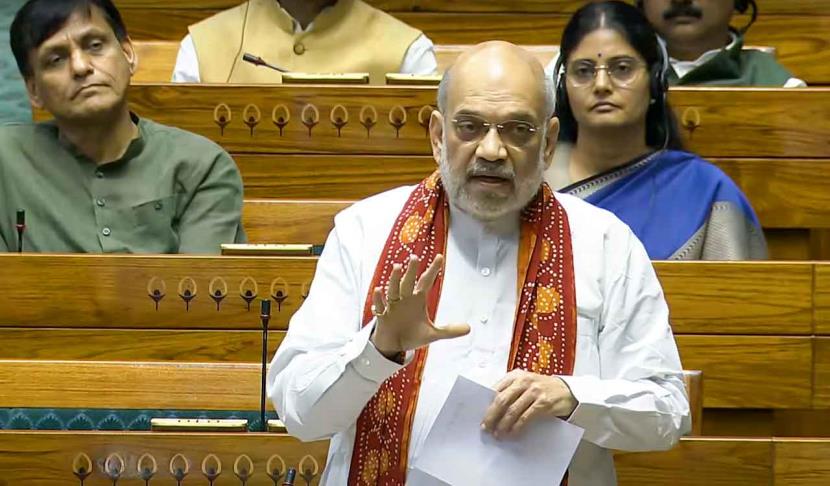
Home Minister Amit Shah today moved three bills in the Lok Sabha to provide for removal of the Prime Minister, Chief Ministers, union ministers and state ministers arrested on serious criminal charges for at least 30 days, drawing fierce and vociferous protests from opposition parties.
Opposition objects
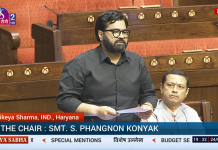
Several Opposition MPs opposed the introduction amid heavy sloganeering and ruckus, prompting the Lok Sabha Speaker Om Birla to adjourn the House till 3 pm. Opposition members trooped into the well, raising slogans and some also tore copies of the bill.
AIMIM’s Asaduddin Owaisi and Congress’ Manish Tewari and K C Vengopal termed the proposed law against the Constitution and federalism. Shah rejected criticism that the bills were brought in haste, adding that they would be sent to the Joint Committee of Parliament, where members of both Houses, including the Opposition, would get an opportunity to give their suggestions.
When Venugopal raised the issue of Shah’s arrest when he was Home Minister of Gujarat and asked about his claim of morality in politics, the BJP leader countered, saying he had resigned on moral grounds before his arrest and joined the government only after being discharged by the court.
The parent bill, the Constitution 130th Amendment Bill, was introduced by Shah at 2 pm.
When the Lok Sabha assembled at 3 pm, opposition MPs, including from the Congress, Trinamool Congress, Samajwadi Party, trooped towards the Well of the House with Speaker Om Birla urging them to maintain dignity of Parliamentary proceedings and allow introduction of the bill.
Shah then proceeded to introduce the constitutional amendment bills to create legal framework for removal of CMs and ministers in the UTs as well as J&K.
He also announced the proposal of constitution of a joint committee of parliament consisting of 21 members of the Lok Sabha and 10 members of Rajya Sabha. The committee will scrutinise the three bills and present its report on the first day of the next winter session of Parliament, he said
Senior leaders of the ruling NDA are demanding action against unruly MPs.
The bills
The Constitution (One Hundred and Thirtieth Amendment) Bill, 2025, aims to further amend the Constitution of India and the Government of Union Territories (Amendment) Bill, 2025
The Jammu and Kashmir Reorganisation (Amendment) Bill 2025 seeks to amend section 54 of the Jammu and Kashmir Reorganisation Act, 2019, to provide a legal framework for the removal of the Chief Minister or a Minister in case of arrest or detention in custody on account of serious criminal charges.
For the Prime Minister, the proposed law states that the person will tender resignation by the 31st day after arrest and detention and if fails to do so, he or she will cease to be in the position. However, the ministers, including the PM and the CMs can be re-appointed on release from custody.
In the statement of objects and reasons for the proposed amendments, the Home Minister said the elected representatives represent hopes and aspirations of the people of India and it is expected that they rise above political interests and act only in the public interest and for the welfare of people.
“It is expected that the character and conduct of Ministers holding the office should be beyond any ray of suspicion. A Minister, who is facing allegations of serious criminal offences, arrested and detained in custody, may thwart or hinder the canons of constitutional morality and principles of good governance and eventually diminish the constitutional trust reposed by people in him,”the statement reads.
Reasons behind the move
There have been instances where a Chief Minister and a state minister did not resign despite their arrest in criminal cases. They include Delhi’s former Chief Minister Arvind Kejriwal who spent over five months in jail after being arrested by the CBI and the ED in a liquor policy related case. He resigned only after he was granted interim bail by the Supreme Court, which had also ordered that he will not visit the CMO and the Delhi Secretariat.
Former Tamil Nadu minister V Senthil Balaji, who was arrested by the ED in June 2023 in a money laundering case, remained without any portfolio but he only resigned much later.