How Salwa Judum—a movement dismantled more than a decade ago—returned to dominate headlines in 2025, this time not in the jungles of Bastar in Chhattisgarh but in the corridors of Parliament and national politics
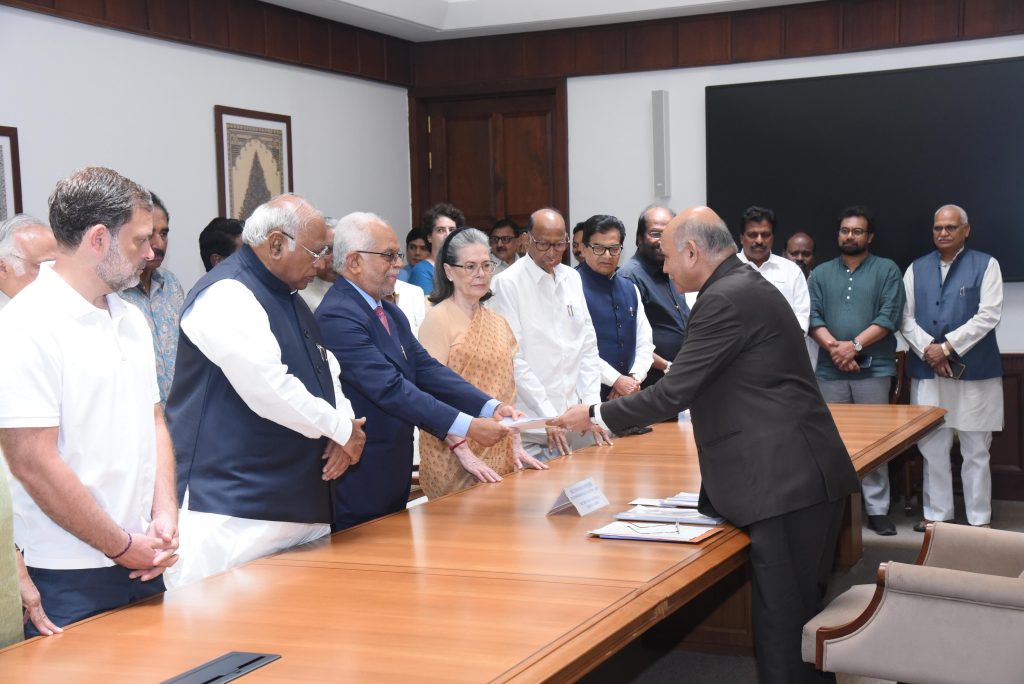
As India heads toward the vice-presidential election on September 9 the political debate has taken on a sharp and rather unusual turn turning an otherwise straightforward contest between the ruling NDA and the opposition INDIA bloc into a referendum on Constitutional values, counter-insurgency methods, and ‘left wing-right wing’ divide
At the heart of this debate is Justice B. Sudershan Reddy—the retired Supreme Court judge chosen by the INDIA bloc as its candidate for India’s second most important Constitutional post
The NDA claims his direct involvement in the increase of Naxal movement by giving a verdict against Salwa Judum—the state-backed vigilante movement in Chhattisgarh that sought to counter Maoist influence by mobilising tribal youth as armed volunteers.
Salwa Judum
To some, Salwa Judum symbolised local resistance against extremists. To others, it was a reckless experiment that displaced villages, forced recruitment, and brought lawlessness to already fragile regions.
In 2011, Justice Reddy, heading a Supreme Court bench, struck down Salwa Judum as unconstitutional. The judgment declared that arming untrained civilians to fight insurgents violated the basic rights of life and equality guaranteed under the Constitution.
BJP’s offensive
With the naming of Reddy as the INDIA Bloc’s VP candidate, the ruling has resurfaced in the heat of political battle.
Launching a major offensive, Home Minister Amit Shah has accused Justice Reddy of indirectly “supporting Naxalism.” According to Shah, the judgment tied the government’s hands and prolonged the insurgency for another decade. He also argued that the decision “denied tribals their right to self-defence” and that had Salwa Judum been allowed to continue, “Maoism could have ended by 2020.”
Such remarks, delivered in speeches across states, are now a part of the BJP’s effort to frame the election as a choice between “national security” and what it portrays as misplaced judicial activism.
INDIA Bloc’s response
Justice Reddy, however, has rejected the suggestion that the court’s ruling weakened India’s fight against Maoists, pointing out that no government since 2011 has claimed the judgment hampered security operations.
“The State has every right to fight violence, but it cannot outsource that responsibility to untrained civilians. The monopoly to wield weapons has always been with the State,” he was quoted as saying, reminding critics that the verdict also protected children’s rights to education, since schools in conflict zones had been occupied by armed forces. For him, the issue was never ideology, but constitutional duty.
The INDIA bloc has rallied behind Reddy, projecting him as a figure of integrity who represents constitutional morality over partisanship. Leaders such as Akhilesh Yadav have urged MPs to “vote for justice,” while Congress is highlighting his record of standing for social justice. Telangana Chief Minister A. Revanth Reddy turned Justice Reddy’s nomination into a point of pride for southern states, calling him an advocate for OBC rights, chairing committees that expanded opportunities for backward classes.
This clash has exposed the deeper stakes of the vice-presidential election. For the BJP, the contest is being framed as one between national security and judicial overreach. For the INDIA bloc, Justice Reddy’s candidacy is about protecting the Constitution, standing up for the marginalized, and asserting that the law—not vigilante militias—must guide the state’s fight against extremism.