In the months since the devastating Pahalgam attack, which killed 25 tourists and one Kashmiri — ruptured the fragile sense of normalcy in Kashmir, the long-pending question of Jammu and Kashmir’s statehood had already begun fading from New Delhi’s priorities. Now, the November car bombing near Delhi’s Red Fort has pushed the debate into even more uncertain terrain. What was once framed as a matter of political commitment has turned into something far more complicated, shaped by new security anxieties and the resurfacing of old fault lines.
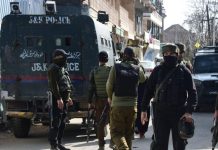
The Red Fort blast, which claimed over a dozen lives, has changed the priorities. Investigations have led to the arrest of several suspects from Kashmir, a development that has caused deep anxiety within the Valley. The immediate consequence has been a tightening of security across the Union Territory, and more quietly, a renewed narrative linking Kashmir once again to national-level threats.
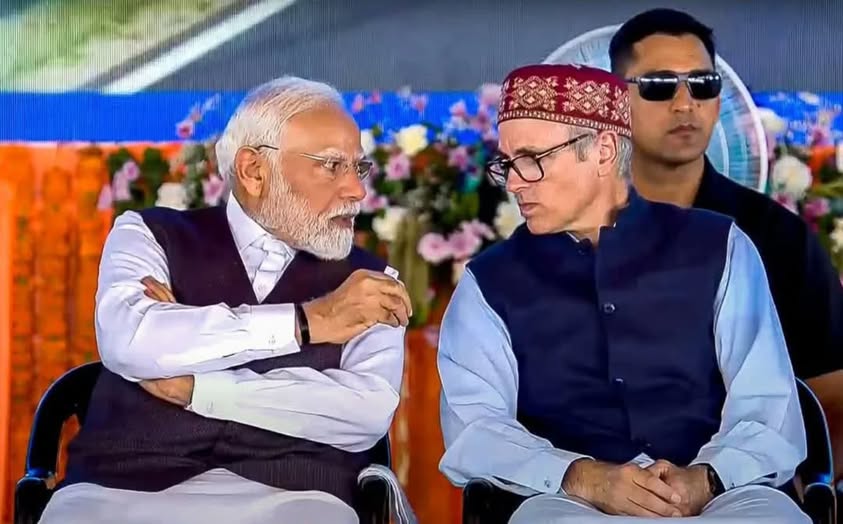
This comes at a time when statehood – promised repeatedly by the Centre, reaffirmed by the Prime Minister in earlier speeches, and demanded consistently by J&K leaders – was expected to return to the national conversation. But in the wake of the Red Fort blast, the political air has shifted. The absence of any mention of statehood in recent statements by top central leaders is being read in Kashmir as a telling silence. Even during high-profile inaugurations in the region over the last few months, the PM avoided committing to a timeline, despite the Chief Minister publicly raising the issue. That omission, which seemed deliberate then, now appears even more significant.
The concern in political circles is that the twin shocks of Pahalgam and now Delhi may have altered the Centre’s calculus. After Pahalgam, analysts felt the government’s hesitation stemmed from worries about transferring control of security-sensitive institutions back to a locally elected administration. The Red Fort blast may harden that instinct. For New Delhi, restoring statehood in the middle of a renewed terror scare – especially one with alleged Kashmir links – might appear politically risky and strategically inconvenient. The central bureaucracy and intelligence agencies, already wary, could argue that decentralization at this stage would weaken counter-terror coordination and the state’s ability to respond swiftly to cross-border threats.
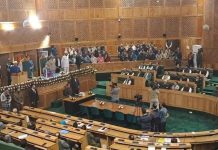
From Kashmir’s side, the argument runs in the opposite direction. Political groups see the new crisis as reinforcing the need for a legitimate local government capable of addressing radicalization at its roots. Without full political empowerment, they say, the region remains stuck in a cycle where policy is driven more by security imperatives than by democratic accountability. The National Conference, since returning to power last year, has adopted a consciously cooperative line with the Centre, avoiding confrontation in favour of patient negotiation. Omar Abdullah has repeatedly said that “there is no need to pick fights,” signalling that the party sees engagement as the only viable path to statehood. Yet even for a leadership committed to quiet diplomacy, the latest developments pose a challenge: how do you persuade New Delhi at a time when security concerns overshadow every other consideration?
The question now is not just whether statehood remains on Delhi’s agenda, but whether it has been quietly deferred to an undefined future. The central government continues to maintain that statehood will be restored “at an appropriate time,” a phrase that now sounds increasingly elastic. The transformed security context gives Delhi both a justification and political cover to delay the process further, possibly tying it to conditions that remain unarticulated.
Whether this double blow ultimately hardens New Delhi’s reluctance or forces a rethinking of its Kashmir strategy will become clearer in the coming months. What is evident already is that the road to statehood – long and uncertain even before – has become steeper after Pahalgam and the Red Fort blast.