The BJP itself has fielded no Muslim candidates in the 101 seats it is contesting, while the NDA has just around five candidates from the community.
In Bihar’s vibrant political mosaic, democracy is not just about casting votes but also about castes, communities, and their aspirations—and the question of representation. The Mahagathbandhan’s decision not to announce a Muslim deputy chief ministerial candidate has become a focal point of political debate in a state where Muslims make up nearly 18 percent of the electorate. The coalition’s chief ministerial face Tejashwi Yadav has hinted that the possibility of a Muslim deputy chief minister remains open, the ambiguity has given a political opportunity to its rivals.
The alliance, comprising the RJD, Congress, Left parties, and the Vikassheel Insaan Party (VIP), has fielded 255 candidates, with around 56 percent from backward or extremely backward communities. This includes a significant number of Yadav and Muslim candidates. The choice of VIP leader Mukesh Sahani as the deputy CM face is seen as a bid to woo the extremely backward castes (EBCs), who form roughly 36 percent of Bihar’s population—the state’s largest social group.
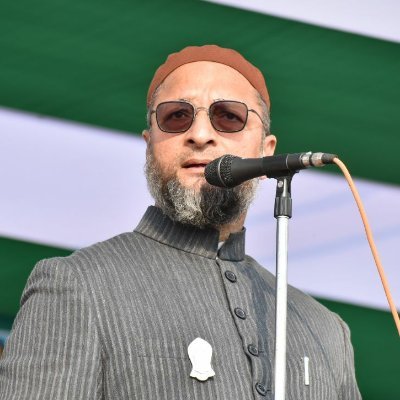
However, the move has drawn sharp criticism from the All India Majlis-e-Ittehadul Muslimeen (AIMIM), which accused the RJD-Congress combine of sidelining Muslims. Whether the absence of a Muslim face in a key position will dent the alliance’s prospects—given its traditional reliance on the ‘M-Y’ (Muslim-Yadav) equation—remains to be seen. For now, rivals are seizing the opportunity, with Asaduddin Owaisi’s AIMIM leading the charge and demanding stronger Muslim representation.
The AIMIM has been vocal in its challenge to the Mahagathbandhan’s silence on Muslim leadership, seeking to tap into a sense of political neglect among Muslim voters who feel sidelined despite their numerical strength and long participation in Bihar’s democratic politics. Owaisi’s decision to field candidates in 32 constituencies—particularly in Seemanchal and Mithilanchal—is a strategic push to consolidate Muslim political assertion in the regions.
The AIMIM’s earlier breakthrough—winning five assembly seats in the 2020 elections, all from Seemanchal—showed that its influence is tangible and growing. For the Mahagathbandhan, this serves as both a warning and a reminder: in Bihar’s shifting political landscape, no community can be taken for granted, and voices long unheard are finding new platforms.
BJP leader Syed Shahnawaz Hussain called the Mahagathbandhan’s move a “mahabhool” (mega blunder), claiming it has alienated the traditional M-Y vote base. “Their M-Y now stands for Mukesh Sahani–Tejashwi Yadav,” he quipped. The BJP itself has fielded no Muslim candidates in the 101 seats it is contesting, while the NDA has just around five candidates from the community.