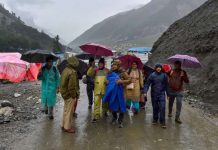
The death toll from the devastating flash floods along the Nepal-Tibet border has risen to at least 626 in Nepal and seven in Tibet, while nearly 3,000 people remain missing, according to the latest Reuters report on Saturday, as rescue operations were suspended in parts of Nepal because of heavy rain and poor visibility.
The disaster, triggered by a glacier collapse that unleashed a torrent of rock, ice, mud and debris through mountain river systems, has devastated communities and infrastructure on both sides of the border. Reuters reported that more than 540 foreign pilgrims, primarily from India, remain unaccounted for.
Nepal has temporarily halted search-and-rescue operations because of continuing rain and fog, with authorities now seeking specialised technical assistance rather than general rescue teams. The focus has shifted towards transporting rescued people to Kathmandu, identifying victims, restoring damaged infrastructure and dealing with difficult rescue sites, including tunnels.

The latest figures represent a sharp rise from the numbers India released on Friday.
In its August 28 briefing, the Ministry of External Affairs said 320 Indian nationals were either missing or remained uncontactable. The ministry stressed that the figure was dynamic and could change as authorities reconciled several lists. Around 100 people of Indian origin holding foreign nationalities were also uncontactable.
The MEA said 21 Indian nationals from Tamil Nadu, rescued from the flood-hit area and brought to Kathmandu, had arrived in Delhi on Friday. Another 63 Indians working at the Trishuli-1 hydropower project had also been rescued.
A further 96 Indian nationals stranded on the Chinese side had safely crossed into Nepal by land, and efforts were underway to evacuate them.
At the same time, around 400 Indian nationals on the Chinese side were safe, according to the MEA. India’s embassy in Beijing was coordinating with Chinese authorities, travel agents and group leaders to arrange their evacuation. Landslides and damaged roads have disrupted connectivity in parts of the region.
The disaster has also affected large groups of Kailash Mansarovar pilgrims. Among those whose whereabouts remain unknown are 77 pilgrims associated with the Isha Foundation, according to reports. The group includes people of several nationalities and should therefore not be added to the MEA’s figure of 320 missing or uncontactable Indian nationals.
India has also stepped up humanitarian assistance to Nepal. According to the MEA, the first relief flight carrying 10 tonnes of supplies left on August 26, followed by a second flight carrying 37.5 tonnes on August 27. A third flight carrying another 12-13 tonnes was being prepared on Friday, taking the planned total assistance to around 60 tonnes.
The supplies included temporary shelters, tents, blankets, hygiene kits, solar lamps, medicines, food items, generators, dewatering pumps and kitchen sets.
Nepal is now seeking specialised international assistance for tasks including tunnel rescue, DNA testing, body management and restoring transport and communications links, Reuters reported. The government estimates that reconstruction could require billions of dollars.
For families waiting for news of missing relatives, however, the numbers remain more than statistics. With difficult weather continuing to hamper operations and large areas still cut off, the fate of thousands remains uncertain.
India’s MEA said its control rooms in New Delhi, Kathmandu and Beijing were working round the clock to trace missing nationals, coordinate with authorities and assist families seeking information.