by Prof. Salim Engineer
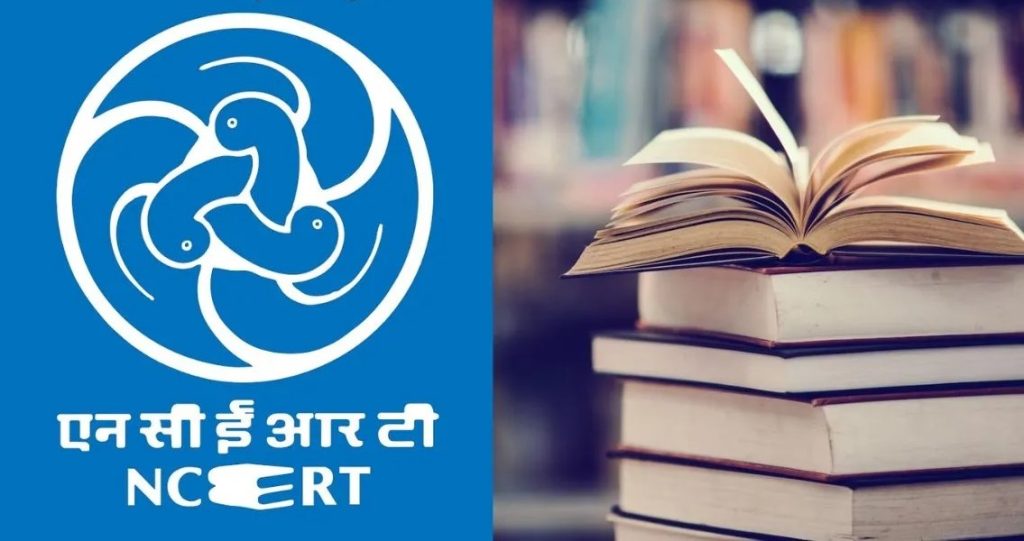
The revision of history textbooks is being carried out by the National Council of Educational Research and Training (NCERT) with great enthusiasm under the directions of the Government of India. The rewriting of history textbooks under a neo-nationalist government can never be a simple, unbiased & honest academic exercise as its exclusivist “Idea of India” is diametrically opposite to the inclusivist “Idea of India” based on the founding principles of the Constitution of India. History is the first lesson in identity that is conferred on children. It shapes the moral universe for its future citizens. Hence, the recent revisions by the NCERT that diminish the role of the Mughals in medieval history while glorifying Hindu rulers cannot be just edits in a textbook. They are an attempt to restructure India’s moral and political imagination. There is a dangerous fallacy at the core of this project. It assumes that the nationhood of “we the people” can be redefined by simplifying history into a tale of villains and heroes. The Mughal emperors must be depicted as ruthless invaders, temple destroyers, and oppressors. Hindu kings are to be exalted as guardians of tradition and tolerance. The broad lesson in Indian history must radiate with Hindu virtue under siege by Muslim barbarity. This project is nothing but myth making in the service of politics.
All civilizations wrestle with violence. To single out the Mughals as uniquely brutal is historically dishonest. As historians remind us, conquest, temple destruction, and political repression were the lingua franca of power across dynasties – Hindu, Buddhist, or Muslim. The Cholas, the Pallavas, the Kashmir kings – all left records of violence that match, and sometimes exceed, those attributed to the Mughals. But NCERT textbooks are curiously silent on these episodes. For example, it is unfair to condemn Akbar for one massacre in a 45-year reign while erasing the Maratha atrocities in Bengal. Such distortions matter because history is not simply about the past; it is about what kind of polity we wish to become. The great achievement of India’s freedom struggle was not simply political independence, but the articulation of a moral vision.
The India that our Constitution makers dreamt of was not just a country of borders drawn on a map. It was an India that would stand firm on its diversity and plurality. This dream had its roots in our shared culture. It is the same culture in which the elegance of Persian, the tradition of Sanskrit, Islamic ideology and the flavour of our local languages blend together to form the civilization in which we all live. The foundation of our country is based on equal respect for all faiths, ideologies, ethnicities, cultures, languages and regions. If the supremacy of a specific culture, language or religion is imposed on everyone, and the diversities and identities are erased by thrusting uniformity and similarity; then the very foundation of India and “Indianness” will be shaken. By rewriting history with a pre-defined agenda, the narrow and exclusivist Hindutva ideology is being surreptitiously imposed on the broad “Indianness” This would tantamount to reversing original constitutional “Idea of India.” The objective of history textbooks should be to expose our young generation to the evolution of our present-day society. Students should get an unbiased and factual picture of major changes, incidents and various factors responsible for shaping our nation. The history textbooks should enable students to think, analyze and draw lessons to shape the future of society.
Supporters of these revisions say that the Mughals were given more space than necessary in the textbooks and this marginalised the ancient Hindu dynasties. This argument has some strength. It is true that our curriculum has not been able to do justice to the entire civilizational achievements of India. But reform cannot be achieved by condemnation. History should be understood, not hated. A balanced and factual view would be that we avoid both glorification and demonization. Show students the magnificent architecture of the Mughals and also acquaint them with their strict policies. Keep Akbar’s experiments with religious tolerance alongside his military campaigns. Textbooks should also include rulers like Tipu Sultan and Dara Shikoh, who in their own ways showed the path of resistance and pluralism. Remember Sher Shah Suri for administrative reforms, Abul Fazal for his intellectual legacy. Only then will our children learn that Indian civilization is not made of a single religion or a single tradition, but of complexities, multiplicities and dialogue.
What we are witnessing is not the pursuit of truth but the construction of usable pasts. By presenting Hindu rulers as noble and Muslim rulers as barbaric, the textbooks become primers of communalism. They train children to see their society as a battlefield of fixed identities, where one community is forever the victim and another forever the oppressor. Such lessons, once learned early, are difficult to unlearn. A 13-year-old who absorbs that “Muslim rulers were cruel” may not read the historian who reminds us that violence was universal, nor notice that Kerala and Bengal – areas with little Mughal control – are among the most Muslim-populated today. Instead, the prejudice instilled in childhood hardens into a worldview. That worldview infected with prejudice and a sense of victimhood metamorphoses into hatred that corrodes our democratic ethos and communal harmony.
This convergence of pedagogy and propaganda risks entrenching communalism in the very minds that democracy requires to remain open and critical. It is true that all governments have sought to tilt the telling of history. But what distinguishes the current moment is not just the tilt but the abandonment of scholarly integrity. In the past, textbooks might have favoured the Congress or downplayed uncomfortable episodes. But they did not indulge in alt-facts – claims that the Aryan migration is merely a “theory,” or that jizya was imposed to encourage conversions. These assertions are not interpretations; they are fabrications. A democracy can survive contested interpretations. It cannot survive the institutionalization of lies.
What, then, is at stake? At stake is not only historical accuracy but the very moral compass of the republic. A plural society cannot be held together by myths of victimhood and vengeance. It can only be sustained by an honest reckoning with its past – a reckoning that acknowledges the grandeur and the brutality, the syncretism and the coercion, across all communities. The point of history is not to cultivate pride or shame but understanding. To teach a child that their ancestors were only victims or only villains is to deny them the possibility of empathy, the foundation of citizenship. A nation that censors its past cannot imagine a democratic future. For the sake of its children, India must resist the temptation of selective memory. The integrity of history is the integrity of democracy itself.
The author is Vice President of Jamaat-e-Islami Hind and Chairman of Markazi Taleemi Board, Views are Personal