A colossal magnitude 8.8 earthquake struck off Russia’s Kamchatka Peninsula on Tuesday, sending tremors through the Pacific and triggering tsunami warnings across multiple nations. The earthquake’s epicenter was located roughly 136 kilometers east of the coastal city of Petropavlovsk-Kamchatsky, deep beneath the seafloor near one of the world’s most seismically active subduction zones.
The immediate aftermath saw authorities in Russia, Japan, the United States, and several Pacific islands scramble into emergency mode. Tsunami alerts rippled outward as scientists tracked the potential spread of destructive waves.
In Russia’s far eastern Kuril Islands, waves reaching up to four meters were reported in the town of Severo-Kurilsk, forcing evacuations and temporarily severing power and communications. While there were no immediate reports of deaths, minor injuries and structural damage were confirmed. The Sakhalin region declared a state of emergency as aftershocks continued to shake the area.
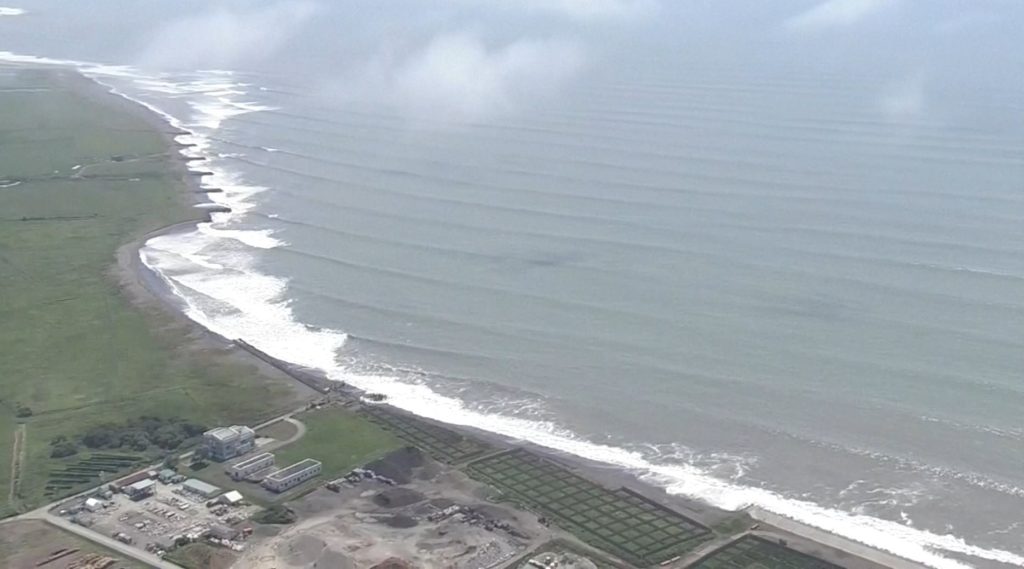
Japan issued a tsunami advisory for its eastern coastline, including Hokkaido and parts of Honshu. Although initial wave heights remained under one meter, authorities took no chances. Over 900,000 people were evacuated from coastal areas. Operations at the Fukushima Daiichi nuclear plant were suspended briefly as a precaution—an unsettling reminder of the country’s vulnerability to seismic sea waves.
Across the Pacific, Hawaii activated tsunami alert systems. Sirens blared on Maui and Oʻahu as emergency shelters opened and coastal areas were cleared. The Pacific Tsunami Warning Center initially projected wave impacts along Midway Atoll and later extended advisories to Alaska’s Aleutian Islands and the U.S. West Coast.
California, Oregon, and Washington issued coastal advisories, asking residents to steer clear of beaches, harbors, and low-lying areas. Emergency services in places like Crescent City—a town notoriously hit by past tsunamis—stood on alert. By late Tuesday, most alerts for Hawaii and the continental U.S. had been downgraded or lifted as wave energy dissipated with minimal inland impact.
The Kamchatka Peninsula lies along the volatile “Ring of Fire”—a horseshoe-shaped belt of fault lines circling the Pacific Ocean. The region has a long history of massive earthquakes and tsunamis, some with devastating consequences.
One of the most deadly tsunamis in Russian history occurred in 1952, when a magnitude 9.0 earthquake off Kamchatka sent waves nearly 18 meters high crashing into Severo-Kurilsk, killing over 2,300 people. It remains a haunting benchmark for the power of tectonic upheaval in the region.
Japan, too, carries deep scars. The memory of the 2011 Tōhoku earthquake and tsunami still looms large. That magnitude 9.1 quake generated towering waves up to 55 meters high, claimed nearly 18,000 lives, and triggered a nuclear meltdown in Fukushima—the most severe nuclear accident since Chernobyl. Tuesday’s evacuations and nuclear plant shutdowns were tinged with echoes of that catastrophe.
Even the United States bears its own tragic tsunami history. In 1964, a magnitude 9.2 quake in Alaska sent waves barreling down the Pacific, killing more than 130 people and damaging infrastructure as far south as California. Towns like Crescent City have since installed tsunami sirens and reinforced seawalls, but the threat remains real.
Seismologists have warned that Tuesday’s quake may not be the last. Aftershocks ranging from magnitude 6.0 to 7.0 have already followed the main quake. The Pacific Tsunami Warning Center is continuing to monitor undersea seismic activity and wave propagation data.
Despite early alarm, officials emphasized that the broad network of tsunami detection buoys and warning systems functioned as intended. Emergency responses were swift, and most evacuations were completed without chaos.
While damage from this latest tsunami appears limited, the quake has stirred memories of past disasters—and underscored the unpredictability of nature. For coastal communities across the Pacific, vigilance remains essential.