This is also the first time LeT and Pakistan-based terror groups have found mention in the monitoring team’s report after several years
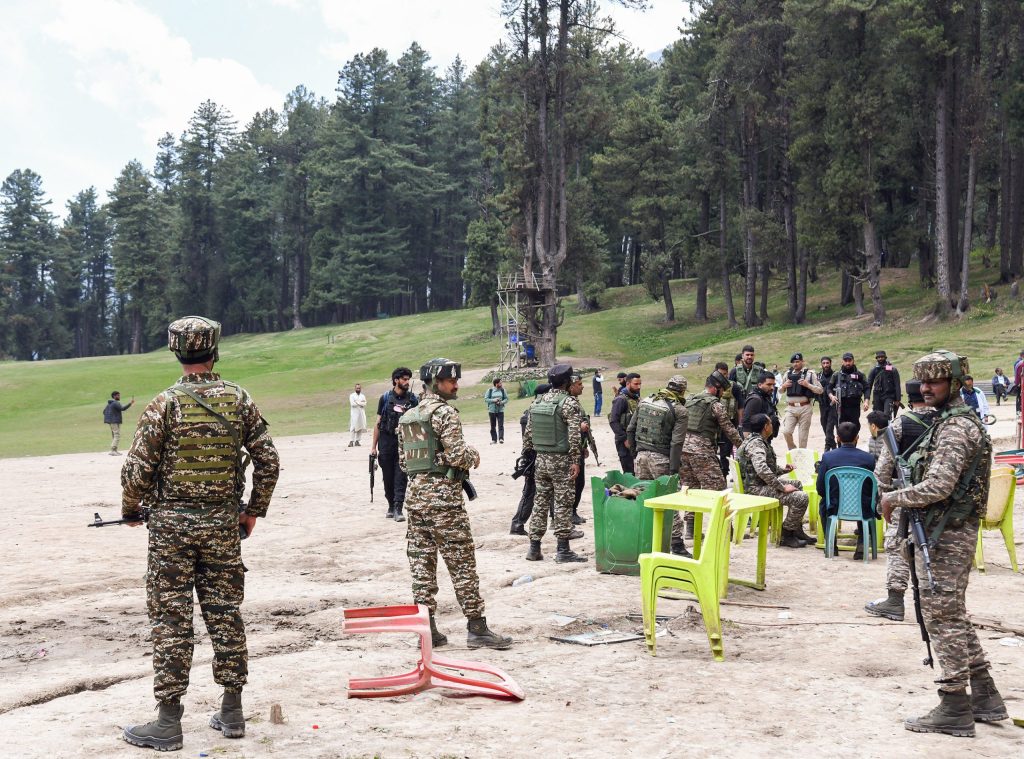
A United Nations (UN) Security Council report has linked The Resistance Front—a front for Pakistan-based Lashkar-e-Taiba (LeT)—to the Pahalgam terror attack, a development which is being seen as a diplomatic win for India.
The ‘Thirty-sixth report of the Analytical Support and Sanctions Monitoring Team submitted pursuant to resolution 2734 (2024) concerning ISIL (Da’esh), Al-Qaida and associated individuals and entities’ clearly talks of the LeT/Pakistan-based terror groups
This is also the first time LeT and Pakistan-based terror groups have found mention in the monitoring team’s report after several years. When the UNSC had issued a statement after the April 22-Pahalgam attack killing 26 civilians, Pakistan (currently a non-permanent member) had blocked any reference to the TRF or even to Pahalgam. Pakistan’s foreign minister Ishaq Dar said that the country had removed any reference to TRF in the UNSC press statement condemning the Pahalgam attack.
People familiar with the matter said that the mention of the TRF in the MT Report is how the world views Pakistan’s lies and deceitful narrative. This development is particularly notable as all decisions of the 1267 Sanctions Committee, including MT reports, are adopted by consensus by the members of the Security Council, they added.
“Pakistan’s strategy of plausible deniability using secular and modern names like ‘The Resistance Front’ and ‘People Against Fascist Front’ for its jihadi proxies to divert attention from LeT/JeM and give an indigenous appearance to its terrorist activities in Jammu & Kashmir now stands punctured.
“The inclusion of TRF in the MT Report despite Pakistan’s efforts for its removal highlights Pakistan’s undeniable involvement in fomenting terrorism in Jammu and Kashmir and attests India’s credibility in the UN on the CT front,” said those in the know
The biannual report from the Security Council’s monitoring team for sanctions on al-Qaeda and the Islamic State linked the TRF to the Pahalgam attack and warned that terrorist groups could exploit tensions between India and Pakistan.
“On 22 April, five terrorists attacked a tourist spot in Pahalgam, in Jammu and Kashmir. Twenty-six civilians were killed. The attack was claimed that same day by The Resistance Front (TRF), who in parallel published a photograph of the attack site,” the report said.
“The claim of responsibility was repeated the following day. On 26 April, however, TRF retracted its claim. There was no further communication from TRF, and no other group claimed responsibility. Regional relations remain fragile. There is a risk that terrorist groups may exploit these regional tensions,” it said.
The report stated, without naming specific countries, that one UN member state said the attack “could not have happened without Lashkar-e-Tayyiba (LeT) support, and that there was a relationship between LeT and TRF”, while another member state said the “attack was carried out by TRF, which was synonymous with LeT”.
In an obvious reference to Pakistan, the UN Security Council report said: “Yet one Member State rejected these views and said that LeT was defunct.” Pakistan has for long taken the official position that LeT is “defunct” since authorities imposed a ban on it.
Following the Pahalgam attack, a team of Indian officials travelled to the US in mid-May and briefed the monitoring team of the 1267 Sanctions Committee and other partner countries on the activities of TRF and presented a dossier on the group. The team also met representatives of the UN Office of Counter-Terrorism (UNOCT) and Counter-Terrorism Committee Executive Directorate (CTED) as part of efforts to get TRF designated as a global terror group by the Security Council.