At least 21 persons have died statewide over the past five days, and hundreds displaced or rescued from flooded areas; respite expected from Thursday; Tuesday’s monorail incident, in particular, highlighted glaring safety oversights, raising fresh questions about commuter safety and emergency preparedness in mind climate change.
On Tuesday Mumbai was thrown into turmoil as two overcrowded monorail trains stalled mid-air between stations, trapping 782 passengers for hours. A city-wide power outage cut off electricity and air-conditioning, leaving passengers in stifling conditions. One person was reportedly hospitalised due to suffocation, while emergency services launched a large-scale rescue operation to evacuate everyone safely.
This dramatic episode unfolded as Maharashtra grappled with one of its most punishing spells of rain in recent years. At least 21 persons have reportedly died statewide over the past five days, and hundreds displaced or rescued from flooded areas. Mumbai’s public transport system — a vital lifeline for millions — has been severely disrupted, with multiple local trains cancelled and flights delayed or grounded due to waterlogged runways and low visibility.
Cracks in the city’s backbone
Mumbai is called the Maximum city for reasons other than rains, it is for maximum opportunities it offers being India’s economic engine, home to the Bombay Stock Exchange, major corporate headquarters, and a thriving Bollywood film industry. Every year lakhs of migrants arrive here in search of work and success
However, despite repeated warnings and decades of similar crises, the infrastructure of the Maximum city remains chronically ill-equipped to handle extreme weather. Drainage systems continue to fail under pressure, flood-prone zones remain unfortified, and even newer transport infrastructure like the Monorail has proven vulnerable.
Tuesday’s monorail incident, in particular, highlighted glaring safety oversights, raising fresh questions about commuter safety and emergency preparedness.
The swelling Mithi River came dangerously close to breaching the danger mark, the India Meteorological Department (IMD) has extended its red alert for Mumbai through Wednesday, though rainfall is expected to taper slightly by Thursday.
Climate connection
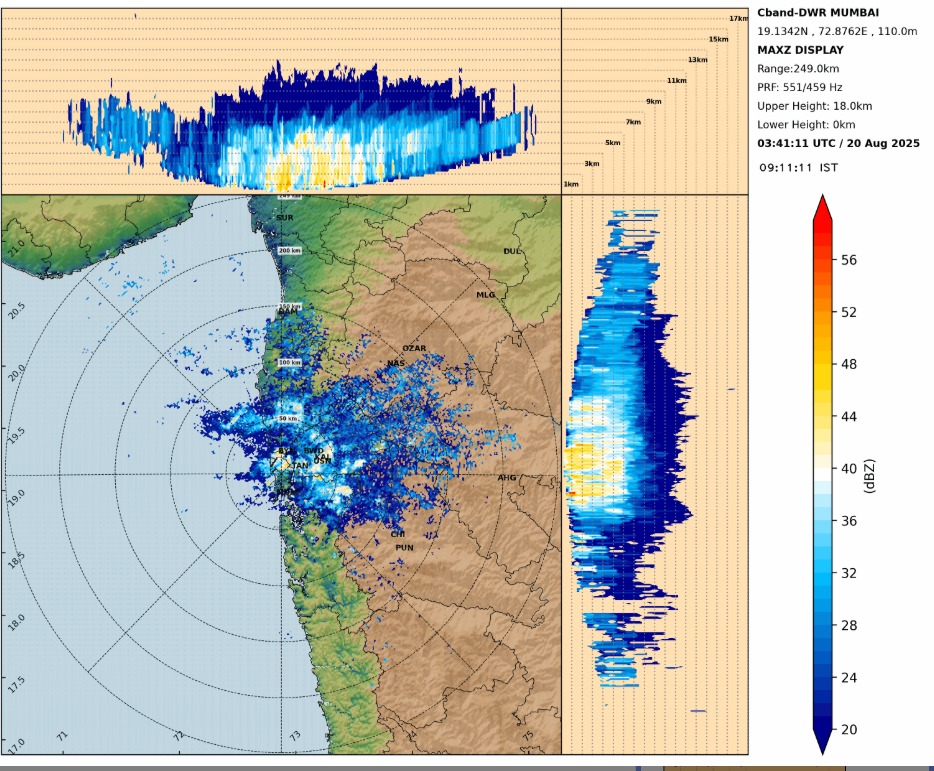
Mumbai recorded over 200 mm of rainfall in just 24 hours on Tuesday — a level categorised as ‘extremely heavy’ by the IMD.
According to the IMD’s latest data, rainfall (mm, >100mm) recorded over different parts of Maharashtra between 830 AM August 19 to 8 AM August 20 are as follows:
Matheran (Raigad):382.5mm
Mahabaleshwar (Satara): 278.0mm
Vikhroli (Mumbai suburban): 229.0mm
IIGHQ New Panvel (Raigad): 217.5mm
Karjat (Raigad): 211.5mm
Mumbai Airport (Mumbai suburban): 208mm
Byculla Mumbai (Mumbai city): 193.5mm
Mumbai Santacruz (Mumbai city): 176mm
Juhu Airport (Mumbai suburban): 149.5mm
Bandra (Mumbai suburban): 137mm
Chiplun (Ratnagiri): 123.5mm
Bhayander (Thane): 100.5mm
Convergence of weather systems
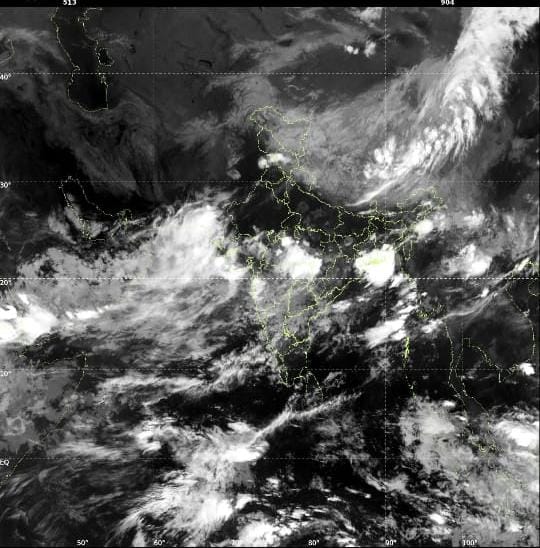
It is being driven by a convergence of weather systems—a low-pressure area over the Bay of Bengal and an east-west trough in the Arabian Sea, which together are pumping excess moisture into the western coast.
Unlike the infamous 2005 floods, which saw nearly 944 mm of rain in a single day, this event is marked by sustained downpours over several consecutive days. Prolonged, high-intensity rainfall is becoming more common, another sign of changing climate dynamics and oblivion of our planners to it.
Warmer oceans are amplifying monsoon systems, increasing frequency and intensity of extreme weather events, say experts
A city drowns
As rainfall patterns grow more erratic and infrastructure continues to lag behind, Mumbai finds itself increasingly vulnerable to natural and man-made crises. The events of this week have served as yet another wake-up call — not just about emergency preparedness, but about the urgent need for sustainable urban planning, resilient infrastructure, and serious investment in climate adaptation.