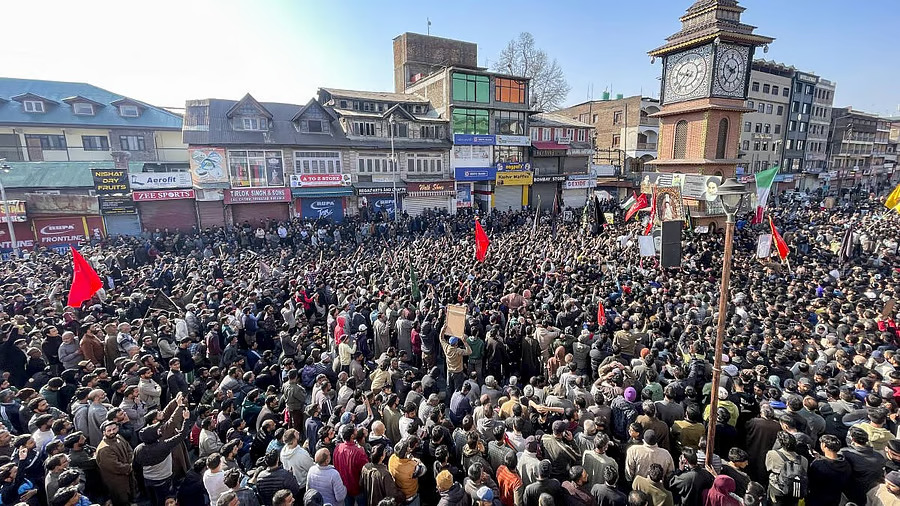
The killing of Iran’s supreme leader Ali Khamenei triggered a sensitive wave of protests in Kashmir, the first such large-scale demonstrations in the Valley since the revocation of Article 370 in 2019.
Authorities imposed curfew-like restrictions and suspended internet services in parts of Srinagar after demonstrations erupted across the city and nearby districts including Budgam. Protesters condemned the joint United States–Israel attack on Iran, while security forces responded with tear gas and baton charges to disperse crowds. At least 14 people, including security personnel, were injured during the clashes, according to officials.
The protests were particularly intense in several Shia-majority localities of Srinagar, where strict curbs on movement were imposed and communication services were disrupted. Schools were temporarily shut and large deployments of police and paramilitary forces were seen across the city. Lal Chowk, Srinagar’s historic commercial centre, was sealed with barricades and concertina wire as authorities attempted to prevent further gatherings.
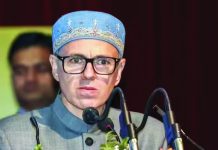
The shutdown call was supported by several political leaders, including the Valley’s chief cleric Mirwaiz Umar Farooq and the president of the People’s Democratic Party, Mehbooba Mufti.
Addressing reporters at her party office in Srinagar, Mufti publicly burnt portraits of Donald Trump and Benjamin Netanyahu while criticising New Delhi’s silence over the attack on Iran.
But Mufti’s remarks went beyond immediate politics. She reminded reporters that Iran had once stood by India on the Kashmir issue at a critical moment in international diplomacy.
“We had very strong ties with Iran,” she said. “When every Muslim country sided with Pakistan on Kashmir, Iran understood the Indian stand and supported it.”
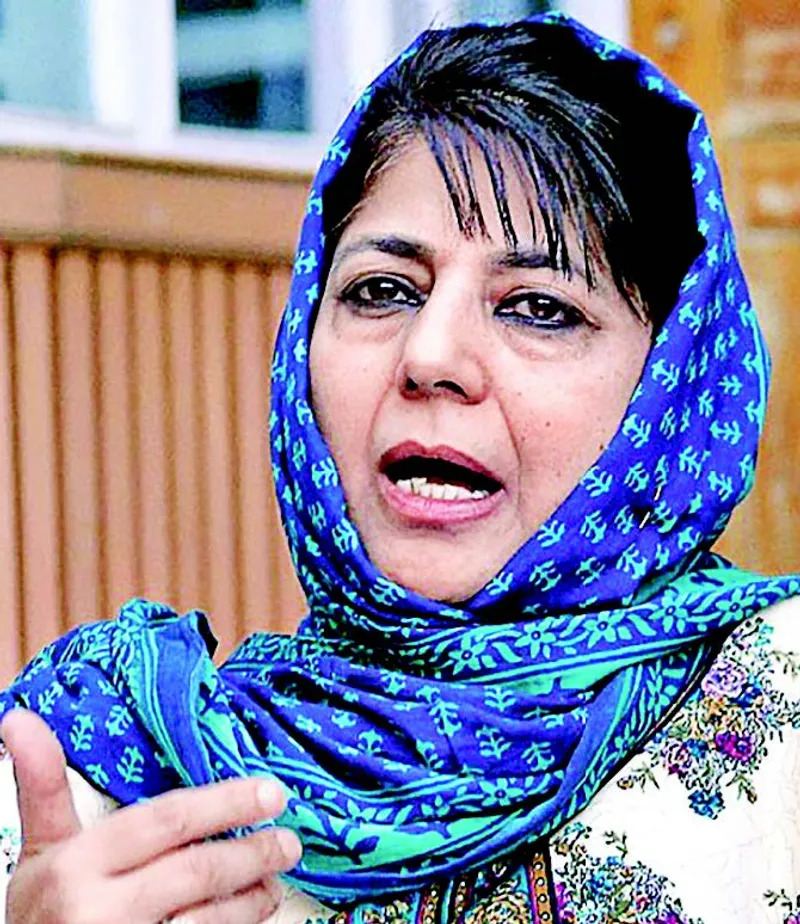
Her comment refers to a little-remembered but important episode in 1994 when Iran played a decisive role in preventing a United Nations resolution against India on Kashmir.
The Geneva crisis of 1994
In early 1994, Pakistan launched a major diplomatic campaign against India at the United Nations Commission on Human Rights in Geneva.
At the time, Pakistan, led by Prime Minister Benazir Bhutto, sought to push through a resolution accusing India of human rights violations in Kashmir. The initiative was backed by members of the Organisation of Islamic Cooperation and had the potential to significantly internationalise the Kashmir dispute.
If the resolution had passed, it could have triggered international investigations into India’s conduct in the region and possibly opened the door for sanctions or further diplomatic pressure.
The government of P.V. Narasimha Rao responded with an intense diplomatic campaign to prevent the move.
In a rare display of political unity, Rao asked opposition leader Atal Bihari Vajpayee to lead the Indian delegation in Geneva. The delegation also included senior political figures such as Farooq Abdullah and Salman Khurshid.
The message India wanted to send to the world was clear: on Kashmir, the country spoke with one voice across party lines.
Yet the most decisive diplomatic manoeuvre was happening quietly behind the scenes.
The Tehran mission
At the time, Iran was widely expected to support Pakistan’s resolution through the OIC bloc.
Recognising the importance of Tehran’s position, Rao decided to open a backchannel with Iran. He dispatched India’s external affairs minister Dinesh Singh, who was seriously ill and hospitalised, on a secret mission to Tehran.
The journey was extraordinary even by diplomatic standards. Singh reportedly left his hospital bed in New Delhi to carry a personal message from Rao to Iranian president Akbar Hashemi Rafsanjani.
Upon arriving in Tehran, Singh held a series of meetings with senior Iranian leaders including foreign minister Ali Akbar Velayati and other top officials. During these discussions, he briefed them extensively on India’s position regarding Kashmir and warned that allowing the issue to be internationalized at the United Nations would set a precedent for Western intervention in regional disputes.
India’s argument appeared to resonate with Tehran.
Iran had its own reasons to be wary of Western-led human rights pressure mechanisms and preferred that disputes in the region be resolved bilaterally rather than through international intervention.
Before Singh left Tehran, Iranian leaders conveyed a message to New Delhi that they would take steps to ensure India was not diplomatically harmed.
The resolution collapses
When the Kashmir resolution was taken up in Geneva, Pakistan expected strong support from Islamic countries within the OIC.
But events unfolded differently.
Iran declined to support the move to table the resolution. Because many OIC positions rely on consensus among member states, Tehran’s refusal disrupted Pakistan’s diplomatic calculations.
Several other countries, including Indonesia and Libya, also backed away from supporting the initiative. With Iran and China unwilling to support the proposal, Pakistan realised that the resolution would likely fail if put to a vote.
On 9 March 1994, just before the vote was scheduled, Pakistan withdrew the resolution.
The outcome was widely viewed as a major diplomatic victory for India. Pakistan’s most serious attempt to internationalise the Kashmir dispute at the UN forum had collapsed.
Many observers later concluded that Iran’s shift in position was one of the key factors behind the outcome.
Strategic consequences
The Geneva episode had wider geopolitical implications.
Iran’s decision to block the move strained relations between Tehran and Islamabad at the time. In the years that followed, Iran and Pakistan increasingly diverged on regional issues, particularly in Afghanistan.
India and Iran, meanwhile, found common ground in supporting the anti-Taliban Northern Alliance during the late 1990s.
Energy ties also deepened between the two countries. For years, Iran remained a significant supplier of crude oil to India, often offering favourable payment terms even during periods when Tehran faced international sanctions.
It is this period of cooperation that Mehbooba Mufti referred to when she said Iran had once supported India on Kashmir and even supplied oil “on loan”.
A complex relationship
Despite that diplomatic episode, relations between India and Iran have not always been smooth.
Iranian leaders, including Khamenei himself, have occasionally criticised India over the situation of Muslims in Kashmir. Such remarks have sometimes prompted diplomatic protests from New Delhi.
At the same time, India has often tried to maintain a careful balance in its ties with Iran, particularly given Tehran’s tense relations with the United States and Israel.
In recent years, however, India’s strategic alignment has increasingly tilted toward Washington and its partners in the Middle East.
A changing geopolitical equation
The latest crisis in Iran could further reshape regional dynamics.
If political change in Tehran eventually produces a government more closely aligned with the United States, it could alter Iran’s diplomatic posture across several regional issues, including relations with India.
For New Delhi, such a shift could potentially remove one of the key constraints in its Middle East diplomacy, the need to balance relations between Iran on one side and partners such as the United States and Israel on the other.
Some analysts believe that a pro-Western leadership in Tehran might also adopt a more pragmatic approach toward India, particularly given New Delhi’s growing economic and strategic influence.
In that sense, the protests in Kashmir over Khamenei’s killing are unfolding against a much larger geopolitical backdrop.
They have also revived memories of a largely forgotten moment in diplomatic history, when Iran, at a critical moment in 1994, quietly helped India prevent the Kashmir dispute from being internationalised at the United Nations.
Three decades later, the region’s strategic alignments may once again be shifting. Whether the next phase of Iran’s politics strengthens or weakens its relationship with India remains uncertain. Much depends on the outcome of the war on the US and Israel.