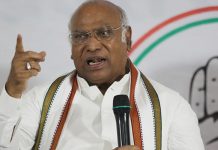
J&K Chief Secretary Atal Dulloo
By Tehelka Web Desk
The Jammu and Kashmir government has introduced a three-year rehabilitation and socio-economic reintegration scheme for people recovering from drug abuse, shifting the focus from treatment and detoxification to long-term recovery and reintegration.
The Rehabilitation and Socio-Economic Reintegration Scheme for Drug Abuse Victims, 2026 provides for continued medical, psychological and social support after a person is discharged from a rehabilitation facility.
Chief Secretary Atal Dulloo said rehabilitation should be treated as a sustained process extending beyond medical treatment.
“The framework seeks to move beyond conventional detoxification and treatment by adopting a holistic approach that combines medical care, psychosocial support, education, skill development, employment opportunities and sustained monitoring,” he said.
Under the scheme, a beneficiary will remain under a structured three-year rehabilitation cycle covering treatment, family and community reintegration, livelihood support and follow-up monitoring.
A Social Welfare official will serve as the case manager and coordinate the beneficiary’s rehabilitation after discharge. The official will work with relevant departments and agencies on areas including school re-enrolment, skill development, employment opportunities and follow-up care.
The scheme provides for scheduled follow-ups at three, six, 12 and 24 months after discharge. A District Task Force will oversee the rehabilitation process and take decisions related to the beneficiary’s progress and continuation of support.
An important feature of the scheme is its approach to relapse. A relapse is treated as a health condition requiring reassessment and additional support rather than as a violation resulting in termination from the rehabilitation programme.
The framework also provides for identifying signs of disengagement or deterioration, including missed counselling sessions, withdrawal from education or employment, behavioural changes and family distress. Such cases can be reassessed and referred for appropriate intervention.
The initiative comes as J&K expands its infrastructure for treatment of substance-use disorders.
A new drug rehabilitation centre was recently inaugurated at the Institute of Mental Health and Neurosciences (IMHANS), Srinagar. The facility has counselling rooms, a group-therapy space and other infrastructure, with a partnership with AIIMS Delhi also being worked on.
The pilot implementation of the new rehabilitation model has begun at IMHANS Srinagar. Addiction Treatment Facilities in Jammu, Kathua and Budgam are also expected to implement the scheme.
The government says the integrated model is intended to help beneficiaries reconnect with their families and communities, resume education or employment and eventually return to productive lives.
The scheme therefore places rehabilitation beyond the period of institutional treatment, with government departments responsible for coordinating continued support and monitoring over three years.