The relocation of leopards from Manikdoh to Vantara highlights the challenge of balancing wildlife conservation with human safety. Experts say relocation is only a short-term measure, and long-term solutions to rising human–leopard conflicts require habitat protection, community awareness and coordinated efforts.
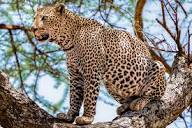
In a significant wildlife management move, the Maharashtra Forest Department has relocated 20 leopards from the overcrowded rescue facility at Manikdoh Leopard Rescue Centre in Pune district to the animal rescue and rehabilitation facility at Vantara Wildlife Rescue and Rehabilitation Centre in Jamnagar, Gujarat.
Officials say another batch of around 30 leopards may also be transferred in the coming months as authorities struggle to cope with a surge in human–leopard conflict in the region.
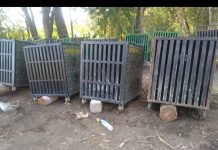
The relocation was carried out over the weekend under the supervision of forest officials and wildlife veterinarians from the Maharashtra Forest Department. Specially designed cages and transport vehicles were used to ensure the animals’ safety during the long journey from Maharashtra to Gujarat.
The leopards were previously housed at the Manikdoh rescue centre located in the Junnar Forest Division of Pune district. The facility is one of the state’s prominent centres for the care and rehabilitation of captured or injured leopards.
However, the centre has been under growing pressure due to the increasing number of animals rescued from human-dominated landscapes in northern Pune district.
According to forest officials, the Manikdoh facility was designed to house around 50 leopards, but the number of animals brought to the centre has exceeded its optimal capacity in recent months.
The rising number of rescues has largely been linked to increased leopard movement in agricultural fields and residential areas, where the animals often come in search of prey such as stray dogs, livestock and smaller wildlife.
The relocated animals included 10 male and 10 female leopards captured from different parts of the Junnar forest division.
A team of 25 officials from the rescue facility at Vantara travelled to Junnar to assist with the transfer operation. The team was led by veterinary officer Gaurav Shrivastav, and the relocation took place under the direction of senior forest officials including Additional Principal Chief Conservator of Forest Jitendra Ramgaonkar and Chief Conservator of Forest Ashish Thakare.
Each leopard underwent veterinary examination before the transfer. During the journey, veterinary experts monitored the animals’ health periodically to ensure that the long-distance transport did not cause stress or injury. Officials confirmed that the animals were transported in a specially equipped rescue vehicle designed for wildlife relocation.
The relocation was conducted after obtaining approval from the Central Zoo Authority of India, which regulates zoos and wildlife rescue facilities across the country.
A proposal to shift 50 leopards from Manikdoh to Vantara was sent to the authority in New Delhi and approved in December 2025. Following the approval, the Maharashtra Forest Department signed an agreement with the Vantara facility to relocate the animals in phases.
The first batch of 20 leopards has now been successfully moved, while the remaining animals are expected to be transferred depending on space availability and further administrative clearances.
Forest officials say the decision was prompted by the sharp rise in human–leopard encounters across the Junnar division, which includes the talukas of Junnar, Ambegaon, Shirur and Rajgurunagar.
Over the past five years, the forest department has rescued 184 leopards in this region alone. A large number of these animals were found trapped in open wells — a common hazard in agricultural landscapes across rural Maharashtra.
The transferred animals will now be housed at the Vantara wildlife rescue facility in Jamnagar, a large-scale animal rescue, care and rehabilitation centre established by the Reliance Foundation.
The facility has extensive infrastructure for the treatment, rehabilitation and long-term care of rescued wildlife. It includes veterinary hospitals, quarantine zones and large enclosures designed to replicate natural habitats.
Officials said the move will help ensure better living conditions for the animals while also easing pressure on the Manikdoh centre.
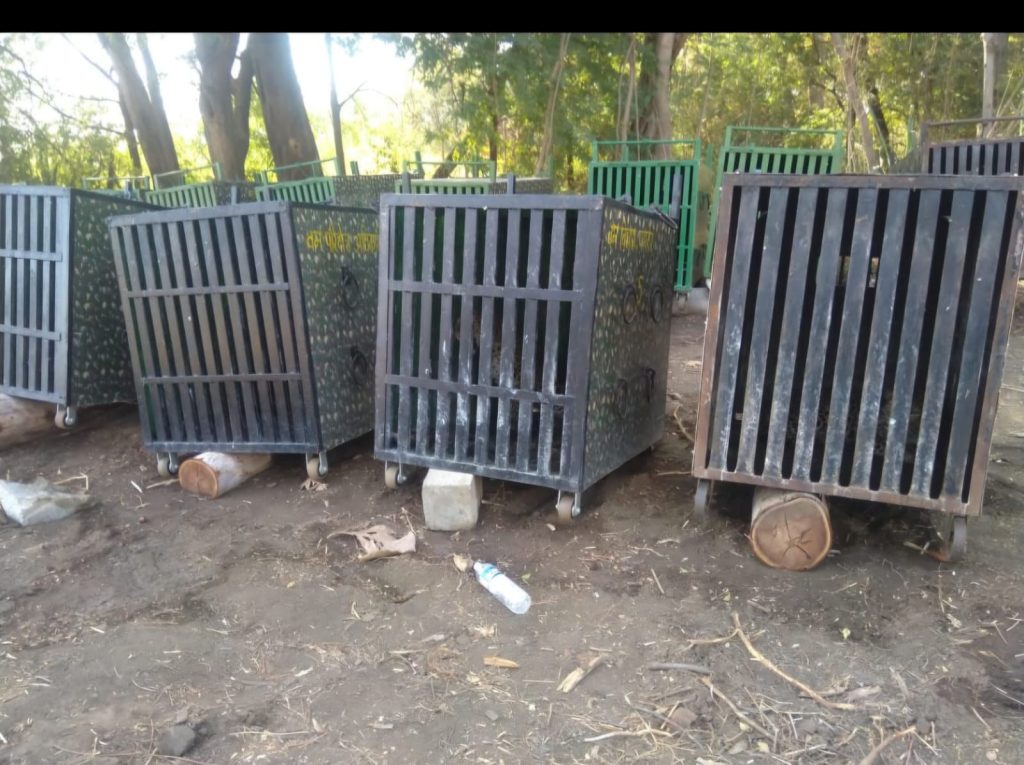
Overcrowded conditions in rescue facilities can lead to stress, aggression and health problems among captive wildlife. By shifting some animals to another facility, authorities hope to improve their welfare and reduce behavioural issues.
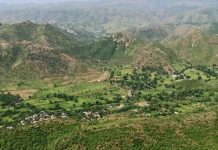
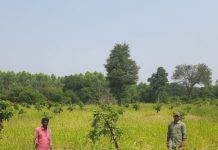
Wildlife experts say the relocation highlights a larger issue confronting conservation authorities in many parts of India — the growing interface between wildlife and human settlements. Leopards are among the most adaptable big cats and are known to survive even in densely populated landscapes. In regions like northern Pune district, sugarcane fields and agricultural areas often provide ideal cover for the animals.
However, as human populations expand and natural habitats shrink, encounters between people and wildlife are becoming more frequent. Experts say capturing and relocating animals is often a short-term solution. Long-term strategies are needed to address the root causes of conflict.
These include:
- protecting natural habitats
- improving management of agricultural landscapes
- securing open wells to prevent animals from falling in
- increasing awareness among local communities
Conservationists also emphasize the importance of maintaining ecological balance so that leopards have adequate prey in natural habitats rather than venturing into villages.