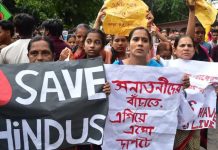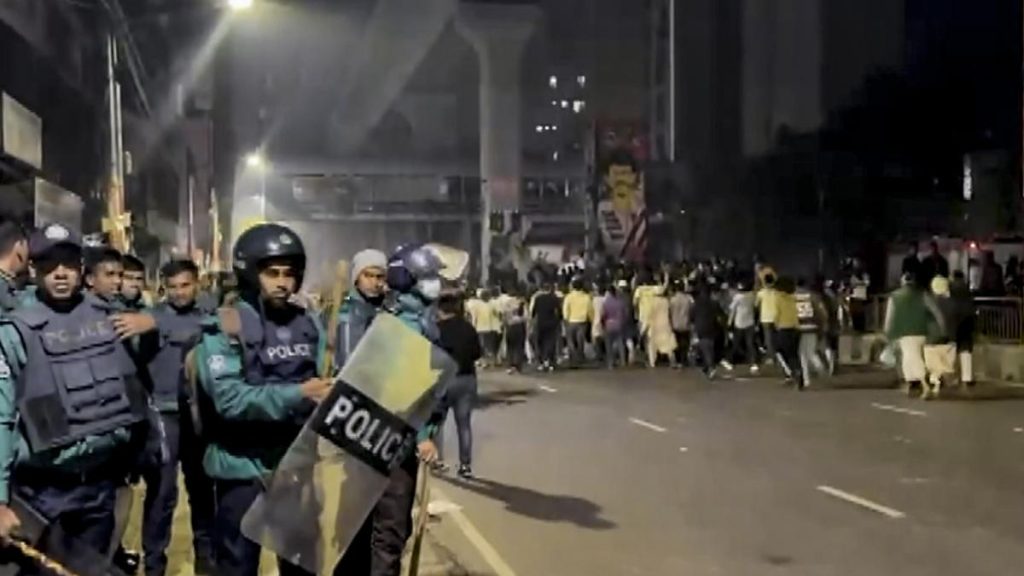
The recent occurrences in Bangladesh were really shocking. The Indian government’s Foreign Affairs Ministry has responded sharply to the incidents. The reported assaults on Bangladeshi Hindu minorities have been denounced by India. However, India is also extremely vigilant and cautious, which is why the Indian government is not reacting hastily, regardless of the response of any individual politician. Right now, the situation is really sensitive.
The Bangladeshi government must conduct an investigation as soon as possible to identify the entity responsible for these atrocities. However, it can be claimed that fundamentalist forces and extremist Islamists dominate Bangladesh. As a result of ongoing efforts to return Bangladesh to the pre-1971 undivided era, one Hindu man, Dipu Chandra Das, was lynched, his body was chained to a tree, and then set on fire.
However, Sharif Osman Hadi, a youth leader and alleged anti-Indian propagandist, who was pushing Bangladesh toward militancy, passed away at Singapore General Hospital while receiving treatment. Hadi has sustained gunshot injuries during an assassination attempt in Bangladesh’s capital, Dhaka, last week. Following his passing, the interim administration arranged a state funeral and granted him martyr status.
Muhammad Yunus, the chief adviser of Bangladesh’s interim government, attended Hadi’s funeral, demonstrating how the Yunus administration legitimised the anti-Indian ideology, philosophy, and attempts of Islamic fundamentalists to take Bangladesh to pre-independence era. Following this role, Muhammad Yunus may be held accountable for this outrage since, as the state’s administrator, he has failed to safeguard Bangladesh’s peace, calm, and law and order. Now that BNP leaders have also been assassinated, their anger has grown.
Jamaat is also extremely irritated since, despite their desire to propagate Islamic ideas, they are now the targets of these radical fundamentalist actions and have been held accountable for them. However, the Jamaat seeks an early election because they haven’t been part of Bangladesh’s electoral parliamentary politics. Similar to the RSS in India, they have always been a supporting force and have never taken part in an election. They want to take part and win the election this time. They have no idea how the election would be conducted in this scenario.
Following these disputes, the Bangladeshi army leader decided to call the Indian army chief for a conversation. The head of the Bangladeshi army stated that they aimed a stable bilateral relationship with India and wanted peace and quiet because the common people on both sides are most affected by the hostility in their relationship.
They discussed how the Pakistani army already controls the Bangladeshi army and that the ISI commander was in Bangladesh a few months ago. Additionally, militant commanders asserted that China and Pakistan would assist them in capturing the ‘Seven Sisters of India’. Therefore, it will be extremely challenging for Bangladesh if Pakistan’s influence grows in Bangladesh, which could lead to the suspension of visa operations for both India and Bangladesh or the emergence of drastic action by India.
India does not want the election to be cancelled in this case, but it might be postponed if all political factions decide to put pressure on Yunus to resign and the military authority takes over. However, the election date has already been set for February 12, 2026, and Ramadan will begin on February 17, when the poll cannot be held. What will then happen? Will there be a postponement of the election? The scenario will become more difficult if the election is postponed. However, the bilateral relationship between the two countries must remain intact and be state-to-state rather than party-based, regardless of which party is in power in Bangladesh.