New Delhi: Union Minister for telecommunication Jyotiraditya Scindia on Thursday said that India will become the most powerful nation in the telecom sector worldwide.
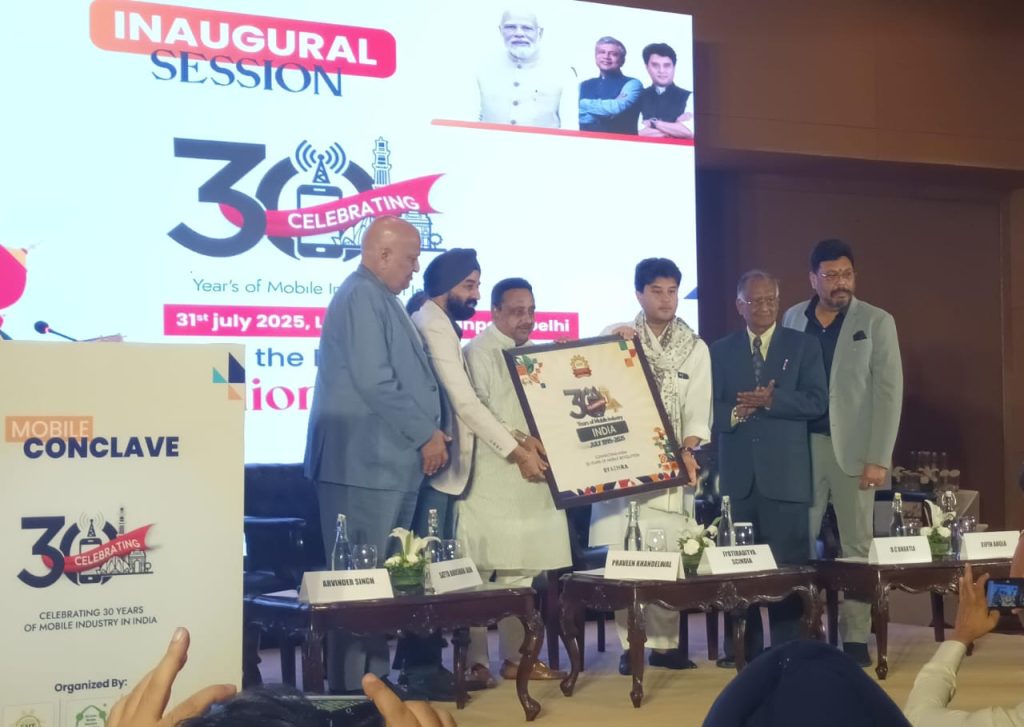
He was speaking during the inauguration of Mobile Conclave and exhibition organized by Confederation of All India Traders (CAIT), the All India Mobile Retailers Association (AIMRA), and the Organised Retail Association (ORA), in New Delhi.
Addressing the gathering of traders and retailers, he said, “Under the leadership of Prime Minister Shri Narendra Modi, a digital revolution has taken place in the country. Today, due to this digital revolution, 2.5 billion transactions are taking place annually through UPI, and corruption has been eradicated. Our UPI system has now reached the Eiffel Tower in France. We have become the 5th country to manufacture 4G equipment, and now India will lead the world in 6G.With the Prime Minister’s vision, an investment of $17 billion will be made to connect 6.5 lakh villages with broadband.”
“The digital highway is now running across the country like veins. I assure you that consumers will receive safe and better telecom services. Today is a historic day, and under PM Modi’s leadership, India will become the most powerful nation in the telecom sector worldwide,” he added.
The event was organized to mark 30th anniversary of India’s first-ever mobile call, made on 31st July 1995, when West Bengal Chief Minister Jyoti Basu spoke to Union Telecom Minister Sukh Ram, ushering India into the mobile era.
This historic moment laid the foundation for a journey that today connects over a billion Indians.
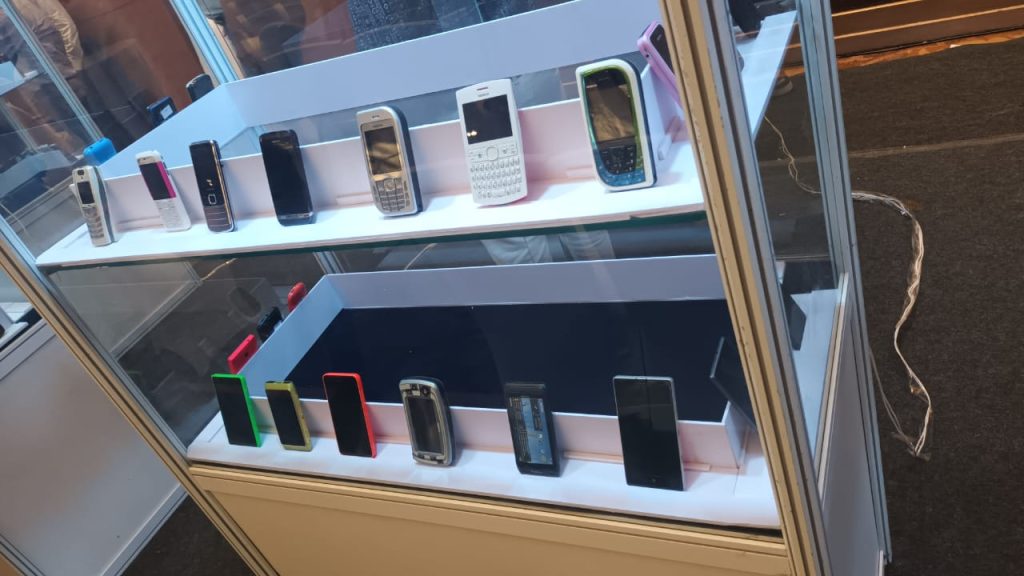
The event featured over 300 iconic mobile handsets spanning three decades—from India’s earliest bulky devices to sleek modern smartphones powered by AI and 5G.
The exhibition offered a captivating glimpse into the evolution of personal connectivity and its impact on commerce, communication, and culture.
Meanwhile Praveen Khandelwal, Member of Parliament from Chandni Chowk and Secretary General of CAIT, paid special tribute to former Prime Minister Atal Bihari Vajpayee, under whose leadership the telecom sector was liberalised, making mobile phones accessible to the masses.
He also lauded Prime Minister Narendra Modi, whose Digital India mission has not only deepened mobile penetration but transformed the mobile into a tool of empowerment, governance, entrepreneurship, and social justice.
“From voice to value, India’s mobile journey is a global case study. What began with a phone call in 1995 is now powering a trillion-dollar digital economy,” Khandelwal said.
The conclave also witnessed a high-powered panel discussion on “The Journey of Mobile Telephony in India: Past, Present & Future” brought together top voices from telecom companies, mobile manufacturers, retailers, and digital innovators.
The dialogue covered transformative milestones—from prepaid connections and mobile internet to digital payments and Bharat-centric mobile innovations. Panelists also explored the future potential of 6G, artificial intelligence, satellite connectivity, and Make in India opportunities in the telecom sector.