
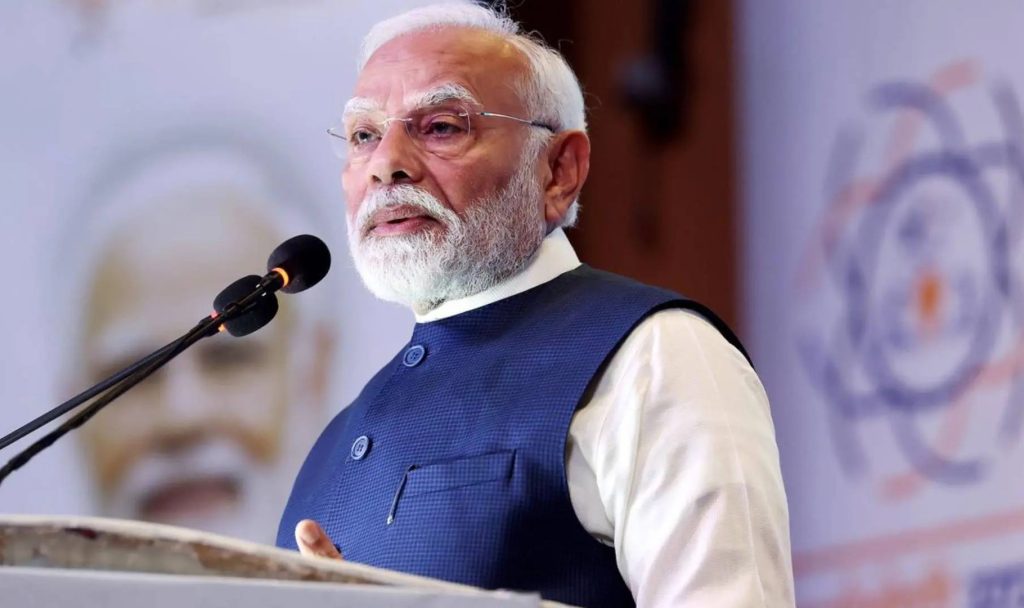
The Bharatiya Janata Party ( BJP) returned to power for a third consecutive term under Prime Minister Narendra Modi in 2024, despite the narrower electoral mandate, the BJP-led government signalled its intent to build upon the policy foundations laid in its previous terms.
The most significant legislative shift came into effect on July 1, 2024, with the implementation of three new criminal laws — the Bharatiya Nyaya Sanhita, 2023, Bharatiya Nagarik Suraksha Sanhita, 2023, and Bharatiya Sakshya Bill, 2023. These statutes replace colonial-era laws that had governed India’s penal, procedural, and evidentiary framework for over a century.
A separate legislative push has decriminalised over 180 provisions across 42 central statutes, further cementing the government’s pro-business stance. Reforms to laws related to Aadhaar, information technology, intellectual property, and film piracy have now been formally notified. These changes aim to simplify compliance, reduce litigation, and encourage innovation.
In tandem, the government has been updating other dated laws to reflect contemporary needs. The Press and Registration of Periodicals Bill, 2023, for instance, replaces an 1867 law with a more streamlined and digital-friendly regime. Meanwhile, the Telecommunications Act, 2023 has triggered debate for its broad language — especially around the potential regulation of OTT (over-the-top) media services — raising questions about digital freedom and regulatory overreach.
From trade secrets to consumer rights, legislative activity has been humming across sectors. The Central Consumer Protection Authority (CCPA) issued guidelines on deceptive “dark patterns” in e-commerce, reflecting growing awareness of user manipulation in digital marketplaces. The Law Commission has also submitted a draft bill on trade secrets, a long-standing gap in India’s intellectual property framework.
Several “silent” but significant infrastructure reforms have also been set in motion. Amendments to intellectual property rules and the Biological Diversity Act, 2002 seek to streamline processes and clarify legal obligations. High courts in Calcutta, Delhi and Madras have launched dedicated IP divisions, enhancing judicial expertise in complex IP litigation.
In one of the more symbolic yet strategic moves, India liberalised foreign direct investment (FDI) norms in the space sector. Building on the 2023 Indian Space Policy, these reforms remove the blanket requirement for prior government approval in some areas.
The government hopes this will accelerate private sector participation, R&D investment, and satellite launches — all aimed at increasing India’s share of the global space economy from 2% to 10% by 2030.
The current government, while navigating a stronger opposition and coalition dynamics, appears committed to consolidating past reforms and modernising India’s legal and policy framework.
With foundational reforms in place across criminal law, financial markets, digital regulation, and sector-specific investment policies, the stage is being set for India’s next economic surge.